Vida Manglar — Colombia's First Verified Blue Carbon Mangrove Project (Cispatá Bay)
Colombia
Conservation International and Colombian partners' Vida Manglar project protects and restores mangroves across Cispatá Bay, scaling from 7,500 to 11,000 …
Sierra Leone · Bonthe · See the Sierra Leone profile
Evidence: Descriptive / self-reported Top 58% 40/100 · Ask Evidence Copilot about this practice
In October 2025, 124 communities on Sierra Leone's Sherbro Island signed a 50-year blue-carbon deal with developer West Africa Blue to protect ~79,000 hectares of mangroves, guaranteeing communities 40-52.5% of gross carbon-credit revenue under 'carbon justice' principles.
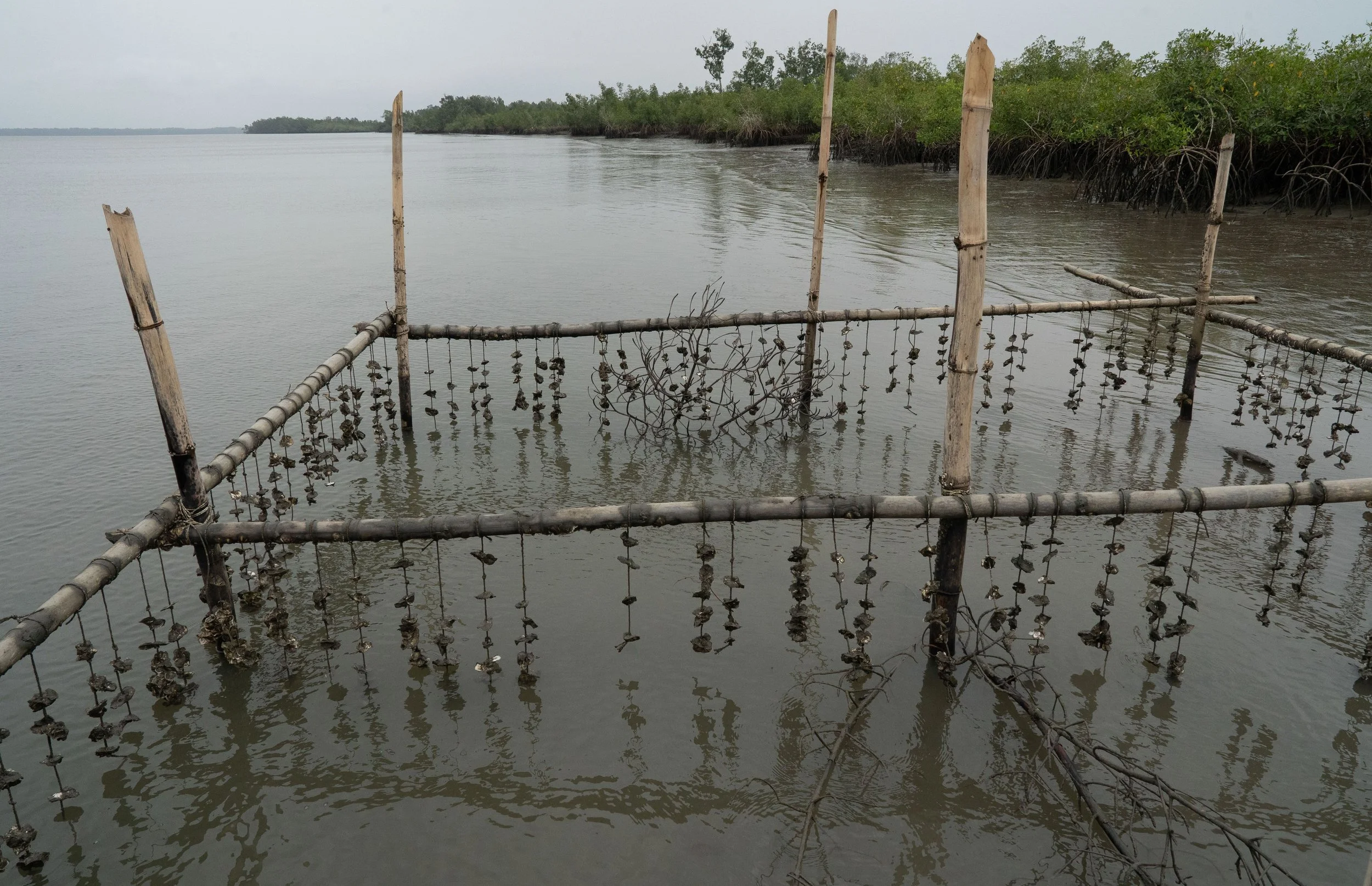
Sierra Leone's Sherbro River Estuary holds roughly half of the country's remaining mangrove forest, though deforestation there has run at about 1.7% a year since 2012. In October 2025, 124 communities across the estuary signed a 50-year benefit-sharing agreement with West Africa Blue, a Mauritius-based project developer, covering protection of an estimated 79,000 hectares of mangroves.
Namati Sierra Leone, a US-based legal-empowerment NGO, spent roughly three years helping communities negotiate the deal using six 'carbon justice' principles drawn from a global network of grassroots organisations' past experience with carbon projects. A tripartite Community Benefit Organisation - three community, three company and three independent representatives - oversees fund management, and the project is certified to Verra's methodology using a conservative baseline.
The agreement has a potential lifetime impact of more than 3 million tonnes of CO2-equivalent. Communities are guaranteed 40-52.5% of gross carbon-credit revenue (varying by phase), with the Sierra Leone government receiving 7.5-15% and community payments disclosed within 45 days of any credit sale. More than 2,500 efficient cookstoves have already been distributed to reduce reliance on mangrove wood for fuel, with fish-drying ovens and processing equipment planned next.
Reporting on the deal is candid about the risks: Verra has previously faced scrutiny after research found some of its terrestrial forest-carbon projects delivered far fewer climate benefits than claimed, the buyer framework contains no explicit exclusion of fossil-fuel companies, and Sierra Leone's post-civil-war history of land grabs has left communities wary. No credits have yet been sold, and the project's real-world carbon and biodiversity outcomes remain to be independently verified.
Indicative funding routes for practices of this type — always check each programme's current calls and eligibility rules.
Do you run this practice? Claim it — verified implementers get a public contact pathway and can propose corrections.
Where this practice's information was retrieved from, and when.
Colombia
Conservation International and Colombian partners' Vida Manglar project protects and restores mangroves across Cispatá Bay, scaling from 7,500 to 11,000 …
China
Shenzhen verified 38,745 t of mangrove-protection carbon sink at Futian Nature Reserve (2010-2020) and auctioned 3,875 t in China's first …
Costa Rica
Costa Rica's first marine PES scheme pays Gulf of Nicoya mollusk-harvester associations for verified mangrove conservation, scaling from 157 harvesters …
Ethiopia
FMNR of 2,728 ha of degraded Ethiopian hillsides; 7 cooperatives established 2005; Africa's first CDM forestry project (2012); 880,000 tCO2e …
Open full copilot Grounded in cited practices — always check the sources.