Sherbro River Estuary Blue-Carbon Agreement — Carbon-Justice Mangrove Protection (Sierra Leone)
Sierra Leone
In October 2025, 124 communities on Sierra Leone's Sherbro Island signed a 50-year blue-carbon deal with developer West Africa Blue …
Colombia · San Bernardo del Viento · See the Colombia profile
Evidence: Descriptive / self-reported Top 14% 60/100 · Ask Evidence Copilot about this practice
Conservation International and Colombian partners' Vida Manglar project protects and restores mangroves across Cispatá Bay, scaling from 7,500 to 11,000 hectares; the first VCS-registered blue carbon project worldwide (2021), projected to remove ~1.22 million tCO2e over 30 years.
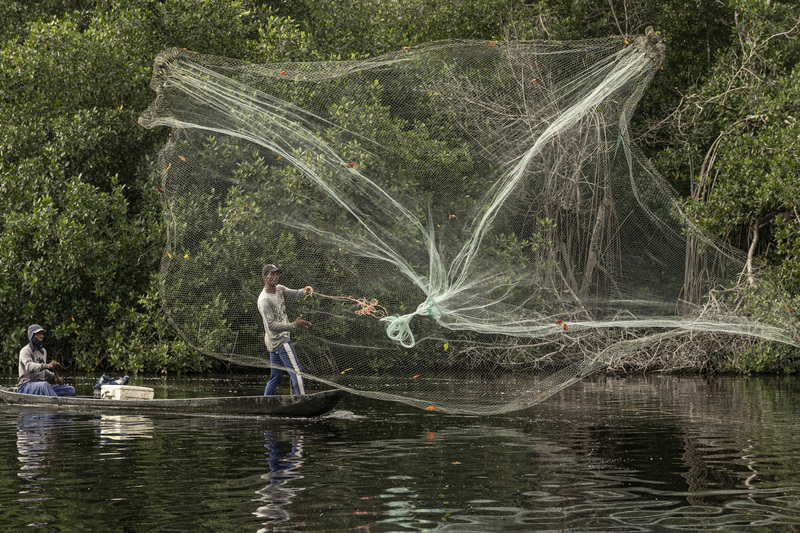
Vida Manglar, led by Conservation International with Colombia's Invemar and CVS, protects and restores mangrove forests around Cispatá Bay in the Gulf of Morrosquillo.
The project currently covers about 7,500 hectares, designed to expand to roughly 11,000 hectares over a 30-year crediting period, built around a community benefit-sharing model channelling carbon-credit revenue to fishing and mangrove-dependent communities.
In 2021 Vida Manglar became the first blue carbon project worldwide registered under Verra's Verified Carbon Standard (VCS 2290); Verra and Conservation International estimate it will avoid or remove close to 1.22 million tonnes of CO2 equivalent over 30 years.
As with other voluntary carbon-market mangrove projects, emissions figures are independently verified estimates rather than direct measurements, and coastal wetland carbon storage carries a documented permanence risk from storms and sea-level rise.
Philanthropic / foundation funding
Indicative funding routes for practices of this type — always check each programme's current calls and eligibility rules.
Do you run this practice? Claim it — verified implementers get a public contact pathway and can propose corrections.
Where this practice's information was retrieved from, and when.
Sierra Leone
In October 2025, 124 communities on Sierra Leone's Sherbro Island signed a 50-year blue-carbon deal with developer West Africa Blue …
China
Shenzhen verified 38,745 t of mangrove-protection carbon sink at Futian Nature Reserve (2010-2020) and auctioned 3,875 t in China's first …
Costa Rica
Costa Rica's first marine PES scheme pays Gulf of Nicoya mollusk-harvester associations for verified mangrove conservation, scaling from 157 harvesters …
Japan
Yokohama's municipally managed eelgrass beds became the first site in Japan's J Blue Credit market, turning coastal seagrass restoration into …
Open full copilot Grounded in cited practices — always check the sources.