Lord Howe Island Rodent Eradication Project
Australia
An AUD 15.5m operation cleared ship rats and house mice from Lord Howe Island's 1,455 ha in 2019; official surveys …
Cook Islands · Suwarrow Atoll · See the Cook Islands profile
Evidence: Observational / pre–post Top 89% 27/100 · Ask Evidence Copilot about this practice
A brodifacoum rat-eradication operation on Suwarrow atoll's Motu Tou in 2013, run by the Cook Islands National Environment Service with BirdLife International and Te Ipukarea Society, aimed to protect seabird colonies including 13% of the world's lesser frigatebirds.
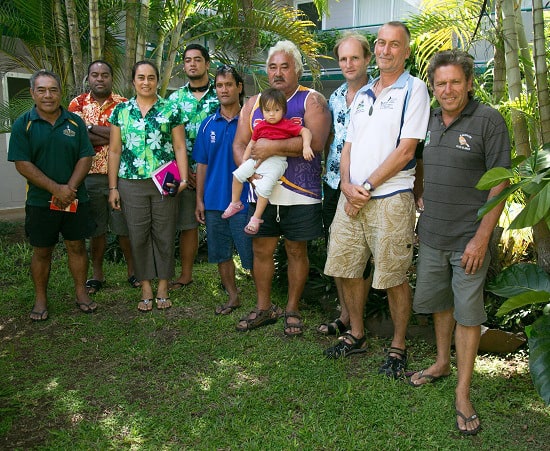
Suwarrow National Park is a remote, uninhabited coral atoll roughly 930 km northwest of Rarotonga, hosting globally significant seabird colonies including lesser frigatebirds, sooty terns and red-tailed tropicbirds. A 2008 survey found black noddies, present on the islet of Motu Tou in a 2000 survey, had disappeared, and identified a rat infestation as the cause.
The Cook Islands National Environment Service, working with BirdLife International and local NGO Te Ipukarea Society, ran a rat-eradication operation using brodifacoum cereal bait pellets from 22 April to 29 May 2013. Ongoing biosecurity management was then handed to an on-site National Environment Service park ranger stationed seasonally on the atoll.
Follow-up monitoring in 2018 found the operation had not fully succeeded: a remnant rat population was detected persisting on one small lagoon islet, more than a decade after the original operation.
The case illustrates both the conservation stakes of invasive-rodent control on remote Pacific seabird strongholds and the practical difficulty of achieving total eradication across dispersed, hard-to-access islets.
National / regional programmes Philanthropic / foundation funding
Indicative funding routes for practices of this type — always check each programme's current calls and eligibility rules.
Do you run this practice? Claim it — verified implementers get a public contact pathway and can propose corrections.
Where this practice's information was retrieved from, and when.
Australia
An AUD 15.5m operation cleared ship rats and house mice from Lord Howe Island's 1,455 ha in 2019; official surveys …
United States of America
A 2011 aerial rat eradication on Palmyra Atoll (Island Conservation/TNC/USFWS) preceded a peer-reviewed study showing native tree seedlings rose from …
Falkland Islands (Malvinas)
Since 2001, Falklands Conservation and partners have cleared invasive Norway rats from 65 islands (~6,500 ha) for under £250,000; a …
French Polynesia
In 2023, SOP Manu and BirdLife International used boat-launched drones to spread rodenticide across three seabird islets of Ua Pou, …
Open full copilot Grounded in cited practices — always check the sources.