Grey to Green — Sheffield's Retrofit SuDS Scheme Turning a Dual Carriageway into Rain Gardens (UK)
United Kingdom
Sheffield turned a redundant dual carriageway into the UK's largest retrofit SuDS scheme (2014-2022): swales cut peak flow up to …
Uzbekistan · Tashkent · See the Uzbekistan profile · See the Tashkent profile
Evidence: Descriptive / self-reported Top 89% 27/100 · Ask Evidence Copilot about this practice
Tashkent is building its first public eco-park in Yunusabad district: 7.5 hectares planted with 1,200+ native trees and 23,000 shrubs, plus a wildlife lake and bird-nesting areas — a pilot still under construction with no monitoring data yet published.
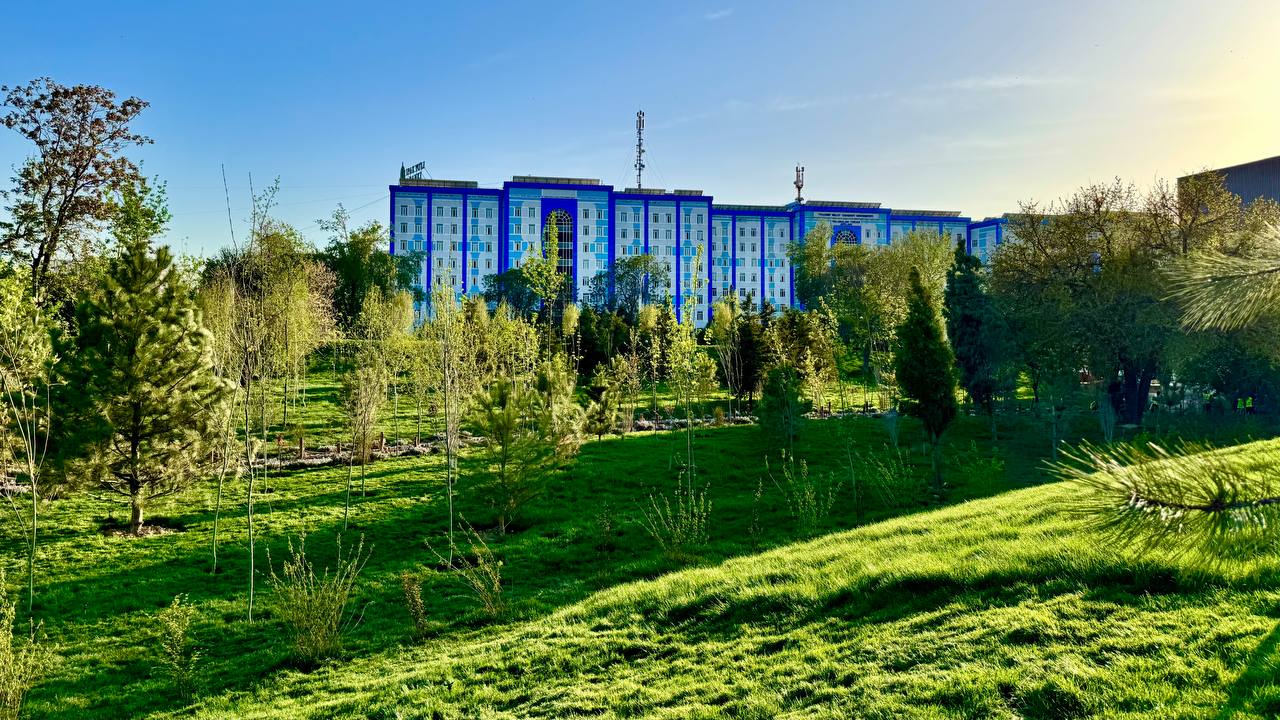
Tashkent's Yunusabad district lacked a dedicated public ecological park amid Uzbekistan's rapid urban growth and the national 'Yashil Makon' tree-planting drive — a separate billion-tree national programme that has itself faced scrutiny over falsified planting reports.
In 2024–2025 the Tashkent city administration built the capital's first public eco-park, known locally as Oxygen Park, on 7.5 hectares of previously abandoned land, planting more than 1,200 trees and 23,000 shrubs selected for local climate adaptation, alongside a constructed lake, bird-nesting structures, a rose garden and public walkways, drawing design inspiration from European and Japanese parks.
As of the most recent public reporting (April 2025), construction was still under way, and no post-completion ecological monitoring, visitor, or maintenance-funding data have been published. Its documented value lies in native-species planting and habitat design rather than measured outcomes, and it should be read as an early-stage pilot rather than a proven practice.
National / regional programmes
Indicative funding routes for practices of this type — always check each programme's current calls and eligibility rules.
Do you run this practice? Claim it — verified implementers get a public contact pathway and can propose corrections.
Where this practice's information was retrieved from, and when.
United Kingdom
Sheffield turned a redundant dual carriageway into the UK's largest retrofit SuDS scheme (2014-2022): swales cut peak flow up to …
Canada
Montréal's borough-run, resident-led green-alley programme (since 1995) supports more biodiversity than grey alleys, but a 53-alley study finds only modest, …
Canada
Residents convert paved back alleys into vegetated shared spaces: 341 were officially recognised by May 2020 and about 500 by …
Sweden
Malmö required Bo01 developers to meet a green space factor of 0.5 and pick ten of 35 'green points' (trees, …
Open full copilot Grounded in cited practices — always check the sources.