National AI Campaign — Mongolia's Nationwide AI Teacher-Training Drive Across All 21 Provinces
Mongolia
AI Academy Asia's five-year National AI Campaign, backed by UNICEF Mongolia, M Bank and Golomt Bank, has trained 1,000 teachers …
Honduras · San Pedro Sula · See the Honduras profile
Evidence: Descriptive / self-reported Top 24% 60/100 · Ask Evidence Copilot about this practice
UNICEF's Tinkering with Tech and AI pilot brings Micro:bit-based STEM and AI learning to 100+ school centres in northern Honduras, with dedicated support for girls. Piloted in 2024 with Maldives, Montenegro and Vietnam, it is expanding with Arm and Raspberry Pi Foundation.
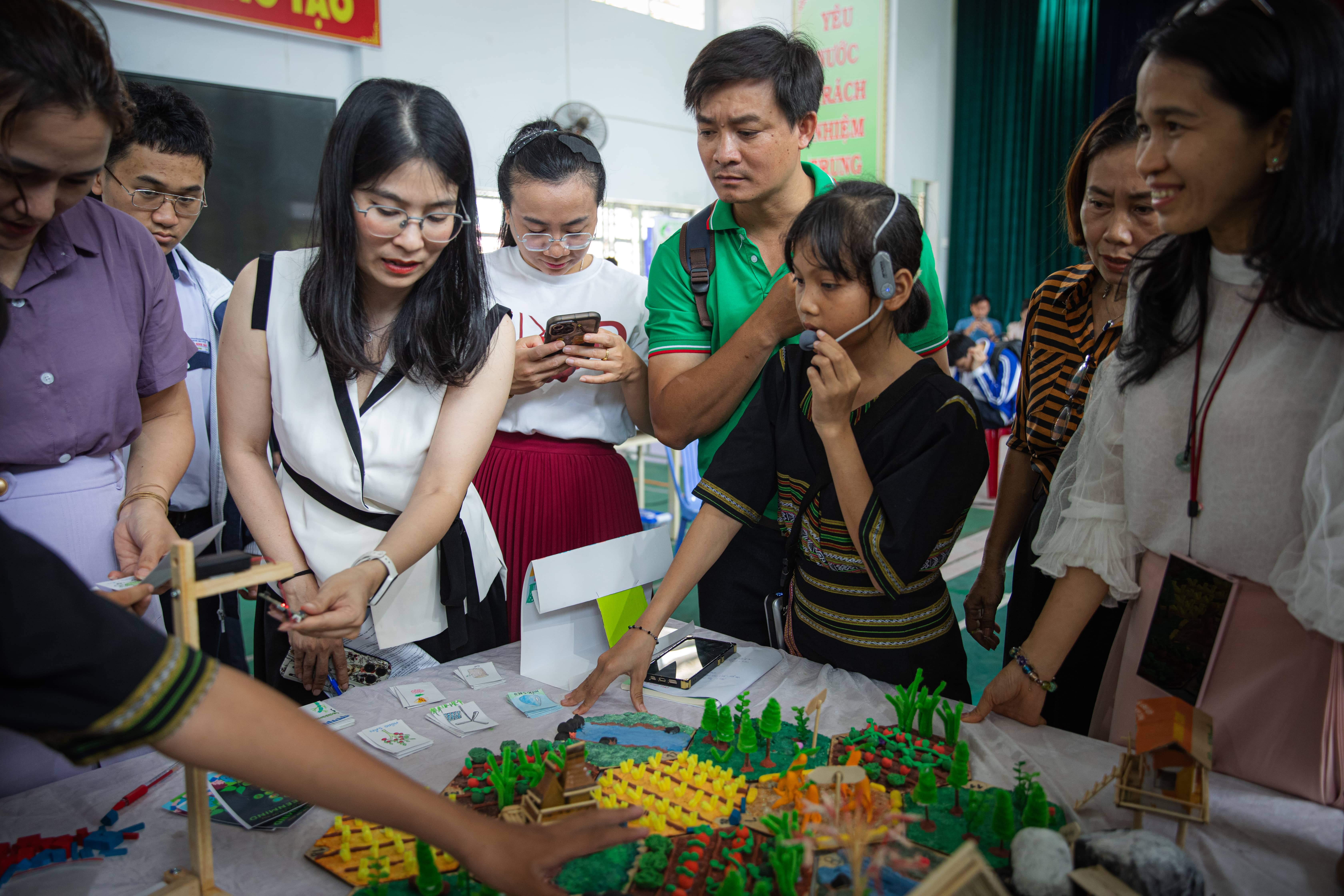
UNICEF's Global Learning and Innovation Hub, based in Helsinki, runs 'Tinkering with Tech and AI' as a hands-on STEM and AI-literacy pilot built around programmable Micro:bit boards, and in Honduras delivery partner the Micro:bit Educational Foundation has worked since 2023 with more than 100 educational centres across four departments in the country's north, including areas around San Pedro Sula, Villanueva and Puerto Cortes.
The programme explicitly targets equity, with UNICEF materials describing girls as 'very often overlooked' in STEM and giving them dedicated support to advance alongside boys; students use design-thinking methods to build projects such as flood-warning systems and agriculture tools, while teachers and school leaders are trained directly on Micro:bit lesson plans.
Honduras was one of four 2024 pilot countries alongside Maldives, Montenegro and Vietnam, and by 2026 the initiative was expanding with new partners Arm and the Raspberry Pi Foundation and a stronger AI focus, with planned expansion to Lao PDR and Uzbekistan.
Published evidence to date is descriptive, consisting of teacher and student confidence gains reported in partner statements rather than an independent quantitative evaluation, and no disaggregated results for girls have been released.
Do you run this practice? Claim it — verified implementers get a public contact pathway and can propose corrections.
Where this practice's information was retrieved from, and when.
Mongolia
AI Academy Asia's five-year National AI Campaign, backed by UNICEF Mongolia, M Bank and Golomt Bank, has trained 1,000 teachers …
United Kingdom
The UK Department for Education committed £8.2 million to the Advanced Maths Support Programme to raise girls' participation in advanced …
Palestine, State of
UNESCO, Palestine Polytechnic University and the Ministry of Education delivered 65 hours of robotics, AI and programming training to 120 …
Taiwan
A quasi-experimental study (n=109, grade 5) in Tainan found girls entered an AI course scoring lower on AI literacy than …
Open full copilot Grounded in cited practices — always check the sources.