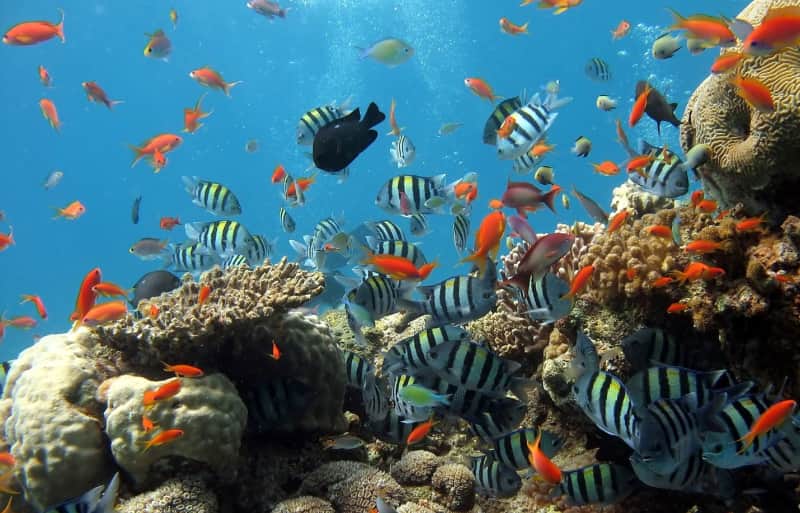
TNC's parametric wind-speed insurance for Hawai'i's coral reefs, running since 2022 with Munich Re and WTW, triggered its first-ever payout - a minimum $200,000 - within days of Hurricane Lala in 2026, funding statewide coral rescue and reattachment.
200,000 USD (minimum)
First Hawai'i payout triggered (Hurricane Lala) (2026)
850,000 USD (approx.)
Prior Mexico payout (Hurricane Delta) (2020)
432,000 USD (approx., over 4 years)
Total Hawai'i premiums paid (2022-2026)
Details
Maturity
Established
Promoter
The Nature Conservancy Hawai'i, with Munich Re, WTW and the Hawai'i Emergency Reef Restoration Network
Coral reefs absorb wave energy and protect coastlines, but conventional insurance has never covered natural assets against storm damage. The Nature Conservancy (TNC) pioneered parametric coral reef cover in Quintana Roo, Mexico in 2019; that policy paid out nearly $850,000 after Hurricane Delta in 2020, the first time insurance funds were ever released to help a natural asset recover. TNC purchased the first U.S. coral reef insurance policy for Hawai'i in 2022.
Activities
The policy was expanded and upgraded in 2024 to give equal coverage across the reefs of all eight Main Hawaiian Islands and to raise the minimum payout to $200,000; annual coverage runs from a $200,000 floor to a $2 million maximum, capped at $1 million per storm. WTW brokered the policy; Munich Re was selected as reinsurer in 2024 from seven competitive bids. The policy is parametric: it pays automatically once sustained tropical-storm-force winds of roughly 50 knots pass close enough to the reef, without the loss assessment conventional insurance requires.
Results
In mid-August 2026, Hurricane Lala triggered the policy for the first time in its four-year history. The $200,000 minimum payout was released within days to the Hawai'i Emergency Reef Restoration (HERR) Network to survey storm-hit reefs statewide and rescue, reattach and restore damaged coral colonies.
Conclusions
The policy covers wind damage only, not coral bleaching, vessel groundings or marine heatwave mortality, and independently verified survival rates for the coral restored after Hurricane Lala have not yet been published.
Implementation
Indicative cost
Medium (€50k–€500k) — Premiums have totalled roughly $432,000 over four years (~$108,000/year); annual coverage runs from a $200,000 floor to a $2 million maximum, capped at $1 million per storm.
Time to results
Medium (1–3 years) — First U.S. policy purchased 2022; expanded/upgraded 2024 to cover all eight islands and raise the payout floor; first real trigger and payout occurred in 2026 (Hurricane Lala).
Staffing & skills
The Nature Conservancy (TNC) Hawai'i (policyholder/programme lead), WTW (insurance broker), Munich Re (reinsurer, selected 2024 from seven competitive bids), Hawai'i Emergency Reef Restoration (HERR) Network — state agencies, scientists, nonprofits and community groups (payout recipient/response coordinator)
Conditions for success
Parametric (wind-speed threshold) trigger removing the need for a loss assessment before payout
Diversified philanthropic funding base for premiums (Rockefeller Foundation, Bank of America Charitable Foundation, Swiss Re Foundation, Howden Foundation, anonymous donors)
Competitive reinsurer selection (seven bids) to keep premiums sustainable
Pre-agreed responder network (HERR) ready to deploy funds immediately after trigger
Common failure modes
Coverage is wind-damage only — excludes coral bleaching, vessel groundings and marine heatwave mortality
Independently verified coral survival rates after the Hurricane Lala-funded restoration have not yet been published
Where it fits
Governance type
NGO-led parametric insurance mechanism with commercial reinsurance
Scale
statewide (all eight Main Hawaiian Islands)
Income level
high-income (USA)
Commonly funded by
Philanthropic / foundation funding
Indicative funding routes for practices of this type — always check each programme's current calls and eligibility rules.
Do you run this practice?
Claim it —
verified implementers get a public contact pathway and can propose corrections.
Data sources
Where this practice's information was retrieved from, and when.