Vida Manglar — Colombia's First Verified Blue Carbon Mangrove Project (Cispatá Bay)
Colombia
Conservation International and Colombian partners' Vida Manglar project protects and restores mangroves across Cispatá Bay, scaling from 7,500 to 11,000 …
Japan · Yokohama · See the Japan profile
Evidence: Observational / pre–post Top 14% 60/100 · Ask Evidence Copilot about this practice
Yokohama's municipally managed eelgrass beds became the first site in Japan's J Blue Credit market, turning coastal seagrass restoration into tradable carbon credits bought by firms including Sumitomo, Tokyo Gas and Mitsui O.S.K. Lines.
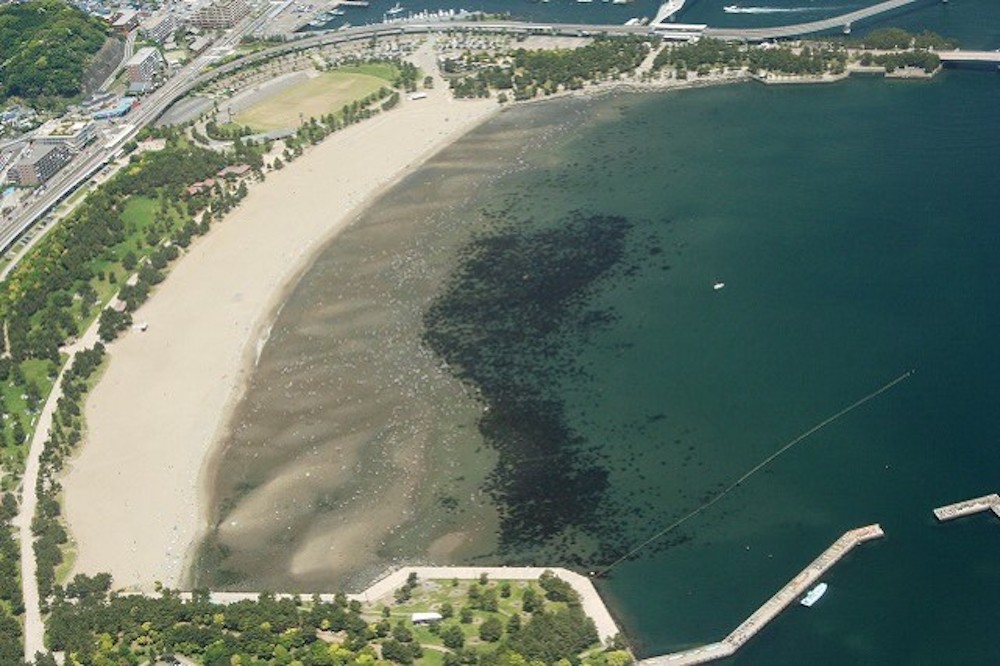
The Yokohama Blue Carbon Project, launched in 2011, was Japan's first initiative pursuing climate mitigation through marine ecosystem restoration, centred on eelgrass (Zostera) beds in the city's municipally managed Marine Park areas.
Certify and monetise carbon sequestered by restored coastal eelgrass beds, first at municipal level and then through Japan's national J Blue Credit registry, feeding into the broader GX-ETS carbon market.
In September 2019 Yokohama certified carbon credits for its municipal eelgrass beds and that December became the first user of domestically generated blue carbon credits. JBE created the national J Blue Credit registry in FY2020 and issued its first credits (2 February 2021) for Yokohama's Bayside Marina seagrass/macroalgal beds.
National J Blue Credit issuance rose from 22.8 t-CO2 across 1 project (FY2020) to 3,733.1 t-CO2 across 21 projects (FY2022), reaching 57 locations (45 cases) by December 2023. Yokohama's own eelgrass area was recorded at 7.8 hectares (sink capacity 12.3 t-CO2/year), later expanding beyond 10 hectares. Credits have traded at roughly JPY 73,000 (~USD 500)/tonne, about ten times conventional voluntary carbon prices, bought by Sumitomo, Tokyo Gas and Mitsui O.S.K. Lines, and were linked into Japan's national GX-ETS market from 2024.
Independent commentary cited in the source notes real limitations: seagrass carbon uptake is hard to measure consistently across seasons and sites, credit permanence is threatened by 'isoyake' (marine-heat-driven seaweed die-off), and verification costs weigh heavily on small fishing cooperatives.
Do you run this practice? Claim it — verified implementers get a public contact pathway and can propose corrections.
Where this practice's information was retrieved from, and when.
Colombia
Conservation International and Colombian partners' Vida Manglar project protects and restores mangroves across Cispatá Bay, scaling from 7,500 to 11,000 …
Mayotte
France's marine natural park around Mayotte (est. 2010) protects a 1,300 km2 double-barrier-reef lagoon - 480 km2 of coral, 700 …
Costa Rica
Costa Rica's first marine PES scheme pays Gulf of Nicoya mollusk-harvester associations for verified mangrove conservation, scaling from 157 harvesters …
Seychelles
TNC's 2016 debt-for-nature swap ($21.6 M) and a 2018 World Bank blue bond ($15 M) funded SeyCCAT, expanding Seychelles marine …
Open full copilot Grounded in cited practices — always check the sources.