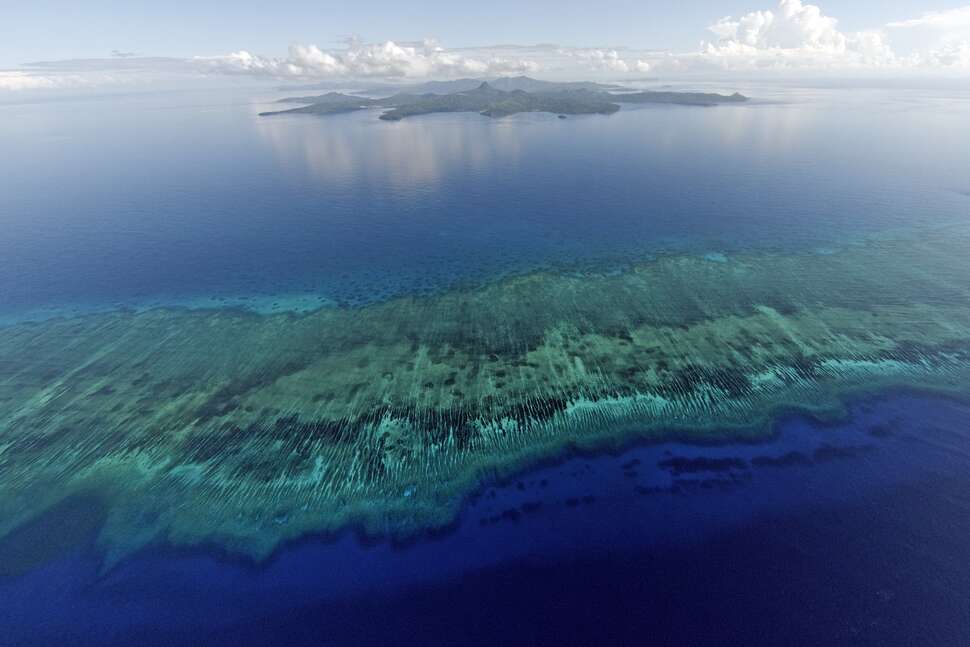
France's marine natural park around Mayotte (est. 2010) protects a 1,300 km2 double-barrier-reef lagoon - 480 km2 of coral, 700 ha of mangroves - via a 41-member council whose permit opinions are legally binding, though surveys find the lagoon's dugongs critically endangered.
~69,000 km2
Exclusive economic zone covered
1,300 km2
Lagoon area
~480 km2
Coral reef area
~250
Coral species
600+
Fish species
41
Governance council members
Details
Maturity
Established
Promoter
Office francais de la biodiversite (OFB) / Parc naturel marin de Mayotte
Created by decree on 18 January 2010 as France's fourth marine natural park, the Parc naturel marin de Mayotte extends across the whole of Mayotte's exclusive economic zone (about 69,000 km2), encompassing a 1,300 km2 lagoon enclosed by one of the world's few double barrier reefs -- a geological rarity shared with only a handful of other reef systems globally.
Activities
Governance runs through a 41-member 'conseil de gestion' -- administered by the French Office francais de la biodiversite (OFB) and popularly described as a 'parliament of the sea' -- representing five stakeholder categories: qualified experts, elected officials, environmental associations, recreational users and marine professionals, including artisanal fishers and pirogue builders. Under French law, the council's opinions on any permit likely to alter the marine environment are legally binding on public authorities, not merely advisory.
Results
Within the lagoon, the park documents roughly 480 km2 of coral reef supporting some 250 coral species and over 600 fish species, alongside about 700 hectares of mangrove and a comparable area of seagrass. The lagoon hosts a resident population of dugongs, a breeding population of humpback whales, and nesting green and hawksbill turtles.
Conclusions
The park's protection has not resolved every pressure on the lagoon: a dedicated academic interview- and survey-based assessment of Mayotte's dugongs found the local population to be small and in decline, underscoring that formal marine-park status has not by itself reversed the fate of the lagoon's most vulnerable large species.
Implementation
Indicative cost
Medium (€50k–€500k) — National marine-park administration via OFB; specific budget not itemised in sources.
Time to results
Long (> 3 years) — Created 2010; ongoing governance and monitoring.
Staffing & skills
Office francais de la biodiversite (OFB), 41-member conseil de gestion (experts, elected officials, environmental associations, recreational users, marine professionals)
Conditions for success
Legally binding council opinions on permits affecting the marine environment, not merely advisory
Representation of five distinct stakeholder categories including artisanal fishers
Common failure modes
A dedicated academic dugong assessment found the local population small and in decline despite the park's protection
Where it fits
Governance type
national marine park with a multi-stakeholder governance council
Scale
territorial (Mayotte EEZ)
Income level
high-income (French overseas territory)
Commonly funded by
National / regional programmes
Indicative funding routes for practices of this type — always check each programme's current calls and eligibility rules.
Do you run this practice?
Claim it —
verified implementers get a public contact pathway and can propose corrections.
Data sources
Where this practice's information was retrieved from, and when.
Since 2011, fishers and the GoldenEye Foundation have co-managed a no-take marine sanctuary at Oracabessa Bay, Jamaica. NEPA-monitored herbivorous fish …