For over 120 years Tokyo's Bureau of Waterworks has owned and managed ~25,000 hectares of 'water conservation forest' along the upper Tama River — about half the basin's upper forest area — funding upkeep partly via corporate naming-rights and sponsorship agreements.
Since the Meiji era (from 1901), the Tokyo Metropolitan Government's Bureau of Waterworks has managed forest land along the upper Tama River as "suizen-rin" (water-source forests) to protect the quality and quantity of the water supply serving the capital. The forest estate covers approximately 25,000 hectares — about half of the roughly 45,000 hectares of forest in the upper Tama basin — making it the largest forest holding of any water utility in Japan. Trees and soil act as a "green dam," absorbing rainwater and releasing it gradually while reducing soil runoff.
Objectives
Protect the quality and quantity of source water feeding Tokyo's water supply by maintaining forest cover and soil structure that regulate water retention and control erosion in the upper Tama river basin.
Activities
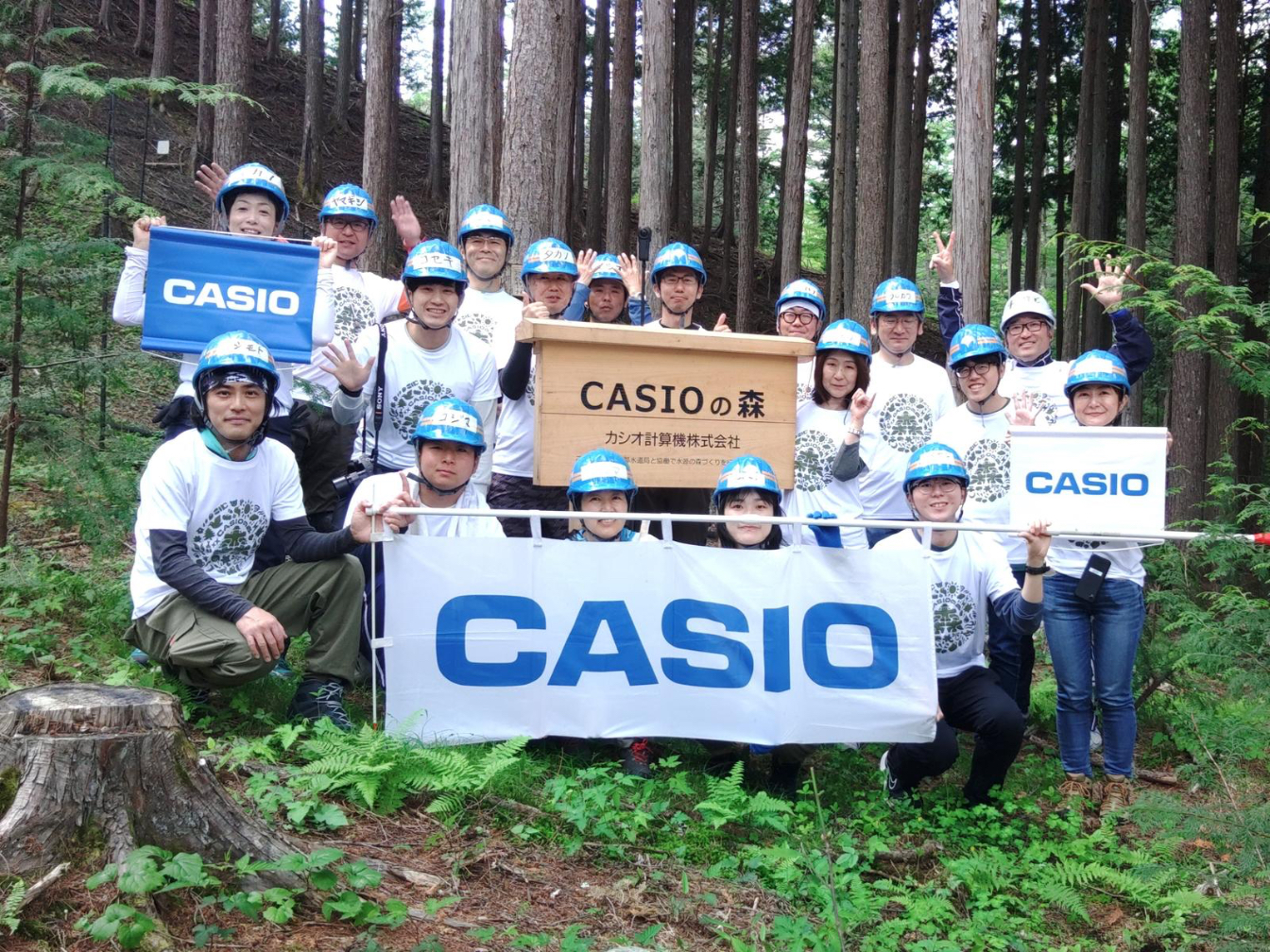
The Bureau of Waterworks acquires and maintains forest land (a land-acquisition programme targeting private forest parcels in the Ogouchi Reservoir watershed launched in 2010) and has introduced a corporate-sponsorship model, with naming-rights agreements and annual sponsorships from companies such as Casio Computer, which has sponsored 2.46 hectares since 2018.
Results
As of April 2023, 12 companies held forest naming-rights agreements and 14 companies were annual sponsors; Casio's volunteer participation grew from about 12 to over 20 employees per year. However, no independent, quantified evaluation of water-quality outcomes or avoided-cost figures (comparable to determinations made for Seattle or New York City) was found in available sources.
Conclusions
Corporate sponsorship covers only a small fraction of the 25,000-hectare estate; the bulk of management costs continue to be borne by the Bureau of Waterworks and, ultimately, Tokyo's water ratepayers, making this primarily a publicly funded, century-long source-water protection programme rather than a corporate-financed one.
Implementation
Indicative cost
High (€500k–€5M) — Costs not itemized in source; bulk of management costs "borne by the Bureau of Waterworks and, ultimately, Tokyo's water ratepayers," with corporate sponsorship covering only a small fraction of the estate.
Time to results
Long (> 3 years) — Continuous management since the Meiji era, formalized water-source forest programme since 1901; corporate sponsorship model and land-acquisition programme added in the 2010s.
Staffing & skills
Tokyo Metropolitan Government Bureau of Waterworks staff manage forest land, Corporate sponsor employees participate in volunteer planting/maintenance days (e.g. Casio Computer)
Conditions for success
Long-term, stable public ownership/management of large contiguous forest tracts
Supplementary corporate sponsorship and naming-rights revenue
Sustained multi-decade institutional commitment
Common failure modes
Reliance on ratepayer funding without independent verification of water-quality/quantity benefits
Corporate sponsorship provides only a "small fraction" of resources needed for the full estate
Where it fits
Governance type
municipal utility
Scale
metropolitan/regional (25,000 ha)
Income level
high-income
Commonly funded by
National / regional programmes
Indicative funding routes for practices of this type — always check each programme's current calls and eligibility rules.
Do you run this practice?
Claim it —
verified implementers get a public contact pathway and can propose corrections.
Data sources
Where this practice's information was retrieved from, and when.
Seattle's ~100,000-acre Cedar River Municipal Watershed programme won EPA's rare 'Limited Alternative to Filtration' status in 2004, saving over $100 …