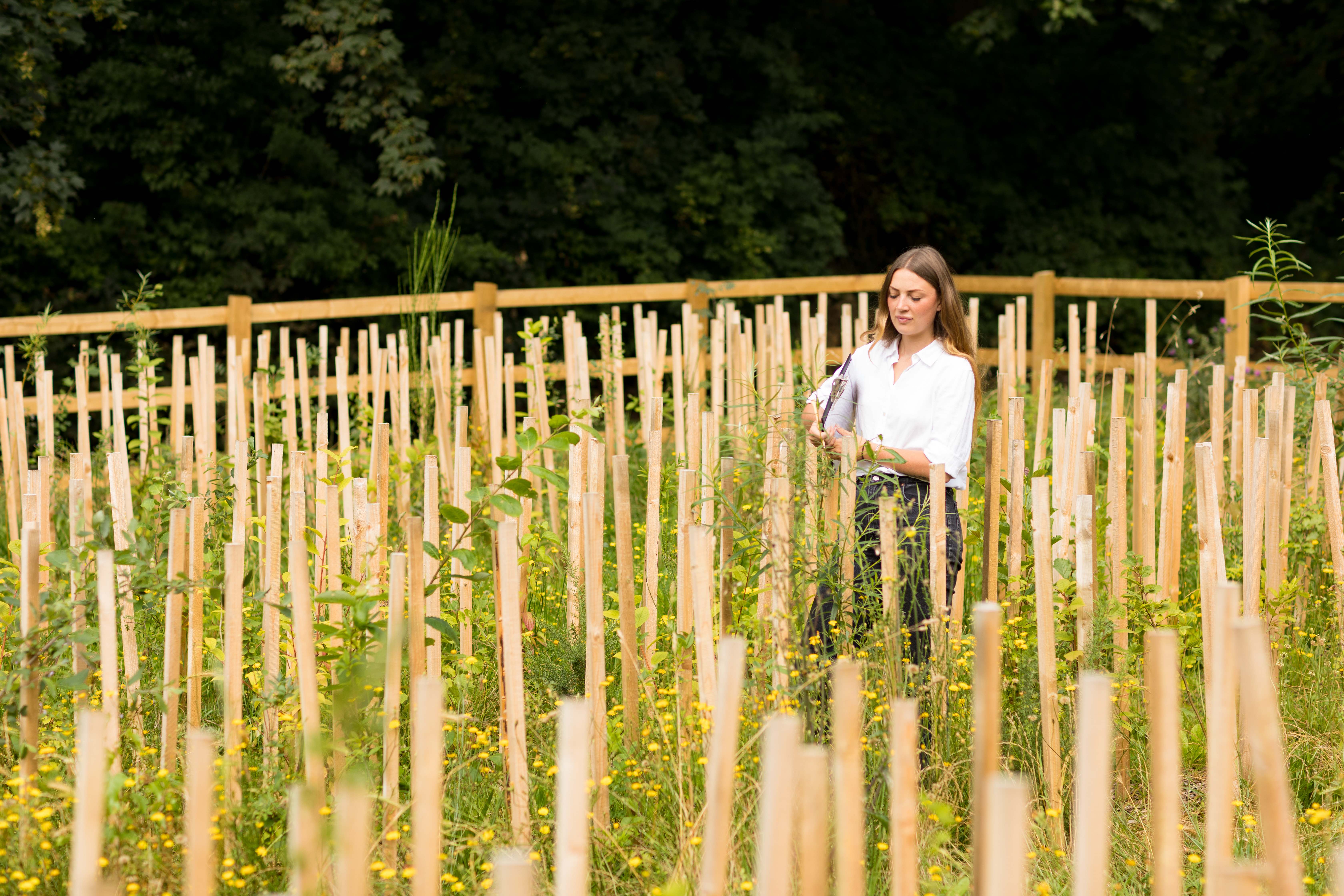
Between October 2020 and 2025 the UK Government-funded Trees Outside Woodlands programme (GBP 4.8m, Shared Outcomes Fund; delivered by The Tree Council, Natural England, Defra and five local authorities) tested the Miyawaki method of dense, mixed native planting in aerated, enriched soil on 16 urban sites across four English local authorities, including Kent. Sites were chosen because earlier conventional planting had failed or soils were poor.
Each Miyawaki plot was paired with a comparison plot using standard practice, the same species mix from the same nurseries and equal maintenance for the first three years. The July 2024 report 'Urban Tree Establishment' and a Natural England blog (Sept 2024) record average survival of 79% in Miyawaki plots versus 47% in comparison plots, measured through the summer 2022 drought, and a median cost of about GBP 10 per surviving tree versus about GBP 50 for standard planting, even though Miyawaki needs roughly three times as many trees up front. After about 3.5 years the plots form dense early-successional thickets, with the tallest trees around 4.5 m.
Limits: monitoring covers only ~3.5 years; plots are small and may self-thin to a few mature trees; wildlife benefits are described qualitatively, with no quantified biodiversity, carbon, cooling or water data; the plot-level methods are not independently peer reviewed. The programme is now testing which individual Miyawaki elements can be dropped to cut cost and soil disturbance.
Read the full analysis: https://naturalengland.blog.gov.uk/2024/09/19/testing-the-miyawaki-method-in-our-urban-greenspaces/
Where this practice's information was retrieved from, and when.