VLibras Suite — Brazil's Free, Open-Source Portuguese-to-Libras 3D Avatar Translator for Websites and Apps
Brazil
UFPB and the Brazilian government built a free, open-source suite that translates Portuguese text, audio and video into Libras with …
Thailand · Bangkok · See the Thailand profile · See the Bangkok profile
Top 82% 52/100 · Ask Evidence Copilot about this practice
Thailand's relay service lets deaf users reach hearing people via sign-language interpreters over video, voice and text. It grew from ~45,000 calls (2012) to 115,000+ (2015), but a budget delay suspended it from 13 June 2025.
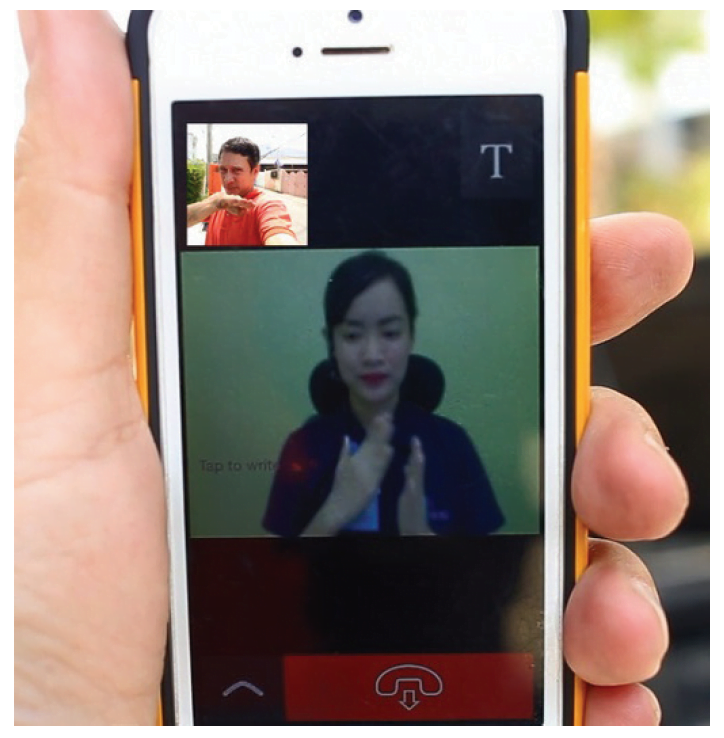
The Thailand Telecommunication Relay Service (TTRS) was set up in 2011 by the Universal Foundation for Persons with Disabilities and NSTDA's Assistive and Medical Devices Research Center (A-MED), with initial funding from the Office of the National Broadcasting and Telecommunications Commission (ONBTC). It uses a 'Total Conversation' platform combining simultaneous video, voice and text, so a deaf caller can sign to an interpreter who relays the call to a hearing person.
Reported scale: nWise, the technology provider, cites growth from around 45,000 calls in 2012 to over 115,000 in 2015 and more than 370,000 uses by end-2015. The Story Thailand reports roughly 40,000 subscribers but only a little over 10,000 regular users, about 40 TTRS interpreters (of roughly 500 in Thailand) each handling 60–70 requests a day, against about 400,000 Thais registered with a hearing impairment. Prachatai reported 1,200–1,600 calls a day and about 450,000 services a year.
Cautionary evidence: because the service depends on year-by-year regulator budget approval, it ceased operating on 13 June 2025 while the NBTC consolidated project funding. Prachatai reported the outage still unresolved after three months (17 September 2025), with deaf community leaders describing being unable to contact family and deaf delivery riders being cancelled by customers. No independent outcome evaluation was found; figures are operator- or press-reported. The practice shows both the value of relay services and the fragility of accessibility infrastructure without a stable funding line.
Read the full analysis: https://nwise.se/resources/250-percent-increase-thai-telecommunication-relay-service-use/
Implementation detail (cost, timeline, staffing, conditions for success) is not yet available for this practice.
Do you run this practice? Claim it — verified implementers get a public contact pathway and can propose corrections.
Where this practice's information was retrieved from, and when.
Brazil
UFPB and the Brazilian government built a free, open-source suite that translates Portuguese text, audio and video into Libras with …
Poland
Migam provides on-demand Polish Sign Language video interpreting in the browser, used by banks, offices and universities. Usage figures (200,000+ …
Brazil
Brazil's federal government embeds a free, open-source 3D avatar that machine-translates Portuguese text into Libras (Brazilian Sign Language) across public …
Malaysia
DITE connects Deaf Malaysians with off-site Malaysian Sign Language (BIM) interpreters by secure video for healthcare visits. A 2024 peer-reviewed …
Open full copilot Grounded in cited practices — always check the sources.