UCC's semiconductor/photonics research institute runs a technology-transfer pipeline that spun out InfiniLED (acquired by Facebook/Oculus, 2016) and Vivid Photonics (2025), with a 2026 government-backed plan to fund 10 more spin-outs and double its Cork footprint by 2030.
20+ EUR million
InfiniLED acquisition value (Oculus/Facebook) (2016)
Horizon 2020 combined project value (Horizon 2020 programme)
47 EUR million
Newly approved research proposals (recent annual figure)
8 EUR million
Direct industry income (recent annual figure)
100 EUR million
2026 government investment to double Cork operations (announced April 2026)
Details
Maturity
Established
Promoter
Tyndall National Institute (University College Cork), with Science Foundation Ireland, IDA Ireland, Enterprise Ireland and Government of Ireland funding
Period
2004-2026
Region (NUTS)
IE053
Keywords
ICT and photonics research, technology transfer, industry collaboration, spin-outs
Context
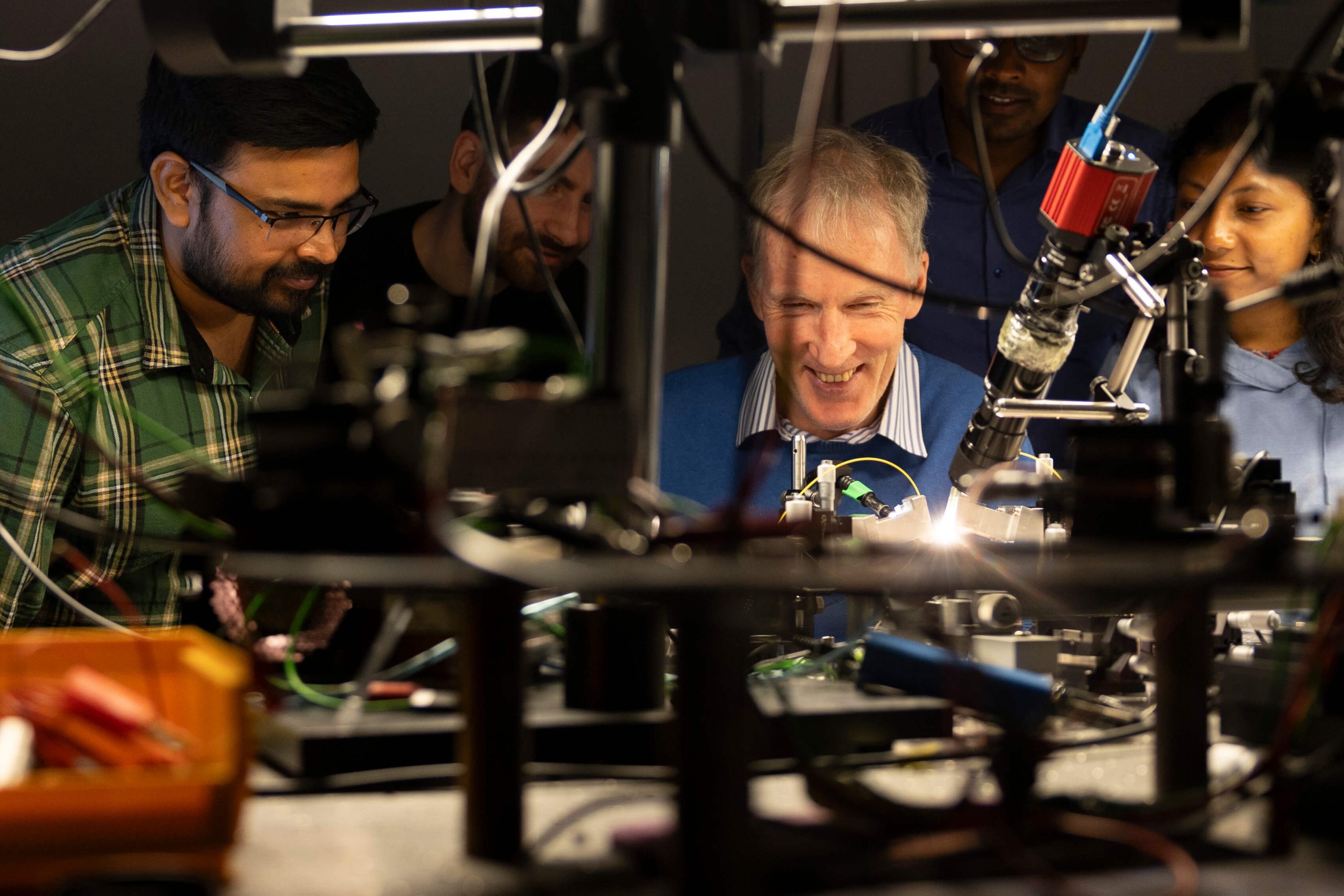
Tyndall National Institute is a semiconductor and photonics research institute based at University College Cork, established in 2004 from the National Microelectronics Research Centre (founded 1981/82), employing 600+ researchers and engineers plus 120-150 postgraduate students from 52 nations.
Activities
The institute operates an industry technology-transfer pipeline covering licensing and spin-out creation, working with 200+ industry partners and participating in EU-funded research, including 111+ Horizon 2020 projects worth approximately EUR 800 million and 41 more recent EU-funded projects worth EUR 467 million combined.
Results
Notable spin-outs include InfiniLED (a 2010 spin-out licensing micro-LED display technology, acquired by Oculus/Facebook for over EUR 20 million in 2016) and Vivid Photonics (2025, superluminescent diode light sources for AR/VR). Recent annual figures include EUR 47 million in newly approved research proposals and EUR 8 million in direct industry income. In April 2026 the Irish government announced EUR 100 million to double Cork operations over three years, targeting 750+ staff, EUR 80 million annual income and 10 additional spin-outs by 2030.
Implementation
Indicative cost
High (€500k–€5M) — Substantial public and EU co-funding; recent example is a EUR 100 million Irish government commitment (announced April 2026) to double Cork operations over three years.
Time to results
Long (> 3 years) — Institutional lineage traces to 1981/82 (as NMRC), formal Tyndall establishment in 2004, with a further multi-year expansion (2026-2030) targeting 750+ staff and 10 more spin-outs by 2030.
Staffing & skills
600+ researchers and engineers, 120-150 postgraduate students from 52 nations
Conditions for success
Deep integration with a large research university (UCC)
Sustained access to EU framework-programme funding
Broad industry-partner network (200+ partners)
Long institutional continuity since 1981/82
Where it fits
Governance type
university-affiliated national research institute
Scale
national/regional (Cork, Ireland) with EU-wide project participation