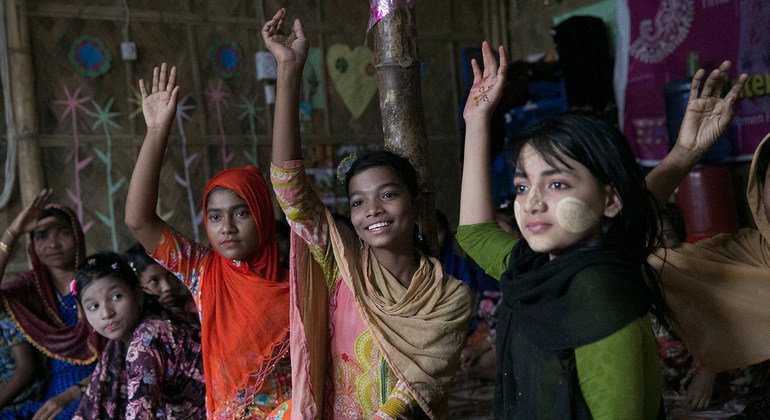
Since the 2017 Rohingya influx, UNFPA has run Women-Friendly Spaces in Cox's Bazar's camps, growing from 19 sites in 2018 to 55 by 2025, reaching 330,000+ women and girls with health, GBV case-management and psychosocial support, though monsoon flooding repeatedly disrupts them.
19
Women-Friendly Spaces (2018)
28
Women-Friendly Spaces (2021)
55
Women-Friendly Spaces (2025)
330,000+
Women and girls reached (by 2025)
8,000+
People with disabilities reached (by 2025)
12,000+
Sterile delivery kits distributed (over nine months)
4,870
Facility deliveries (2018)
6,064
Facility deliveries (2020)
~135,000
Women reached with contraceptive methods (2020)
~60%
Reduction in facility usage during monsoon
~10
Spaces damaged in a single rainy season
Details
Maturity
Scaling
Promoter
UNFPA Bangladesh (with UNHCR, UNICEF, Ministry of Women and Children Affairs)
Following the August 2017 military crackdown that forced over 700,000 Rohingya into Bangladesh, women and girls — over half of the refugee population, with 16% of households female-headed — faced acute risks of gender-based violence and lacked safe access to health services inside the overcrowded camps of Cox's Bazar.
Objectives
UNFPA, working with UNHCR, UNICEF, the Bangladesh Ministry of Women and Children Affairs and refugee/host-community groups, established Women-Friendly Spaces (WFS): dedicated centres staffed by midwives and caseworkers offering healthcare, counselling, gender-based-violence case management, awareness sessions and referrals.
Activities
The network grew from 19 spaces in 2018 to 28 by 2021 and 55 by 2025, serving both Rohingya refugees and Bangladeshi host communities across camps and Bhasan Char island.
Results
By 2025 the spaces reached more than 330,000 women and girls, including over 8,000 people with disabilities. Earlier tracking shows concrete health gains: over 12,000 sterile delivery kits distributed in nine months, facility deliveries rising from 4,870 (2018) to 6,064 (2020), and roughly 135,000 women reached with contraceptive methods in 2020 alone through a 40-partner Sexual and Reproductive Health working group.
Conclusions
The programme has real operational fragility: heavy monsoon rains cut facility usage by around 60% in some periods and damaged about 10 spaces in a single rainy season, and funding for the humanitarian response has come under recurring pressure — the reach figures depend on continuous donor support rather than a permanent local system.
Implementation
Implementation detail (cost, timeline, staffing, conditions for success) is not yet available for this practice.
Data sources
Where this practice's information was retrieved from, and when.
South Africa's Thuthuzela Care Centres (TCCs) co-locate police, medical, legal and psychosocial services for sexual-violence survivors. Since 2006, 66+ centres …