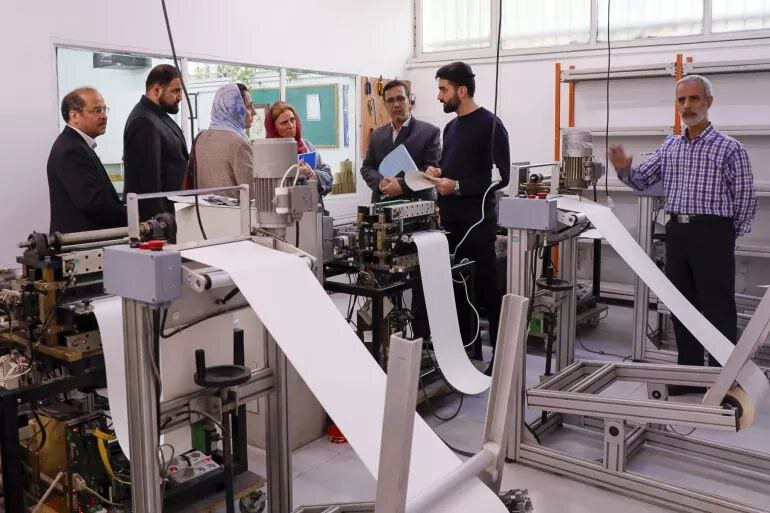
In February 2025 UNICEF procured a Braillo 600 SR2 embosser for Iran's Ministry of Education and SEO, replacing two 35-year-old Norwegian machines and restoring braille textbook production for 7,145 students with visual disabilities nationwide.
7,145
Children currently served (2025)
214,350
Projected lifetime beneficiaries (~30-year service life)
Details
Promoter
UNICEF Iran, with Iran's Ministry of Education and Special Education Organization (SEO)
For 35 years, Iran's braille-textbook production for visually impaired students depended on two ageing Norwegian-made embossers that international sanctions prevented the Ministry of Education from replacing. In February 2025, UNICEF Iran procured and delivered a Braillo 600 SR2 industrial embosser to the Ministry.
Results
The equipment serves the 7,145 children currently registered with visual disabilities in Iran's formal education system (5,239 mainstream, 1,906 special schools), and is projected to remain in service for roughly 30 years, over which UNICEF estimates it will benefit an estimated 214,350 students in total.
Implementation
Indicative cost
Low (< €50k)
Time to results
Short (< 1 year)
Staffing & skills
UNICEF Iran, Ministry of Education and Special Education Organization (SEO)
Conditions for success
Continued maintenance capacity for the embosser over its 30-year service life
Common failure modes
No independent outcome evaluation (e.g. reading-level gains, delivery timeliness) found
Do you run this practice?
Claim it —
verified implementers get a public contact pathway and can propose corrections.
Data sources
Where this practice's information was retrieved from, and when.
Government-backed Indian digital library giving people with print disabilities free access to accessible-format books. Launched 2016 with 200,000+ titles; by …
A free government app gives Bahamians with disabilities one-touch access to emergency alerts, sign-language interpretation, job listings and transport bookings. …
Plan Ceibal's CeRTI center distributes 'Valijas Viajeras' — portable assistive hardware/software kits ('digital ramps') — to Uruguayan schools for students …
Seoul-based Dot Incorporation built the first commercialised electromagnetic tactile display, letting blind and low-vision users feel braille text and graphics …