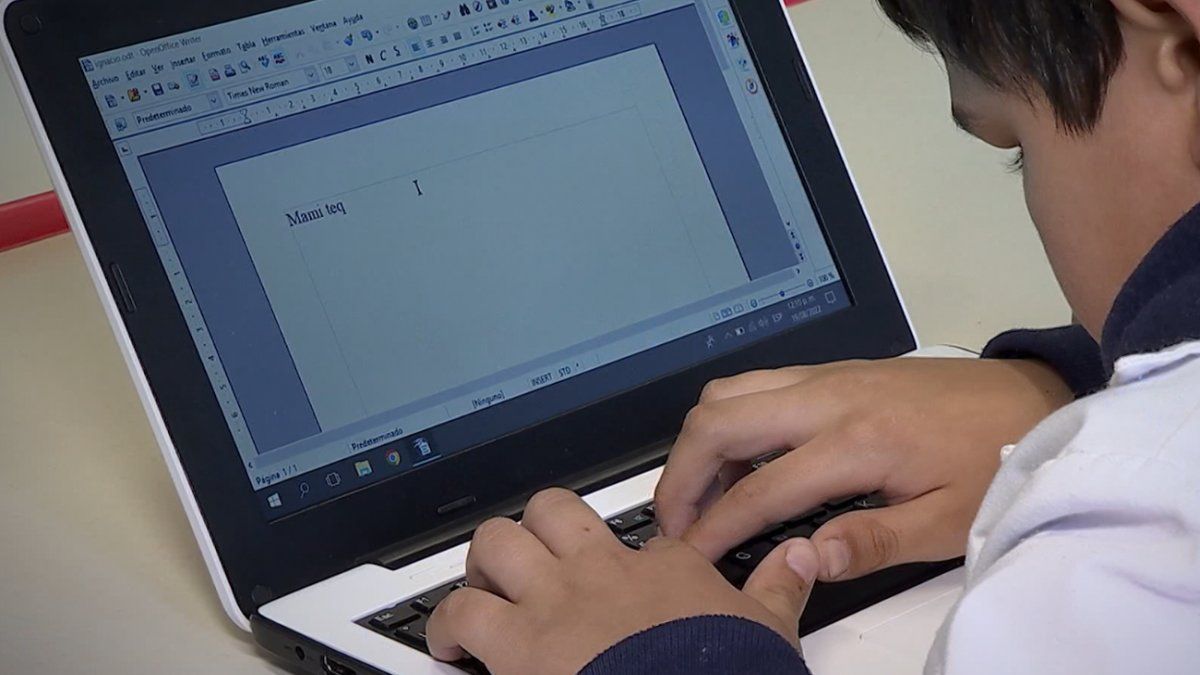
Plan Ceibal's CeRTI center distributes 'Valijas Viajeras' — portable assistive hardware/software kits ('digital ramps') — to Uruguayan schools for students with motor, visual or cognitive disabilities. Piloted in 4 departments (2019), nationwide since 2022.
200
Digital ramps distributed (2020)
Details
Maturity
Established
Promoter
Centro de Referencia en Tecnología para la Inclusión (CeRTI), Plan Ceibal, with ANEP and UNICEF Uruguay
Period
2019 pilot (4 departments) – nationwide since August 2022
Keywords
education, disability inclusion, assistive technology, public sector
Context
Plan Ceibal's inclusion unit CeRTI packages assistive hardware and software ('digital ramps') into portable Valijas Viajeras kits for students with motor, visual or cognitive disabilities. It piloted in four departments in 2019 and, working with ANEP and UNICEF, reached all of Uruguay's departments by August 2022.
Results
Roughly 200 digital ramps were distributed in 2020 alone; a documented cohort of 34 students over 18 at the Centro de Transicion a la Vida Adulta received adapted equipment. CeRTI also trains teachers via courses, webinars and the CREA platform.
Implementation
Indicative cost
Medium (€50k–€500k)
Time to results
Medium (1–3 years)
Staffing & skills
CeRTI (Centro de Referencia en Tecnologia para la Inclusion), ANEP, UNICEF, school-level ANEP representatives
Conditions for success
Case-by-case equipment assignment with local ANEP staff
Teacher training via CREA platform
Common failure modes
No independent, controlled evaluation of learning outcomes published
Commonly funded by
National / regional programmes
Indicative funding routes for practices of this type — always check each programme's current calls and eligibility rules.
Do you run this practice?
Claim it —
verified implementers get a public contact pathway and can propose corrections.
Data sources
Where this practice's information was retrieved from, and when.
A three-year, Australian-funded programme trains Vanuatu teachers and health workers to identify and refer children needing eyeglasses, hearing aids or …