Tahiry Honko — Community Mangrove Blue Carbon Project, Velondriake LMMA (Madagascar)
Madagascar
Blue Ventures and Velondriake communities protect 1,200+ hectares of mangroves in southwest Madagascar under Plan Vivo + CCB Gold—the world's …
Kenya · Vanga · See the Kenya profile
Evidence: Observational / pre–post Top 40% 47/100 · Ask Evidence Copilot about this practice
Since 2020, the Vanga Blue Forest community organisation has protected 460 ha of mangroves at Vanga Bay on the Kenya–Tanzania border under Plan Vivo certification, generating an estimated 5,347 tCO2/year and channelling 60% of carbon-credit revenue to about 974 households.
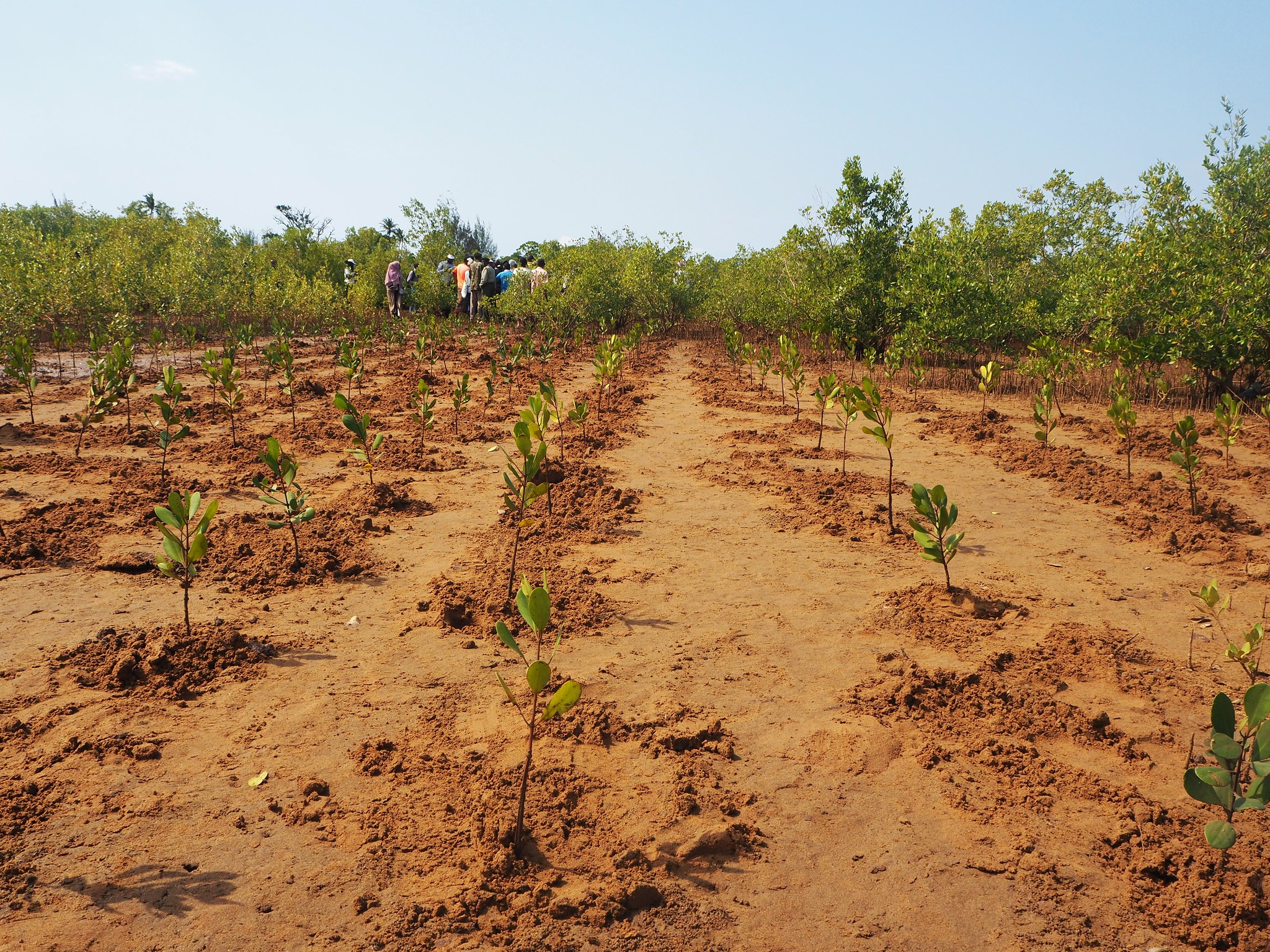
Vanga Blue Forest is a community-based mangrove conservation and carbon project in Vanga Bay, Kwale County, Kenya, covering the villages of Vanga, Jimbo and Kiwegu near the Kenya-Tanzania border. Inspired by the Mikoko Pamoja project in Gazi Bay, it began operations in 2020 and is co-managed by the Kenya Forest Service and a local Community Forest Association.
The project seeks to protect mangrove forest from clearance and degradation, generate community-owned carbon-credit revenue, and diversify local livelihoods through planned beekeeping, ecotourism and crab-farming activities.
Core activities are mangrove protection and Plan Vivo-certified carbon-credit sales, which began in 2021, with revenue directed toward school materials, building construction, hospital equipment, water infrastructure and COVID-19 relief.
The project protects 460 hectares of mangrove forest, generating an estimated 5,347 tCO2e per year in avoided emissions and sequestration under Plan Vivo verification. It has registered 974 beneficiary households, representing an estimated 9,000-13,500 people across the three villages, and returns 60% of carbon-credit revenue directly to the community.
Evidoria's own review notes that realized carbon removals have not been independently audited by a third party and that reported biodiversity benefits remain unquantified, even though the project's governance and revenue-sharing arrangements are well documented.
Philanthropic / foundation funding
Indicative funding routes for practices of this type — always check each programme's current calls and eligibility rules.
Do you run this practice? Claim it — verified implementers get a public contact pathway and can propose corrections.
Where this practice's information was retrieved from, and when.
Madagascar
Blue Ventures and Velondriake communities protect 1,200+ hectares of mangroves in southwest Madagascar under Plan Vivo + CCB Gold—the world's …
Colombia
Conservation International and Colombian partners' Vida Manglar project protects and restores mangroves across Cispatá Bay, scaling from 7,500 to 11,000 …
China
Shenzhen verified 38,745 t of mangrove-protection carbon sink at Futian Nature Reserve (2010-2020) and auctioned 3,875 t in China's first …
Kenya
Since 2013, Mikoko Pamoja has conserved 117 ha of mangrove in Gazi Bay, Kenya, the world's first community mangrove-carbon project. …
Open full copilot Grounded in cited practices — always check the sources.