Hong Kong's Gazetted Water Gathering Grounds — Avoided-Cost Protection of Local Catchment
Hong Kong
About one-third of Hong Kong's land — roughly 30,000 ha — is gazetted as protected Water Gathering Grounds feeding 17 …
New Zealand · Auckland · See the New Zealand profile · See the Auckland profile
Evidence: Descriptive / self-reported Top 76% 33/100 · Ask Evidence Copilot about this practice
Auckland's water utility Watercare is regenerating 2,000+ hectares of native forest in the Hūnua and Waitākere Ranges — source of ~84% of the city's water — spending at least NZ$15 million on planting over 30 years to protect water quality and defer costly treatment upgrades.
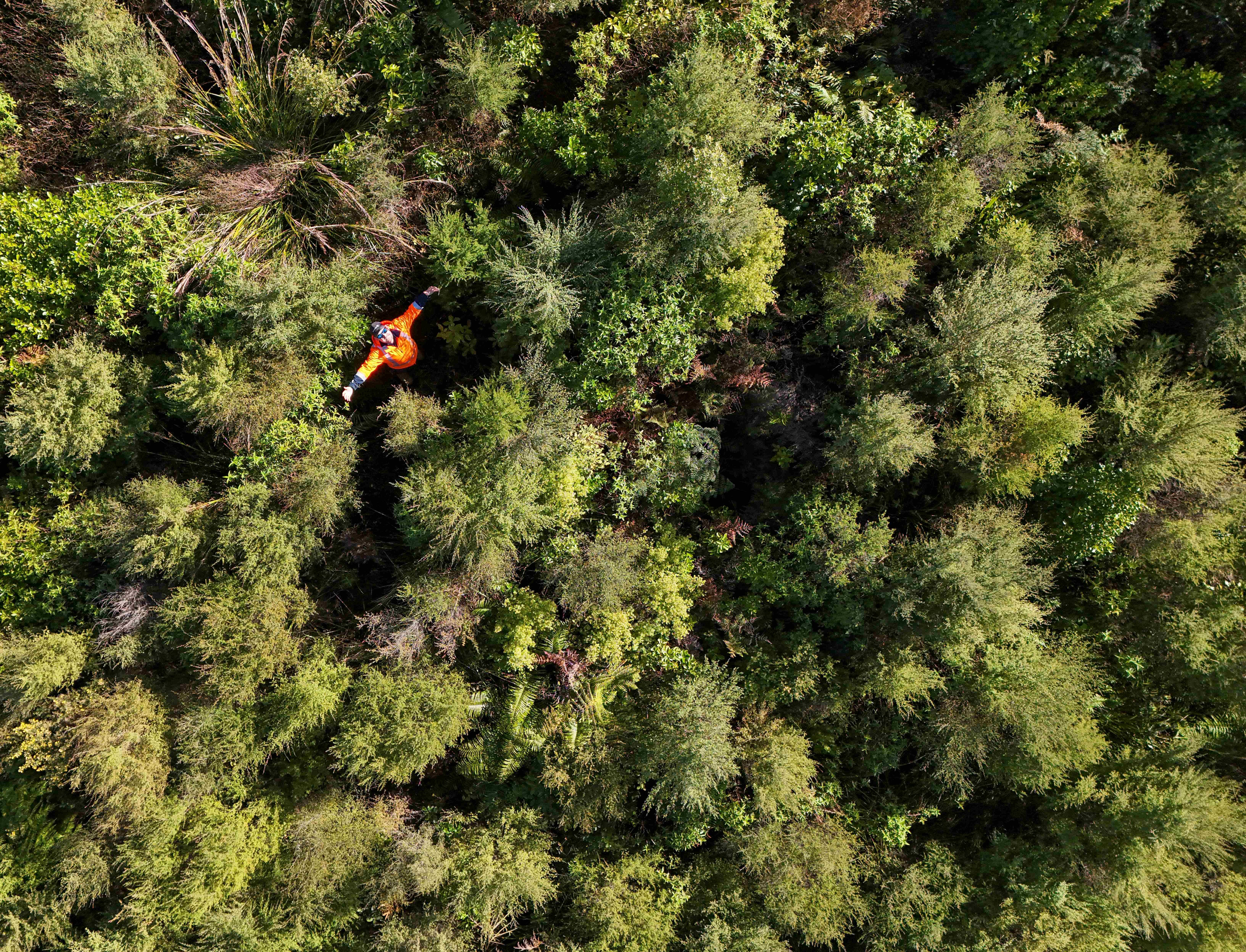
About 84% of Auckland's drinking water is collected from dams in the Hūnua and Waitākere Ranges, where largely native-forest catchments require comparatively little treatment before the water reaches the tap. Watercare, the council-owned water utility, treats this low-treatment-cost profile as a resource worth protecting: in 2017 it purchased forestry harvesting rights across former pine plantation land in the Hūnua Ranges, giving it direct control over land-use activities inside its own water catchments for the first time.
The programme aims to protect catchment water quality and defer costly treatment upgrades by regenerating former forestry land with native forest, after the 2017 'Tasman Tempest' storm caused hundreds of landslips on forestry land that sent clay and silt into supply dams and made the water markedly harder and more expensive to treat.
The resulting 30-year programme is regenerating more than 2,000 hectares of former forestry land with native trees and plants, with Watercare planning to spend at least NZ$15 million on planting alone; in one record planting season it put half a million native trees into the ground.
Separately, Watercare's more recent push to build a new NZ$400 million treatment plant inside the Waitākere Ranges to replace the ageing Huia plant has drawn public and iwi opposition over native tree loss — a reminder that watershed protection and new infrastructure needs can pull in different directions even within the same utility.
National / regional programmes
Indicative funding routes for practices of this type — always check each programme's current calls and eligibility rules.
Do you run this practice? Claim it — verified implementers get a public contact pathway and can propose corrections.
Where this practice's information was retrieved from, and when.
Hong Kong
About one-third of Hong Kong's land — roughly 30,000 ha — is gazetted as protected Water Gathering Grounds feeding 17 …
Ecuador
Cuenca's municipal utility ETAPA has co-managed the ~29,000-hectare Parque Nacional Cajas — source of the rivers that supply the city's …
Austria
Since 1873, Vienna has piped untreated drinking water from two protected Alpine catchments (675 km²), avoiding filtration-plant costs; its forestry …
France
Eau de Paris, with 80% Seine-Normandie water-agency funding, contracts farmers on its catchments to cut pesticides; reported 2023 pesticide use …
Open full copilot Grounded in cited practices — always check the sources.