Vietnam Women's Union Savings & Credit Groups — Mass-Organisation Microfinance for Rural Women
Vietnam
Since 1992, the Vietnam Women's Union has organised village-level Savings and Credit Groups channelling collateral-free loans to rural women via …
Peru · Puerto Maldonado · See the Peru profile
In Peru's Madre de Dios region, women now hold 30% of formalized mining concessions — the country's highest share — with women-led associations like AMATAF adopting mercury-free gold processing and reforesting over 10 hectares with native trees since 2014.
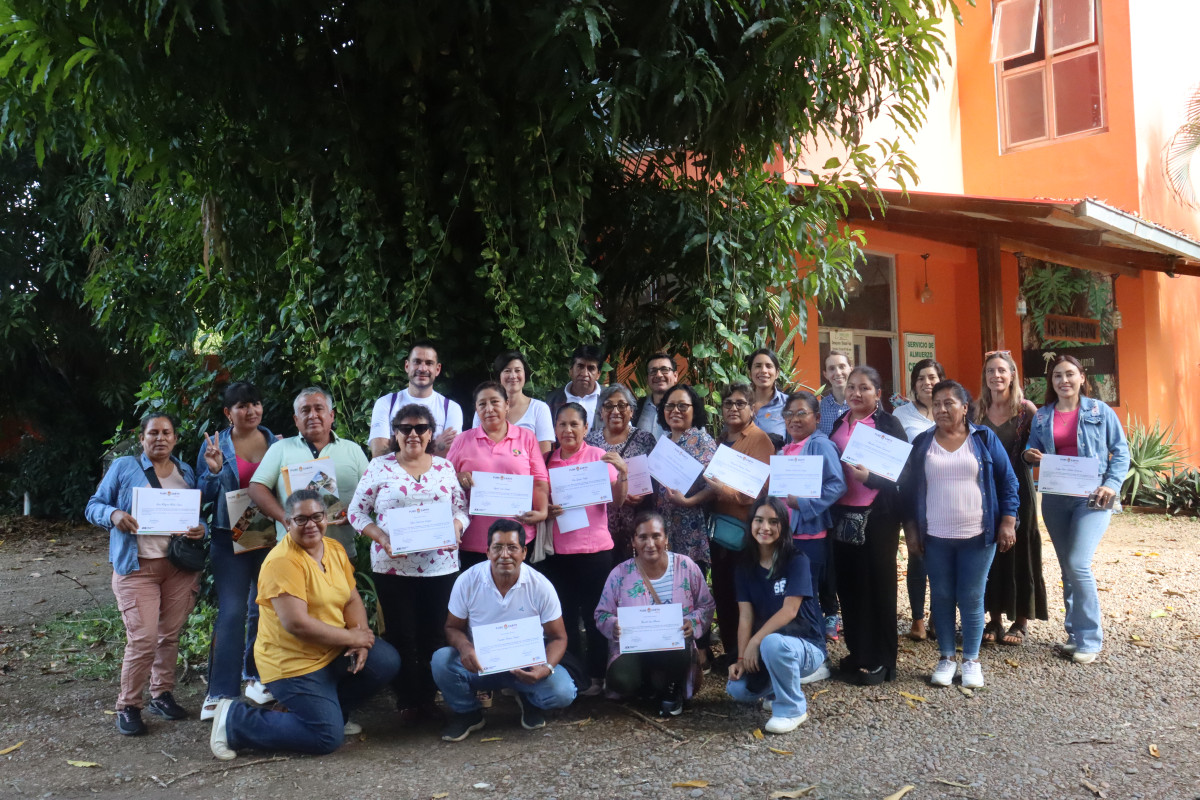
Madre de Dios, in the Peruvian Amazon, is one of Peru's largest artisanal and small-scale gold mining regions; mercury used to separate gold causes severe environmental and health harm, and mining activity rose 900% between 2021 and 2024.
Support women-led mining associations in adopting mercury-free gold processing and expanding reforestation of mined-out land, and strengthen women's formalized role in the mining sector.
Women miners organised through associations including AMATAF (active since 2014) and the Women's Artisanal and Small-Scale Mining Network of Madre de Dios (established 2020); a 2025-2027 project led by Pure Earth Peru, funded by Brilliant Earth, supports adoption of mercury-free processing methods such as shaking tables and expansion of reforestation.
Women now hold 30% of formalized mining concessions in Madre de Dios, the highest share in Peru. Since 2014, AMATAF's women-led operations have reforested more than 10 hectares with over 10,000 native trees, with a further 3 hectares targeted under the current project.
These are real, documented gains but remain modest against the scale of the problem: over 67,000 hectares were deforested in Madre de Dios in the past decade alone, and only a minority of mining operations in the region are formalized.
Implementation detail (cost, timeline, staffing, conditions for success) is not yet available for this practice.
Where this practice's information was retrieved from, and when.
Vietnam
Since 1992, the Vietnam Women's Union has organised village-level Savings and Credit Groups channelling collateral-free loans to rural women via …
India
Since 2008, Barefoot College in Tilonia, India has trained over 1,700 rural, often illiterate, women from 96 countries as solar …
India
SEWA, founded in Ahmedabad in 1972, is the world's largest trade union of informal-sector women. With 3.7 million members across …
Kenya
Since 2010, Nairobi's AkiraChix has trained under-resourced East African women in software development via its residential codeHive programme; reported graduation …
Open full copilot Grounded in cited practices — always check the sources.