Helmi Habitats Programme (Finland)
Finland
Voluntary, state-funded Finnish programme (2020–2030) protecting and restoring mires, wetlands, traditional biotopes and shores; 27,770 ha of mires protected and …
South Africa · Pretoria · See the South Africa profile · See the Pretoria profile
Evidence: Observational / pre–post Top 40% 47/100 · Ask Evidence Copilot about this practice
South Africa's national public works programme paying community workers to rehabilitate degraded wetlands through invasive alien plant removal, bio-engineering and re-vegetation; 1,300+ wetlands treated since 2002, 22,500 ha and 12,513 jobs created in five years.
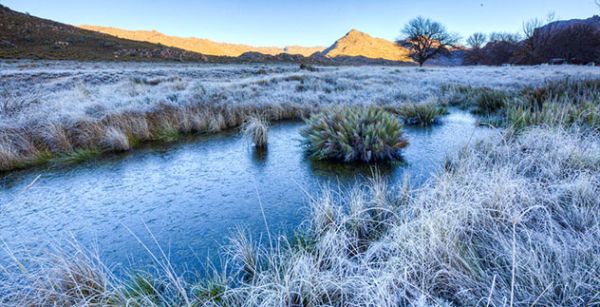
Working for Wetlands (WoW) is South Africa's national wetland rehabilitation programme, established in 2002 under the Expanded Public Works Programme (EPWP). It is a joint initiative of the Department of Forestry, Fisheries and the Environment (DFFE), the Department of Water and Sanitation, and the Department of Agriculture, Land Reform and Rural Development.
The programme rehabilitates degraded wetlands while creating jobs for community workers, prioritising women, youth and people with disabilities, and improving the hydrological health of wetland catchments.
Community workers carry out invasive alien plant removal, bio-engineering, re-vegetation and erosion control. Commercial timber plantations have been removed from wetland buffer zones since 1998 to improve catchment hydrology.
Since inception, more than 1,300 wetlands across all provinces have been rehabilitated. Over the most recent five-year period, 634 wetlands covering approximately 22,500 hectares were restored and 12,513 full-time and part-time jobs were created. More than 12,000 hectares of commercial timber plantations have been removed from wetland buffer zones since 1998, and over R725 million has been invested since formal inception in 2004.
Working for Wetlands is distinct from the related Working for Water programme (which targets upland catchments for water yield rather than wetland rehabilitation). It reports annually to the Department of Public Works under EPWP norms; no programme-wide biodiversity or carbon metric has been independently published.
National / regional programmes
Indicative funding routes for practices of this type — always check each programme's current calls and eligibility rules.
Do you run this practice? Claim it — verified implementers get a public contact pathway and can propose corrections.
Where this practice's information was retrieved from, and when.
Finland
Voluntary, state-funded Finnish programme (2020–2030) protecting and restoring mires, wetlands, traditional biotopes and shores; 27,770 ha of mires protected and …
United Kingdom
Scottish Government grant programme funding voluntary peatland restoration by landowners; 90,000 ha on path to recovery and 14,860 ha restored …
New Zealand
National programme paying contractors to eliminate invasive wilding conifers from ~180,000 ha/year; wilding conifers remove up to 40% of catchment …
United States of America
Ten island watershed partnerships co-manage 2.6M acres of Hawaiian native forest through fencing and invasive/ungulate removal. ~US$2.5M annual state funding; …
Open full copilot Grounded in cited practices — always check the sources.