Reserva del Ecosistema de Redonda — Erradicación de Ratas y Cabras (Antigua y Barbuda)
Antigua y Barbuda
La erradicación de cabras y ratas (2016-2018) en el árido islote de Redonda desencadenó, según un estudio revisado por pares, …
Cabo Verde · Santa Luzia · Ver el perfil de Cabo Verde
Evidencia: Observacional / pre-post Top 89% 27/100 · Pregunte a Evidence Copilot sobre esta práctica
SPEA, Biosfera 1 y la agencia ambiental de Cabo Verde trasladaron 37 alondras de Raso, en peligro crítico, a Santa Luzia con control de depredadores en 2018 (más 33 después); se confirmó la reproducción, aunque la Covid-19 interrumpió la erradicación de gatos.
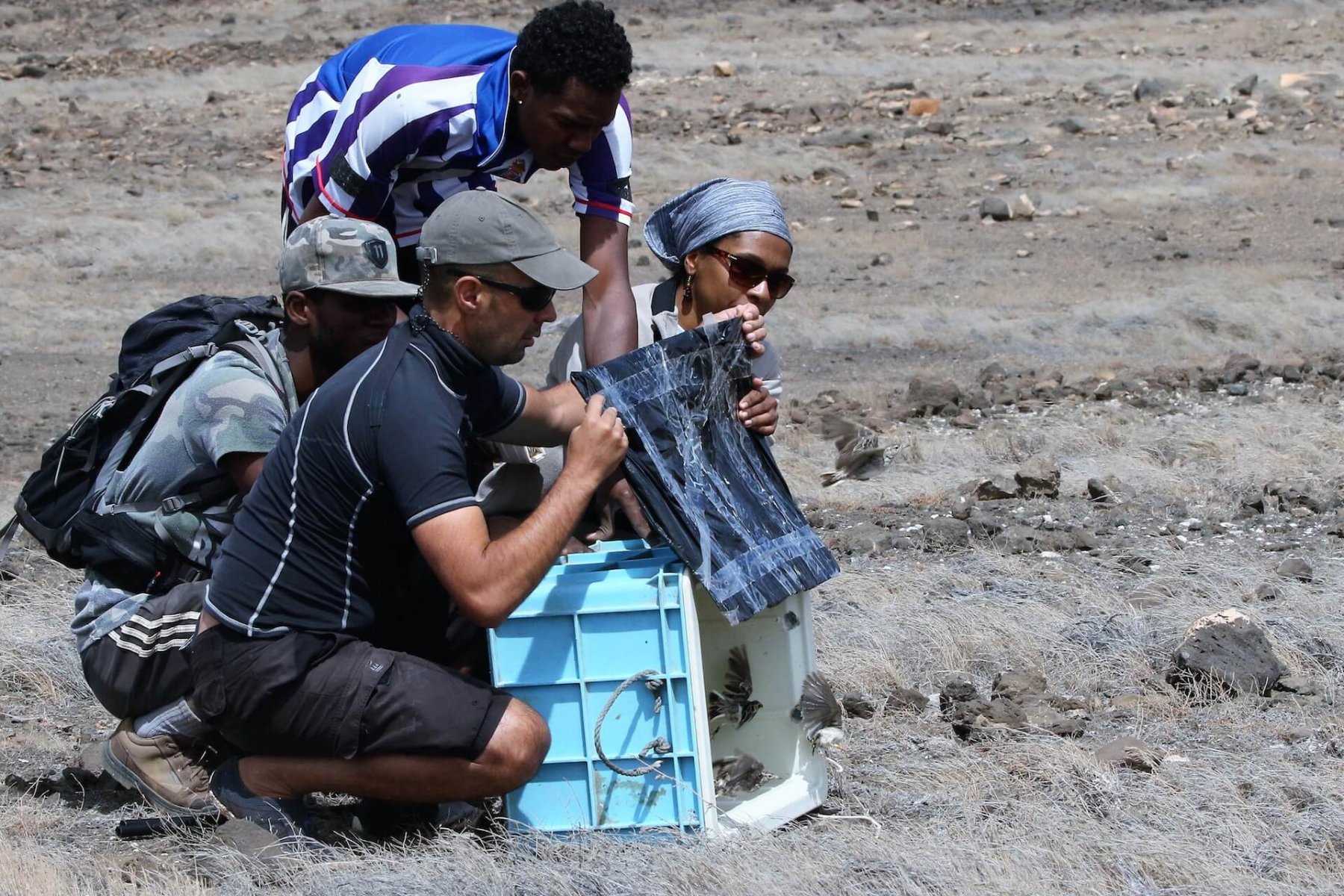
The Raso Lark is a Critically Endangered songbird historically confined to a single 7 km² islet, Raso, in Cabo Verde's Barlavento island group - a single-island endemism that creates acute vulnerability to catastrophic events such as drought, disease, or introduced predators. From 2017, SPEA (Sociedade Portuguesa para o Estudo das Aves), Biosfera 1 and Cabo Verde's Directorate-General for Environment (DNA) began feral cat eradication on the neighbouring 35 km² island of Santa Luzia, as part of ecological restoration of the Santa Luzia Nature Reserve within the roughly 11,000-hectare Santa Luzia Marine Protected Area, funded by the MAVA Foundation.
To establish a second, predator-free population of the Raso Lark on Santa Luzia island, reducing extinction risk associated with single-island endemism.
In April 2018, 37 Raso Larks were translocated from Raso to Santa Luzia with specialist Dr Mike Brooke. A follow-up translocation moved a further 33 larks (19 males, 14 females) to broaden genetic diversity. In parallel, feral cat eradication was carried out on Santa Luzia.
By March 2019, approximately 20 larks were recorded on Santa Luzia: 5 original released birds, 2 colour-ringed birds that had flown independently from Raso, and 12 unmarked birds including hatchlings - confirming that released birds had bred on Santa Luzia and that their annual survival was comparable to the source population on Raso. Separate BirdLife monitoring on nearby islets (Raso, Branco, Rombo) recorded no seabird predation over a 2.5-year period.
The translocation itself is documented as successful and published as a transferable case study in the IUCN journal PARKS. However, the cat-eradication component on Santa Luzia was interrupted when the island was evacuated during the COVID-19 pandemic, leaving the ultimate outcome of that eradication - and therefore the long-term security of the reintroduced lark population against residual or reintroduced cats - independently unconfirmed.
Philanthropic / foundation funding
Vías de financiación indicativas para prácticas de este tipo: compruebe siempre las convocatorias vigentes y las reglas de elegibilidad de cada programa.
¿Usted implementa esta práctica? Reivindíquela — los implementadores verificados obtienen un contacto público en la página y pueden proponer correcciones.
De dónde se obtuvo la información de esta práctica, y cuándo.
Antigua y Barbuda
La erradicación de cabras y ratas (2016-2018) en el árido islote de Redonda desencadenó, según un estudio revisado por pares, …
México
Desde finales de los anos 1990, la ONG mexicana GECI ha eliminado 60 poblaciones de 13 especies invasoras de 39 …
Ecuador
Campaña financiada por el GEF, liderada por el Parque Nacional Galápagos y la Fundación Charles Darwin, eliminó más de 140.000 …
Mauricio
Desde 1976, Durrell, el Servicio de Parques Nacionales de Mauricio y la Mauritian Wildlife Foundation erradicaron cabras invasoras (1979) y …
Abrir el copiloto completo Basado en prácticas citadas: comprueba siempre las fuentes.