Conservación y Restauración de Hábitats de Turberas — el Programa LIFE Mires de Estonia
Estonia
El programa LIFE Mires (2015–2021) restauró la hidrología natural en casi 8000 ha de turberas drenadas en Estonia, cerrando 317 …
Italia · Ver el perfil de Italia
Evidencia: Observacional / pre-post · Pregunte a Evidence Copilot sobre esta práctica
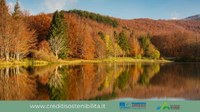
The project arose from the need to ensure continuity in sustainable forest management after the exhaustion of ministerial funds at the beginning of the 2020s. Forest protection against the hydrogeological disruption of settlements and economic activities in hilly and mountainous areas has emerged as an increasingly important need, especially in case of storms and extreme rainfall events. Without this protection, human activities in these areas would face significant damage and extremely costly defence works. The Apennines are home to highly diverse forests dominated by many European temperate and boreal tree species that reach here the southern limit of their distribution ( Morales-Molino, 2021 ). The Tuscan-Emilian Apennines National Park hosts a large variety of forested areas, including chestnut, beech forests, silver fir forests ( Abies Alba ), oak and hornbeam forests, as well artificially created reforestation areas with conifers over medium to high altitude land. All these stands require continuous care, including clearing of undergrowth, pruning and forest renovation in artificially reforested areas. Together with the land abandonment, climate change threatens the existence and health of these forests, leading to a potential loss of biodiversity and essential local cultural heritage. Scientific literature ( Noce et al., 2023 ) indicates that many species are expected to experience a future decrease in their altitudinal range of suitability due to projected changes in temperature and precipitation. The largest and most widespread impacts on all species are expected in the Northern and North-Eastern Apennines. The sustainable management of the forests in the Tuscan-Emilian Apennines National Park is key to ensure long-term resilience of forests to climate change and the continuous provision of ecosystem services.
The overall aim of the Sustainability credits approach is to help increase the climatic resilience of forests within the Biosphere Reserve to minimise climate change impacts on the forests and to ensure the continuous benefit from ecosystem services for future generations. It also aims to combat climate change by increasing carbon stocks in forest reservoirs. The specific objectives are: ● To enable forest planning over the entire territory managed by the Park Authority to deliver Ecosystem Services while strengthening the (climate) resilience of the forest. The ecosystem services provided include: o Carbon stocks in forest reservoirs to improve CO2 capture and storage capacity, o Biodiversity conservation, o Increase of the recreational and tourist value of the forest, o Nature-based solutions for water cycle management and conservation, o Soil conservation. ● To provide companies with a way to engage in Corporate Social Responsibility by supporting local projects, easily recognisable by their clients and employees. 80% of credit buyers are from provinces located in the National Park (Reggio Emilia, Parma, and Modena). While sustaining local projects, certification standards are international, allowing, in principle, credits to be sold globally. This combination highlights the importance of proximity between industrial districts and forests: companies appreciate purchasing credits close to their home.
The core solution is the Trading Platform for Sustainability Credits and its underlying system. Local companies, eager to demonstrate their commitment to social and environmental sustainability, buy credits generated by certified forests and sold through the platform. In this way, they finance forest restoration projects, which make forests more resilient to climate change. These transactions are monitored through the publicly accessible credits’ registry . The sustainability credit trading system is based on the widespread implementation of Sustainable and Responsible Forest Management across the Tuscan-Emilian Apennines Biosphere Reserve, coordinated by the National Park Authority. Within this system, sustainable Forest Management is defined as environmentally friendly (maintaining biodiversity, forest productivity, ecological processes), socially useful (providing long-term benefits to local and wider society), and economically sustainable (profitable without depleting resources). Forest certification (PEFC and FSC) is the tool used to promote this management, ensuring adherence to scientifically robust and stringent environmental, social, and economic standards. A key element of the Sustainability Credits Trading Platform is the local mechanism established for remunerating the ecosystem services generated by certified forests. Sustainability Credits are generated through the adoption of specific forest management solutions which are implemented in the park territory with additionality (i.e. generating additional benefits) compared to traditional management. These management solutions are implemented within forests certified for sustainable/responsible forest management and Ecosystem Services. Sustainability Credits represent the recognition of a market value to the ecosystem services provided by the certified forests. They are the result of a process involving the quantification, evaluation, and robust certification of the positive impacts of sustainable forest management on the quantity and quality of ecosystem services. The main, but by no means the only, quantitative indicator is the metric ton equivalent of CO2 sequestered. A crucial condition to generate credits is that the actions implemented provide additional benefits compared to traditional management. They must be performed within forests certified according to FSC and PEFC standards for both Sustainable/Responsible Forest Management and Ecosystem Services. The credit system certifies the adoption of one or more of the following sustainability measures within the forest: ● Increasing forest biomass ● Lengthening the minimum rotation of managed deciduous forests ● Conversion of coppice (woodland in which trees or shrubs are periodically cut back to ground level) to high forests (large, mature trees) ● Reforestation after extreme events ● Afforestation/reforestation activities ● Fire risk reduction ● Activities to protect against biotic damage Specific management actions carried out to demonstrate positive impact on the quality of Ecosystem Services include: ● Development of specific silviculture techniques, based on the selection and care of specific target trees, also creating dendro-microhabitats for insects, birds, small mammals and amphibians ● Protection of forest regeneration ● Transition towards forests with more natural structure and composition ● Creation of buffer strips to minimise disturbances, and ecological corridors to enhance ecosystems integrity and connectivity ● Nature-based solutions for soil/water quality conservation ● Maintenance or restoration of lakes, ponds and peat bogs to keep water in the forest ● Interventions to support the habitats of pollinators (green structures, refuges, nests, etc.) ● Research on and monitoring of endangered species’ habitats ● Activities to improve and promote recreational and cultural use of certified forests
Quantifying the costs for this project is not straightforward. Designing, launching and operating the project has required five years of work by the Park’s staff, including travel and on-site activities to bring forest owners and managers onboard. This can roughly correspond to a few hundred thousand Euros. The project "Trading Platform for Sustainability Credits" has received funding within the EU-funded Next Generation EU project Green Community Garfagnana Greenland ( “Garfagnanagreenland. Strategie per una comunità locale sostenibile ”). Sustainability credits are a market instrument, with a price tag attached to each credit sold. Credits are sold at 33 Euro +VAT each. As each hectare generates on average 3 credits, the cost is about 100 Euro/ha (+ VAT). From the start of the project in xx to August 2025, 12,099 Sustainability Credits have been sold to 50 unique buyers. Revenues are entirely returned to forest managers for new sustainable forestry interventions. The non-monetary benefits provided by the implemented solutions are extensive and include positive outcomes related to the provision of five main ecosystem services: carbon dioxide capture and storage; biodiversity conservation; tourism and recreational functions of the forest; water cycle regulation and soil conservation s. More in detail, expected benefits are ● Climate Change Adaptation & Mitigation: o Increased climatic resilience of forests. o Increased carbon stocks in forest reservoirs. o Improved absorption and storage capacity of carbon dioxide. o Protection of settlements and economic activities against hydrogeological disruption and erosion, especially during extreme rainfall. ● Environmental Co-benefits: o Maintenance of biodiversity, forest productivity, and ecological processes. o Creation of habitats and support for diverse species of plants, animals, and fungi (Biodiversity Conservation). o Improved water cycle management. o Conservation of soil quality. ● Societal Co-benefits: o Psychophysical benefits from recreational activities in the forest (Health and well-being). o Preservation and enhancement of the forest's historical and cultural function. ● Economic Co-benefits: o Sustainable forestry operations that are sufficiently profitable without depleting resources. o Mechanism for companies to implement Environmental, Social, Governance strategies and projects. o Tall forests will be able to revive the timber economy for construction and the paper industry. o By fostering the recruitment of forestry experts, the project has generated skilled employment in the area. A quantitative analysis of these benefits is not available yet. However, a monitoring initiative is ongoing to evaluate project results. Anyway, it is possible to highlight that from the beginning of the project, the area covered by sustainable management moved from about 10,000 ha to 30,000 ha with increasing requests from forest owners and managers to join the project.
Success factors Success factors include: • The coordinating role of the National Park Authority and of the new Forest Certification Group. It allowed multiple forest owners to participate under a single certificate. • The involvement of diverse stakeholders including public bodies, collective properties, and private owners • The backing by scientific research and expert advice • The use of well-established international certification standards (PEFC, FSC). • Funding from initiatives like Next Generation EU . The consistent growth in the number of members and certified area since the group's formal establishment in 2022 demonstrates that the initiative was successfully initiatiated and implemented and indicates potential for its scaling/replication. The format used for generating and trading sustainability credits can be replicated anywhere in areas with significant initial funding, public forests of adequate size, and an entrepreneurial fabric sensitive to sustainability. Importantly, forests should be able to benefit from additionality: credits are only generated if there is an improvement on top of previous management. The Park Authorities adopted the European Charter for Sustainable Tourism ( CETS ), obtained a first certification in 2014 and its renovation in 2019. The Charter represents an important opportunity to identify new and effective forms of sustainable development for the territory and to improve its capacity to attract tourists. Limiting factors An important limiting factor is the additionality requirement of credit generation. The closer the forest is to its pristine status, the fewer the credits that can be generated. Where sustainable forestry practices are already in place, as in the case of other Italian regions such as Trentino Alto Adige, a much larger forest area (50 ha) is needed to generate the same amount of credits as those generated by one hectare in Emilia Romagna and Tuscany. The expected number of credits generated by sustainable forest actions are expected to decrease in the long- term. This is due to a progressive saturation of the market, since all forestry practices are implemented in the park area and the forestry land not covered by the sustainability credits progressively declines. Moreover, the additionality criterion becomes increasingly difficult to satisfy. Indeed, if this point is reached, this would be a clear sign of the success of the project, but new mechanisms to ensure the long-term continuity of sustainable forest management will become necessary.
Los detalles de implementación (coste, plazo, personal, condiciones para el éxito) aún no están disponibles para esta práctica.
Recovery and Resilience Facility (national plans) National / regional programmes
Vías de financiación indicativas para prácticas de este tipo: compruebe siempre las convocatorias vigentes y las reglas de elegibilidad de cada programa.
¿Usted implementa esta práctica? Reivindíquela — los implementadores verificados obtienen un contacto público en la página y pueden proponer correcciones.
De dónde se obtuvo la información de esta práctica, y cuándo.
Estonia
El programa LIFE Mires (2015–2021) restauró la hidrología natural en casi 8000 ha de turberas drenadas en Estonia, cerrando 317 …
Vietnam
Desde 2009, el Parque Nacional de U Minh Thượng (Vietnam) no registra incendios, manteniendo el nivel freático por encima de …
Benín
Creada en 2012 por el gobierno de Benín, la UICN y donantes internacionales, la FSOA financia patrullas de guardaparques y …
Sudáfrica
Desde 1982, el municipio de eThekwini, en Durban, protege una red estatutaria de espacios abiertos que hoy cubre unos 940 …
Abrir el copiloto completo Basado en prácticas citadas: comprueba siempre las fuentes.