Top 67%
dans ce catalogue (1207 pratiques notées)
Les scores se concentrent dans le haut de l’échelle ; la position au sein du catalogue est donc souvent plus parlante que le chiffre seul.
Transferability / replicability2/3
The civil-society-drafted law plus protection-order model is replicable, but implementation gaps documented by ICJ and LCPS limit what can be transferred.
Impact on gender equality0/1
No outcome data on reduced domestic violence were found, so impact cannot be credited.
Effectiveness0/1
ICJ found diverging court interpretations and the specialised police unit and victims' fund were still pending, so effectiveness is unproven.
Efficiency0/1
No cost or resource-efficiency data were located.
Evaluated outcomes0/1
The ICJ review covers only 24 protection orders and 37 decisions, not an outcome evaluation.
Sustainability1/1
The law has endured and was strengthened by the December 2020 amendments (Law 204/2020).
Achievement / evidence1/1
A first dedicated domestic-violence law was enacted in 2014 and broadened in 2020 to cover economic violence.
Gender-mainstreaming embedding1/1
The law addresses violence against women as a legal and institutional matter, with a specialised police role and victim fund.
Curator validation1/1
Two independent sources (ICJ, LCPS) support the claims, with limitations stated openly.
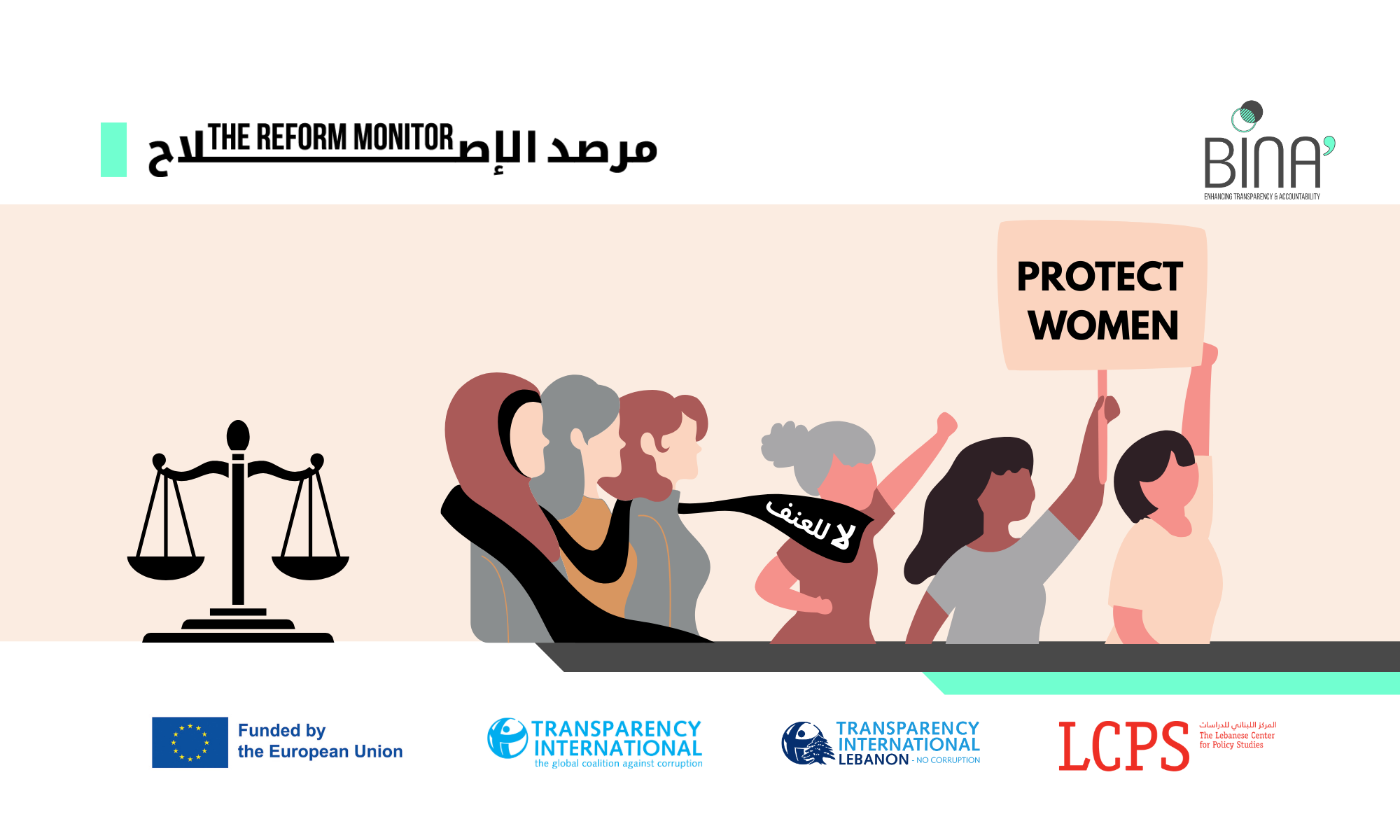
Evidoria. Loi 293/2014 du Liban et amendements de 2020 — ordonnances de protection contre les violences conjugales, mise en œuvre encore incomplète. ID persistant: 00c6f74f-81fd-47b1-b88d-e82c10213f68.