Réserve écosystémique de Redonda — Éradication des rats et des chèvres (Antigua-et-Barbuda)
Antigua-et-Barbuda
L'éradication des chèvres et des rats (2016-2018) sur l'îlot aride de Redonda a entraîné, selon une étude évaluée par des …
Cap-Vert · Santa Luzia · Voir le profil de Cap-Vert
Preuves: Observationnel / avant-après Top 89% 27/100 · Demandez à Evidence Copilot à propos de cette pratique
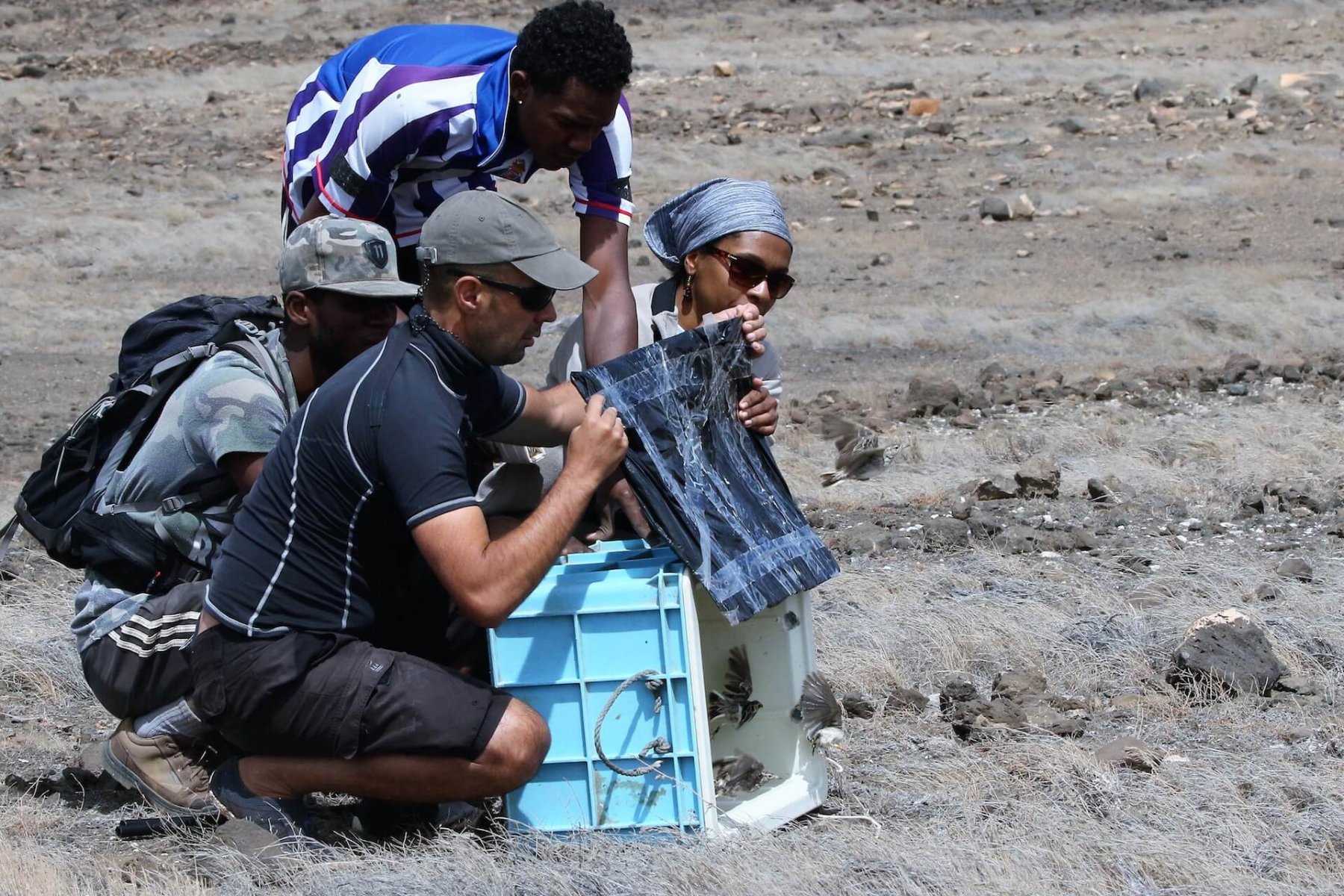
La SPEA, Biosfera 1 et l'agence environnementale du Cap-Vert ont transloqué 37 alouettes de Raso, en danger critique, vers Santa Luzia sous contrôle des prédateurs en 2018 (puis 33 de plus) ; la reproduction a été confirmée, bien que la Covid-19 ait interrompu l'éradication des chats.
The Raso Lark is a Critically Endangered songbird historically confined to a single 7 km² islet, Raso, in Cabo Verde's Barlavento island group - a single-island endemism that creates acute vulnerability to catastrophic events such as drought, disease, or introduced predators. From 2017, SPEA (Sociedade Portuguesa para o Estudo das Aves), Biosfera 1 and Cabo Verde's Directorate-General for Environment (DNA) began feral cat eradication on the neighbouring 35 km² island of Santa Luzia, as part of ecological restoration of the Santa Luzia Nature Reserve within the roughly 11,000-hectare Santa Luzia Marine Protected Area, funded by the MAVA Foundation.
To establish a second, predator-free population of the Raso Lark on Santa Luzia island, reducing extinction risk associated with single-island endemism.
In April 2018, 37 Raso Larks were translocated from Raso to Santa Luzia with specialist Dr Mike Brooke. A follow-up translocation moved a further 33 larks (19 males, 14 females) to broaden genetic diversity. In parallel, feral cat eradication was carried out on Santa Luzia.
By March 2019, approximately 20 larks were recorded on Santa Luzia: 5 original released birds, 2 colour-ringed birds that had flown independently from Raso, and 12 unmarked birds including hatchlings - confirming that released birds had bred on Santa Luzia and that their annual survival was comparable to the source population on Raso. Separate BirdLife monitoring on nearby islets (Raso, Branco, Rombo) recorded no seabird predation over a 2.5-year period.
The translocation itself is documented as successful and published as a transferable case study in the IUCN journal PARKS. However, the cat-eradication component on Santa Luzia was interrupted when the island was evacuated during the COVID-19 pandemic, leaving the ultimate outcome of that eradication - and therefore the long-term security of the reintroduced lark population against residual or reintroduced cats - independently unconfirmed.
Philanthropic / foundation funding
Pistes de financement indicatives pour des pratiques de ce type — vérifiez toujours les appels en cours et les règles d'éligibilité de chaque programme.
Vous portez cette pratique ? Revendiquez-la — les porteurs vérifiés obtiennent un contact public sur la page et peuvent proposer des corrections.
D'où proviennent les informations de cette pratique, et quand.
Antigua-et-Barbuda
L'éradication des chèvres et des rats (2016-2018) sur l'îlot aride de Redonda a entraîné, selon une étude évaluée par des …
Mexique
Depuis la fin des annees 1990, l'ONG mexicaine GECI a elimine 60 populations de 13 especes envahissantes sur 39 iles …
Équateur
Une campagne financée par le FEM, menée par le Parc national des Galápagos et la Fondation Charles Darwin, a éliminé …
Maurice
À partir de 1976, Durrell, le Service des parcs nationaux de Maurice et la Mauritian Wildlife Foundation ont éradiqué les …
Ouvrir le copilote complet Fondé sur des pratiques citées — vérifiez toujours les sources.