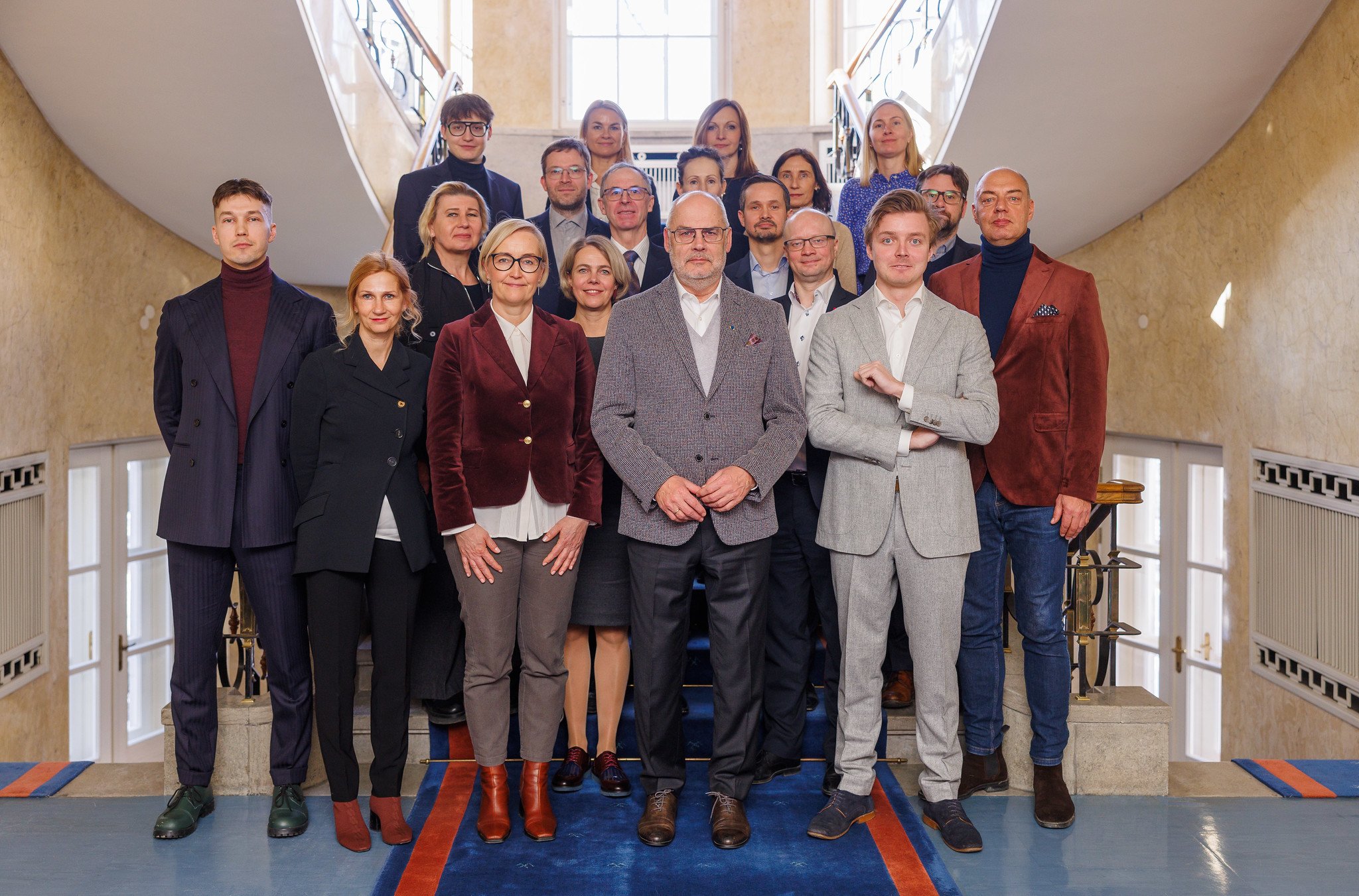
Initiated by Estonia's President and Ministry of Education with a public-private foundation backed by OpenAI and Anthropic, AI Leap 2025 gives free AI tools to 20,000 grade 10-11 students and trains 3,000 teachers, expanding to ~58,000 students by 2027.
20000 students
Grade 10-11 students reached in Phase 1 (September 2025)
3000 teachers
Teachers trained in Phase 1 (2025)
38000 students
Additional students added in Phase 2 (from September 2026)
2000 teachers
Additional teachers added in Phase 2 (from September 2026)
almost 58,000 students
Projected total students trained by spring 2027 (by spring 2027)
almost 5,000 teachers
Projected total teachers trained by spring 2027 (by spring 2027)
Details
Maturity
Scaling
Promoter
Estonian Ministry of Education and Research, President's Digital Council & AI Leap Foundation, with OpenAI and Anthropic
Period
Phase 1 from September 2025; Phase 2 from September 2026
Region (NUTS)
EE00
Keywords
AI literacy, teacher training, national AI curriculum, K-12 and VET education
Context
AI Leap 2025 (TI-Hüpe) is a national programme initiated by Estonia's President Alar Karis and led by the Ministry of Education and Research together with the President's Digital Council, run through a new public-private AI Leap Foundation set up in 2025 with OpenAI and Anthropic among its named technology partners. It is explicitly framed as a successor to Estonia's 1990s Tiger Leap initiative, which brought computers and internet access to Estonian schools.
Objectives
The programme aims to give free access to AI tools to Estonian secondary and vocational students and to train teachers to use AI in the classroom, scaling in phases from an initial cohort to nearly the whole upper-secondary and VET system.
Activities
Phase 1, from September 2025, reaches 20,000 grade 10-11 students and trains 3,000 teachers. Phase 2, from September 2026, extends the programme into vocational (VET) institutions and new grade-10 cohorts, adding roughly 38,000 students and 2,000 teachers.
Results
By spring 2027 the programme is projected to have reached almost 58,000 students and trained close to 5,000 teachers. Public sources confirm the governance structure, partners and these rollout numbers, but state directly that specific key performance indicators for learning impact are still being developed, so no learning-outcome data exists yet.
Conclusions
AI Leap is a well-funded, politically backed national rollout at an early implementation stage, with strong institutional and industry backing but no measured learning outcomes published so far.
Implementation
Indicative cost
High (€500k–€5M)
Time to results
Medium (1–3 years)
Staffing & skills
President Alar Karis, Estonian Ministry of Education and Research (Minister Kristina Kallas), President's Digital Council, AI Leap Foundation (public-private), OpenAI (technology partner), Anthropic (technology partner)
Conditions for success
Presidential and ministerial political backing
A dedicated public-private foundation to run the programme
Named technology partners providing AI tools
A phased rollout with a built-in teacher-training component
Slovenia's education ministry, University of Maribor and National Education Institute piloted the EU Erasmus+ AI4T programme, training 262 teachers across …
University of Liechtenstein leads a four-partner Erasmus+ project with Finland and Croatia, running hands-on generative-AI workshops for teaching staff and …