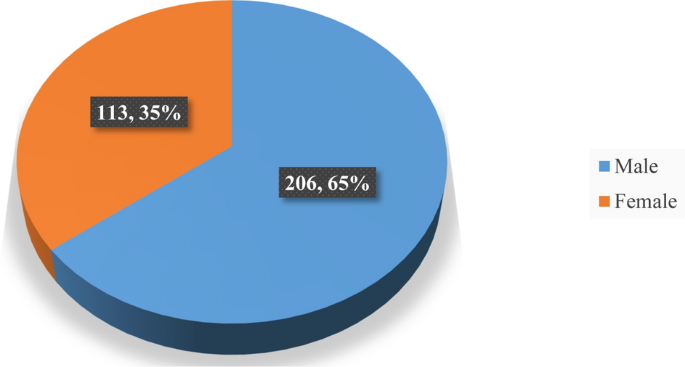
A University of Cape Coast study surveyed 319 Ghanaian basic-school teachers with a validated AI-literacy scale, finding moderate literacy (~2.9/5) across knowledge, application, evaluation and ethics, with a significant gender gap favouring male teachers.
319
Teachers surveyed
2.93 out of 5
Mean AI-literacy score: knowledge and understanding of AI (KUAI)
2.92 out of 5
Mean AI-literacy score: application of AI (AAI)
2.92 out of 5
Mean AI-literacy score: evaluation of AI application (EAIA)
2.91 out of 5
Mean AI-literacy score: AI ethics (AIE)
Details
Promoter
University of Cape Coast, College of Distance Education
Period
2025 (published December 2025)
Keywords
teacher AI-literacy assessment, basic education, gender equity in ed-tech
Context
Researchers at the University of Cape Coast's College of Distance Education, led by Valentina Arkorful, conducted a cross-sectional survey of 319 basic-school teachers in Ghana to assess their AI literacy, using a confirmatory-factor-analysis-validated scale spanning four dimensions: knowledge and understanding of AI, application of AI, evaluation of AI application, and AI ethics. The study was published in Discover Education (Springer Nature) in December 2025.
Objectives
The study aimed to establish a baseline measure of Ghanaian basic-school teachers' AI literacy across the four dimensions and to test for gender differences in literacy levels.
Activities
Teachers self-reported their AI literacy on the validated scale; the research team analysed results using descriptive statistics and a one-way MANOVA to test for gender differences, and used structural analysis to examine relationships between the four literacy dimensions.
Results
Mean scores were moderate and similar across all four dimensions (2.93 for knowledge, 2.92 for application, 2.92 for evaluation, 2.91 for ethics, each out of 5, with standard deviations around 1.1–1.2). The MANOVA found statistically significant gender differences, with male teachers scoring higher, most markedly in practical AI application; structural analysis showed AI application positively influenced evaluation and ethics literacy, but knowledge did not significantly predict evaluation skill, and ethics literacy did not significantly predict foundational knowledge.
Conclusions
This is a diagnostic baseline study rather than an evaluation of an implemented training intervention: it identifies a specific, statistically significant gender gap and distinct (non-transferring) literacy competencies for policymakers to target, but it does not itself deliver or measure a remedy. The authors recommend targeted interventions to close the gender gap and note implications for teacher-training curricula.
Implementation
Indicative cost
Low (< €50k) — No budget figures disclosed; a single cross-sectional survey study.
Time to results
Short (< 1 year) — Cross-sectional survey conducted and published in 2025 (December 2025 publication); single-timepoint study.
Staffing & skills
Research team from University of Cape Coast, College of Distance Education, led by Valentina Arkorful
Conditions for success
Use of a confirmatory-factor-analysis-validated AI-literacy scale for measurement rigour
Common failure modes
Statistically significant gender gap in AI literacy favouring male teachers, most pronounced in practical application
Knowledge, application, evaluation and ethics literacy do not automatically transfer to one another and may need to be taught as distinct competencies
Where it fits
Governance type
academic research at a public university
Scale
single-country teacher sample (n=319)
Income level
lower-middle-income (Ghana)
Do you run this practice?
Claim it —
verified implementers get a public contact pathway and can propose corrections.
Data sources
Where this practice's information was retrieved from, and when.
UNESCO's human-centred AI competency frameworks for students and teachers, alongside its GenAI guidance and Ethics Recommendation — the global reference …