UNESCO AI competency frameworks for students and teachers
France
UNESCO's human-centred AI competency frameworks for students and teachers, alongside its GenAI guidance and Ethics Recommendation — the global reference …
Ghana · Cape Coast · See the Ghana profile
A University of Cape Coast study surveyed 319 Ghanaian basic-school teachers with a validated AI-literacy scale, finding moderate literacy (~2.9/5) across knowledge, application, evaluation and ethics, with a significant gender gap favouring male teachers.
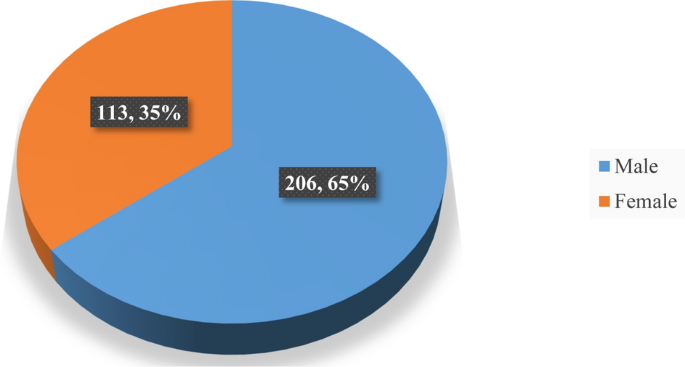
Researchers at the University of Cape Coast's College of Distance Education, led by Valentina Arkorful, conducted a cross-sectional survey of 319 basic-school teachers in Ghana, applying a confirmatory-factor-analysis-validated AI-literacy scale spanning four dimensions: knowledge and understanding of AI (KUAI), application of AI (AAI), evaluation of AI application (EAIA), and AI ethics (AIE). The study was published in Discover Education (Springer Nature) in December 2025.
Mean scores were similar and moderate across all four dimensions — 2.93 (KUAI), 2.92 (AAI), 2.92 (EAIA) and 2.91 (AIE), each with standard deviations around 1.1–1.2 — indicating teachers have a workable but incomplete grasp of AI concepts, use, evaluation and ethics. A one-way MANOVA found statistically significant gender differences across the literacy dimensions, with male teachers scoring higher, most markedly in practical AI application. Structural analysis showed AI application positively influenced teachers' evaluation and ethics literacy, but ethics literacy did not significantly predict foundational knowledge, and knowledge did not significantly predict evaluation skill — suggesting these are related but distinct competencies that need to be taught separately rather than assumed to transfer.
This is a diagnostic baseline study, not an evaluation of an implemented training intervention: it identifies a real, specific gender gap and skill-transfer gap for policymakers to target, but does not itself measure or deliver a remedy. The authors recommend targeted interventions to close the gender gap and highlight implications for teacher-training curricula and school administration.
Read the full analysis: https://link.springer.com/article/10.1007/s44217-025-00630-3
Implementation detail (cost, timeline, staffing, conditions for success) is not yet available for this practice.
Where this practice's information was retrieved from, and when.
France
UNESCO's human-centred AI competency frameworks for students and teachers, alongside its GenAI guidance and Ethics Recommendation — the global reference …
United Kingdom
Free AI-literacy curriculum for students aged 11–14, launched April 2023: 30,000+ educators trained across 180+ countries, reaching an estimated 2.9 …
Finland
A free online AI-literacy course from the University of Helsinki: 1M+ completions and 2M+ sign-ups from 170+ countries, translated into …
Kazakhstan
Kazakhstan's Orleu teacher-training agency, with UNESCO IITE and UNESCO-ICHEI, ran a free national generative-AI micro-certification for teachers: by Nov 2025, …
Open full copilot Grounded in cited practices — always check the sources.