WeSign — AI-Powered Real-Time Feedback for Vietnamese Sign Language Learning, Hanoi
Vietnam
WeSign gives deaf and hard-of-hearing Hanoi primary pupils real-time, AI-scored feedback on fingerspelling and sign formation via webcam. A 30-participant …
Kenya · Maseno · See the Kenya profile
Evidence: Descriptive / self-reported Top 70% 40/100 · Ask Evidence Copilot about this practice
Maseno University's AI4KSL project built an open dataset and prototype AI translator from spoken English to Kenyan Sign Language, drawing on data from 400 Deaf learners and 48 KSL teachers, to help mainstream Kenyan schools include Deaf students.
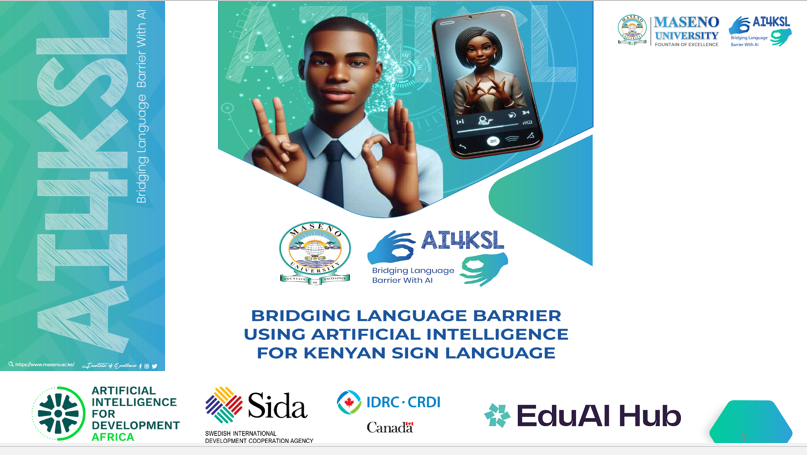
Maseno University's AI4KSL project set out to build assistive AI translating spoken English into Kenyan Sign Language via virtual signing avatars, to bridge communication between Deaf students and hearing peers/teachers in mainstream Kenyan schools.
Over 2023-2024, researchers collected sign-language elicitation data from 400 Deaf learners and 48 teachers/tutors of the Deaf, releasing an open-access dataset validated through stakeholder and town-hall dissemination workshops with the Deaf community.
As a foundational research and dataset project rather than a deployed classroom tool, AI4KSL has not yet published measured effects on learners' academic outcomes or teachers' proficiency; its evidenced contribution to date is the open KSL dataset and validated data-collection process.
Reusable artefacts from this practice — as published by their sources.
Do you run this practice? Claim it — verified implementers get a public contact pathway and can propose corrections.
Where this practice's information was retrieved from, and when.
Vietnam
WeSign gives deaf and hard-of-hearing Hanoi primary pupils real-time, AI-scored feedback on fingerspelling and sign formation via webcam. A 30-participant …
Mexico
TecNM and UABC researchers in Tijuana built a mobile app using computer-vision gesture recognition and adaptive difficulty to teach Mexican …
Kenya
Kenyan NGO inABLE and Google piloted AI live captioning at Kambui Primary School for the Deaf, logging 700+ hours across …
Kenya
Kenyan startup Signvrse built Terp 360, an AI sign-language avatar, from a 20,000-sign dataset co-created with 30+ deaf signers; tested …
Open full copilot Grounded in cited practices — always check the sources.