Scriptix — the Philippine Judiciary's AI Transcription Pilot That Cut Court-Reporting Time Up to 80%
Philippines
A 14-month pilot of the AI transcription platform Scriptix in the Sandiganbayan and 41 trial courts cut transcription time by …
Peru · Lima · See the Peru profile · See the Lima profile
Evidence: Descriptive / self-reported Top 46% 60/100 · Ask Evidence Copilot about this practice
Peru's Lima Norte court built Amauta.Pro, an AI assistant that drafts domestic-violence protection-order resolutions; the court reports draft time fell from over three hours to 40 seconds, with 1,000+ resolutions produced in its first weeks.
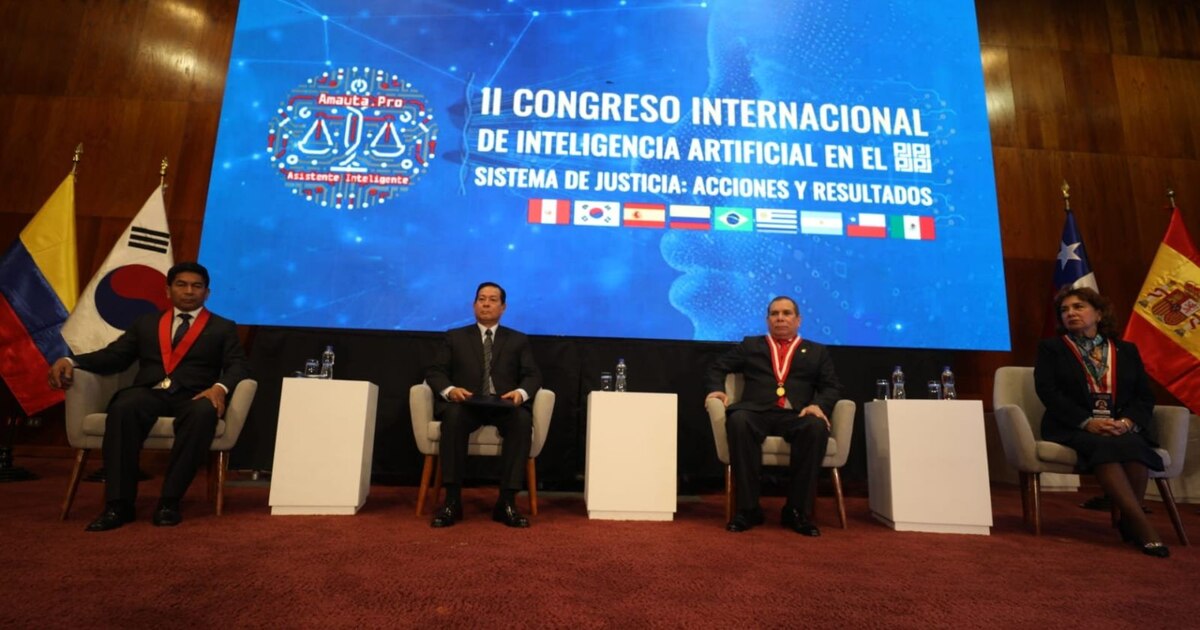
The Superior Court of Justice of Lima Norte, part of Peru's Poder Judicial, handles a heavy domestic-violence caseload — in 2022 its jurisdiction issued 23,000 protection measures, about 80% classified as mild or moderate risk under a severity-triage model the court built with the Universidad Nacional de Ingeniería (UNI). Building on that model, judges and engineers at the court's in-house AI laboratory spent about a year developing Amauta.Pro, an AI assistant that reads a domestic-violence complaint and the documents submitted through family police stations, organises the case file, applies the applicable legal norms, and drafts a protection-order resolution.
The goal, as described by court president Lorenzo Castope Cerquín, was to automate classification and drafting for the large share of simple, lower-severity cases so judges could concentrate on severe and very-severe ones, targeting a four-hour turnaround for issuing protection measures.
Amauta.Pro was presented on 5–6 September 2024 at the II International Congress on Artificial Intelligence in the Justice System, under Judicial Power president Javier Arévalo. Drafts produced by the tool are reviewed and signed by the presiding judge before issuance — the system assists rather than replaces judicial decision-making.
According to the Poder Judicial's own figures, reported independently by Infobae and other Peruvian outlets, generating a draft resolution now takes about 40 seconds versus more than three hours previously, and the tool produced more than 1,000 resolutions in its first weeks of use. The same court's separate 'Panic Button' app for domestic-violence victims logged 545 activations across 199 devices between January and June 2024.
No independent audit of Amauta.Pro's resolution quality, error rate or bias has been published — all figures to date originate from the Judicial Power's own announcements as covered by Peruvian press, not a peer-reviewed evaluation. Court officials have described the tool as replicable to other case types, but no documented expansion beyond Lima Norte's family-violence courts had been reported as of mid-2026.
National / regional programmes
Indicative funding routes for practices of this type — always check each programme's current calls and eligibility rules.
Do you run this practice? Claim it — verified implementers get a public contact pathway and can propose corrections.
Where this practice's information was retrieved from, and when.
Philippines
A 14-month pilot of the AI transcription platform Scriptix in the Sandiganbayan and 41 trial courts cut transcription time by …
India
Kerala High Court made Adalat AI, a Malayalam-capable speech-to-text tool, mandatory for recording witness depositions in every trial court from …
Croatia
Croatia's Ministry of Justice deployed ANON, an AI pseudonymisation tool integrated with the national eSpis system, to automatically redact personal …
Argentina
Argentina's Ministry of Justice and SAIJ piloted generative AI across the judiciary: 5,000 court staff rated it 81% positive, and …
Open full copilot Grounded in cited practices — always check the sources.