Top 62%
in this catalogue (1067 scored practices)
Scores cluster high, so position within the catalogue is often more telling than the number alone.
Evidence of impact / measured public value1/3
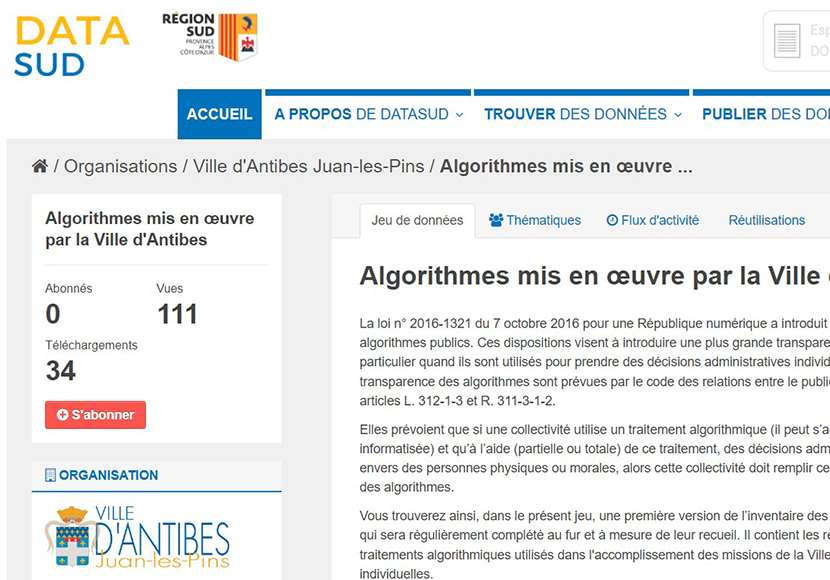
Evidence is descriptive only: the inventory has been published since January 2021, but the city reports roughly 100 views and 40 downloads and no measured effect on trust or services.
Transparency, fairness & accountability2/3
Each entry names the competence, legal basis, data used, data source, collection method and decision procedure, but the tables contain no formulas and some criteria sit in vendor software whose calculations are not visible.
Transferability / demonstrated replication2/3
It follows Etalab's national guide and was built by consulting city departments, so it is a plausible template for other towns above 3,500 inhabitants, though the city's own scope is small.
Scalability beyond pilot1/3
The inventory covers only 8 processing operations (one fully automated, the tourist tax) because waste, housing and mobility sit with the agglomeration, so scale is unproven.
Governance, capability & sustainability2/3
The register was launched in July 2020, first published in January 2021 and refreshed every six months, giving internal services a single up-to-date procedure description, but no sanction or external audit exists.
Evidoria. Antibes Juan-les-Pins' Algorithm Inventory — A Mid-Sized French City's Six-Monthly Register Under the Lemaire Law. Persistent ID: 615d0eed-c3da-4d1b-ade9-671379a4665a.