ASTRA — the EU-Funded AI Project That Triples Air-Traffic Hotspot Warning Time to an Hour
Malta
A Malta-led, EU-funded consortium (with Italy, Spain and Switzerland's Skyguide) built an AI tool that predicts dangerous air-traffic congestion up …
United States of America · Charlotte · See the United States of America profile
Evidence: Observational / pre–post Top 1% 93/100 · Ask Evidence Copilot about this practice
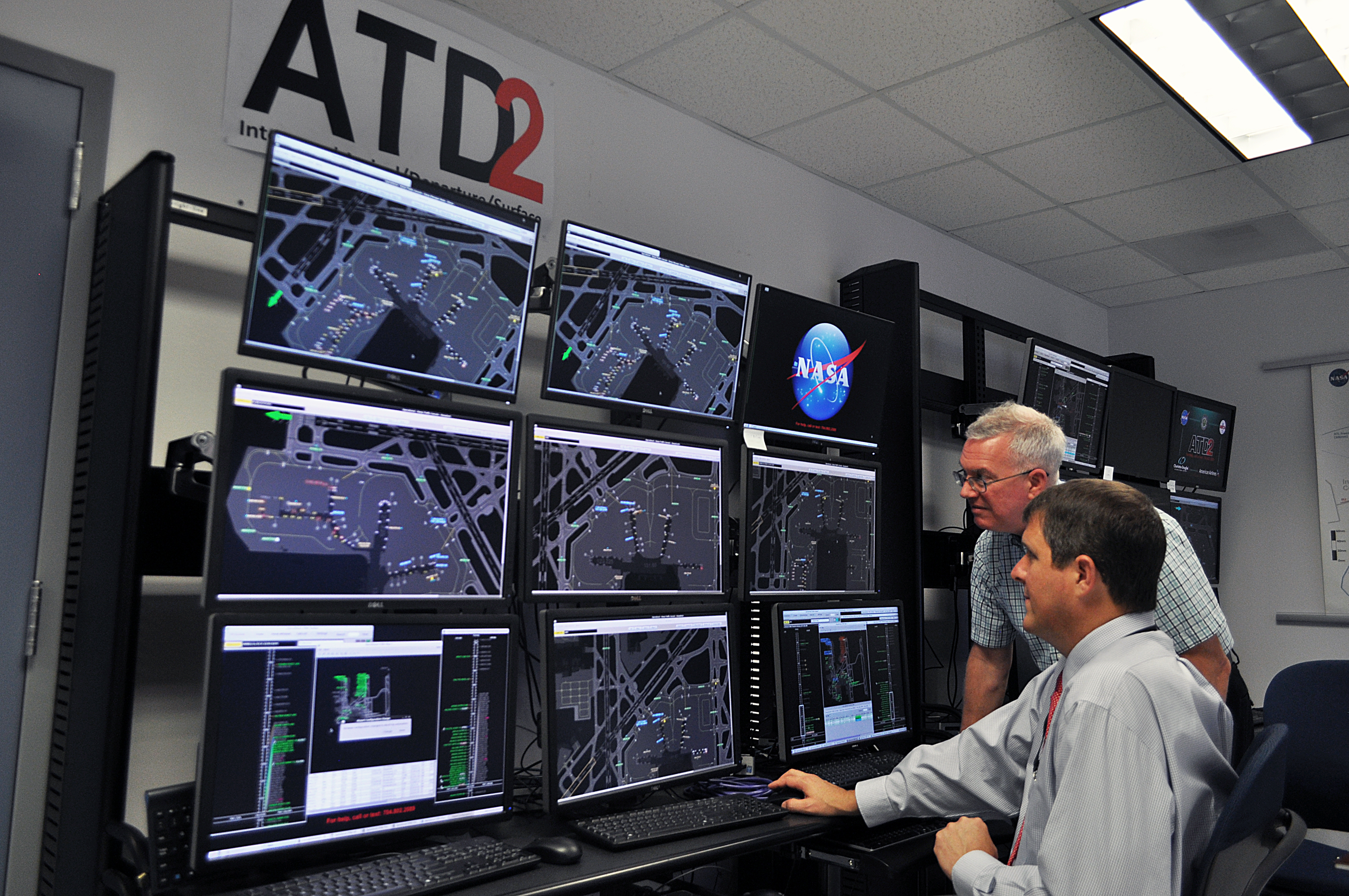
NASA's ATD-2 project used ML taxi-time and surface-trajectory prediction to schedule gate pushbacks at Charlotte Douglas Airport, saving 1M+ gallons of jet fuel and 933 passenger-delay hours over four years before transfer to the FAA for rollout to 27 US hub airports.
Aircraft that push back from the gate too early end up idling in long taxi queues, burning fuel and emitting carbon while going nowhere; airports have historically relied on static, physics-based estimates rather than predicting exactly when a runway slot will actually open.
Replace legacy physics-based taxi-time modelling with machine-learning models - including neural networks - trained on real surface-surveillance data, to predict taxi-out and taxi-in times and better time aircraft pushback from the gate.
NASA's Airspace Technology Demonstration-2 (ATD-2) project built an Integrated Arrival, Departure and Surface (IADS) system whose Surface Trajectory-Based Operations component was field-tested at Charlotte Douglas International Airport (KCLT), using data also drawn from Dallas/Fort Worth (KDFW), from September 2017 to September 2021.
The system saved more than 1 million gallons of jet fuel, an estimated $1.4 million in flight-crew costs, 933 hours of passenger delay (valued at roughly $4.5 million), and around 8 tons of CO2 per day at Charlotte Douglas. NASA formally transferred the technology to the FAA in September 2021, where it was folded into the Terminal Flight Data Manager (TFDM) programme for a phased rollout beginning with Charlotte and Phoenix and eventually reaching 27 hub airports, including Atlanta, Chicago, New York, Washington, San Francisco and Los Angeles.
The published machine-learning taxi-time models still carry meaningful uncertainty - roughly 10-15% for total and airport-movement-area taxi times, and about 20% for ramp taxi time - and national rollout to all 27 airports was projected to take five to ten years, so the measured benefits above remain concentrated at the original test sites rather than proven network-wide.
Horizon Europe National / regional programmes
Indicative funding routes for practices of this type — always check each programme's current calls and eligibility rules.
Reusable artefacts from this practice — as published by their sources.
Do you run this practice? Claim it — verified implementers get a public contact pathway and can propose corrections.
Where this practice's information was retrieved from, and when.
Malta
A Malta-led, EU-funded consortium (with Italy, Spain and Switzerland's Skyguide) built an AI tool that predicts dangerous air-traffic congestion up …
Singapore
PUB's Anomaly Leak Finder uses AI, machine learning and a daily-recalibrated hydraulic digital twin to detect and localise hidden pipe …
Greenland
DMI's ASIP uses a convolutional neural network fusing Sentinel-1 radar and AMSR2 microwave data to generate Greenland coastal sea-ice charts, …
Somalia
WFP's AI-assisted HungerMap Live platform, built with Google.org and covering 50+ countries, helped identify worsening hunger in Somalia's Buur Hakaba …
Open full copilot Grounded in cited practices — always check the sources.