HungerMap LIVE's AI Nowcasting Tracks Sudan's Slide Toward Famine
Sudan
WFP's HungerMap LIVE uses machine-learning "nowcasts" to estimate food insecurity where ground surveys are impossible. In Sudan's civil war, it …
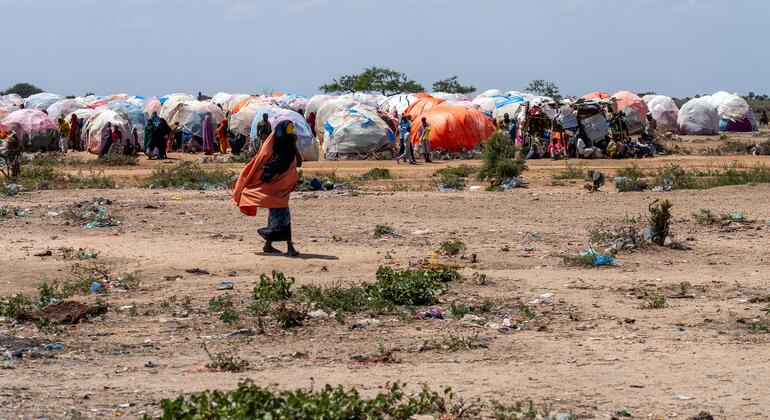
Somalia · Buur Hakaba · See the Somalia profile
Evidence: Descriptive / self-reported Top 1% 93/100 · Ask Evidence Copilot about this practice
WFP's AI-assisted HungerMap Live platform, built with Google.org and covering 50+ countries, helped identify worsening hunger in Somalia's Buur Hakaba district before malnutrition peaked, triggering food aid for 48,000 people and nutrition support for 3,000 women and children.
The World Food Programme released HungerMap Live on 16 April 2026, a global hunger-monitoring platform covering more than 50 countries - including all 16 WFP-designated 'Hunger Hotspots' - that combines data from over 300 WFP food-security analysts with climate, market, conflict and nutrition data from external partners, including an AI-assisted forecasting layer developed with Google.org and a nutrition-adequacy layer supported by the Gates Foundation.
Answer where food insecurity is worst, where it is heading, and why, so that response can be triggered earlier and targeted more precisely.
In Somalia's Buur Hakaba district, roughly 180 km northwest of Mogadishu, WFP used the platform's predictive analysis to identify a deteriorating situation before malnutrition among children became severe.
The early identification triggered food assistance for 48,000 people and targeted nutrition support for 3,000 women and children in Buur Hakaba.
The case sits inside a much larger, still-unresolved crisis: an estimated 6 million Somalis face crisis-level food insecurity, WFP says it can reach only about 1 in 10 people in need, and the agency cites a $192 million funding gap through January 2027 - the tool improves the targeting and timing of a response that remains heavily resource-constrained, rather than resolving the underlying funding shortfall.
Philanthropic / foundation funding National / regional programmes
Indicative funding routes for practices of this type — always check each programme's current calls and eligibility rules.
Do you run this practice? Claim it — verified implementers get a public contact pathway and can propose corrections.
Where this practice's information was retrieved from, and when.
Sudan
WFP's HungerMap LIVE uses machine-learning "nowcasts" to estimate food insecurity where ground surveys are impossible. In Sudan's civil war, it …
Switzerland
SPSP integrates AI-powered genomic analysis to detect pathogen variants across Switzerland. Mandated by the Federal Office of Public Health since …
India
India's ICMR-run network of tertiary hospitals turned six years of resistance data into machine-learning early-warning signals, flagging cefotaxime resistance as …
Sierra Leone
Statistics Sierra Leone and the GRID3 partnership use machine-learning building-footprint detection on satellite imagery to map population at 1-hectare resolution, …
Open full copilot Grounded in cited practices — always check the sources.