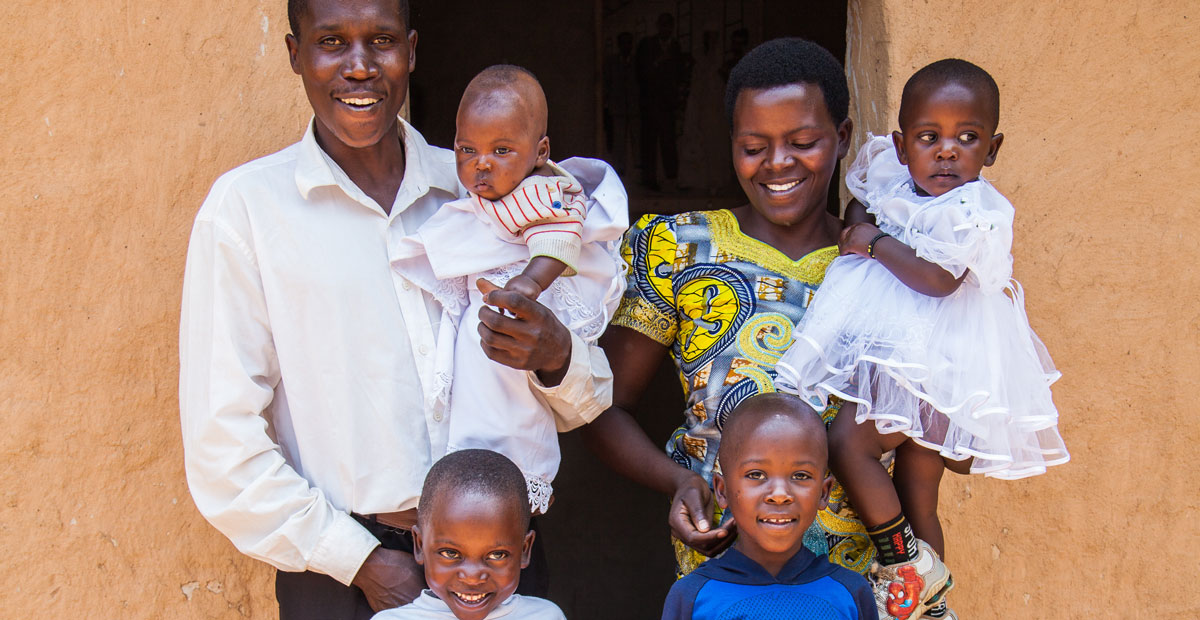
Bandebereho (‘role model’ in Kinyarwanda) is a 15-session couples’ curriculum for expectant/new fathers in Rwanda. A randomised trial found far less intimate-partner violence (33% vs 57%) and nearly an hour more daily unpaid care work than a comparison group, 21 months on.
575
Intervention couples in cluster-RCT
624
Comparison couples in cluster-RCT
33% vs 57%
Physical violence reported by women, intervention vs comparison (21 months post-programme)
35% vs 60%
Sexual violence reported by women, intervention vs comparison (21 months post-programme)
Bandebereho ("role model" in Kinyarwanda) is a gender-transformative group education programme for expectant and current fathers and their partners, developed by the Rwanda Men's Resource Center (RWAMREC) with Promundo/Equimundo and the Rwanda Biomedical Center as part of the global MenCare initiative.
Objectives
Over 15 weekly sessions, facilitators work with couples on gender and power, fatherhood, communication and decision-making, intimate partner violence, caregiving, child development, and male engagement in maternal and reproductive health.
Activities
The programme was delivered to couples across four Rwandan districts as part of a cluster-randomised controlled trial comparing 575 intervention couples to 624 comparison couples.
Results
21 months after the programme, women in the intervention arm reported physical violence at 33% versus 57% in the comparison group, and sexual violence at 35% versus 60%. Men in the intervention group also reported doing significantly more unpaid care work (roughly one hour more per day) and were more involved in antenatal care. The trial was published in PLOS ONE (Doyle et al., 2018), and a six-year follow-up in eClinicalMedicine documented sustained reductions in violence.
Conclusions
Since its 2014 launch, the programme has engaged over 1,700 couples directly, and its curriculum has informed Rwanda's national parenting and gender-based-violence-prevention programming as well as MenCare's fatherhood work in over 50 countries.
Implementation
Implementation detail (cost, timeline, staffing, conditions for success) is not yet available for this practice.
Commonly funded by
Philanthropic / foundation funding
Indicative funding routes for practices of this type — always check each programme's current calls and eligibility rules.
Do you run this practice?
Claim it —
verified implementers get a public contact pathway and can propose corrections.
Data sources
Where this practice's information was retrieved from, and when.
CARE International Balkans' Young Men Initiative combines compulsory in-school curricula, offsite retreats and community/media campaigns to shift adolescent boys' attitudes …