Hekluskógar — Reforesting the Slopes of Hekla Against Volcanic Ash Erosion
Iceland
Since 2007, Iceland's Hekluskógar project has enlisted 210+ landowners to re-establish native birch woodland around the Hekla volcano, planting 2.3M+ …
Algeria · Bejaia · See the Algeria profile
Evidence: Descriptive / self-reported Top 89% 27/100 · Ask Evidence Copilot about this practice
Algeria paired 2023-2024 forestry and disaster-risk laws with an AI-camera-and-drone fire early-warning pilot in Bejaia province, where 5,300 fires burned 144,000 ha since 1985. The World Bank-backed pilot lacks independent before/after reduction figures so far.
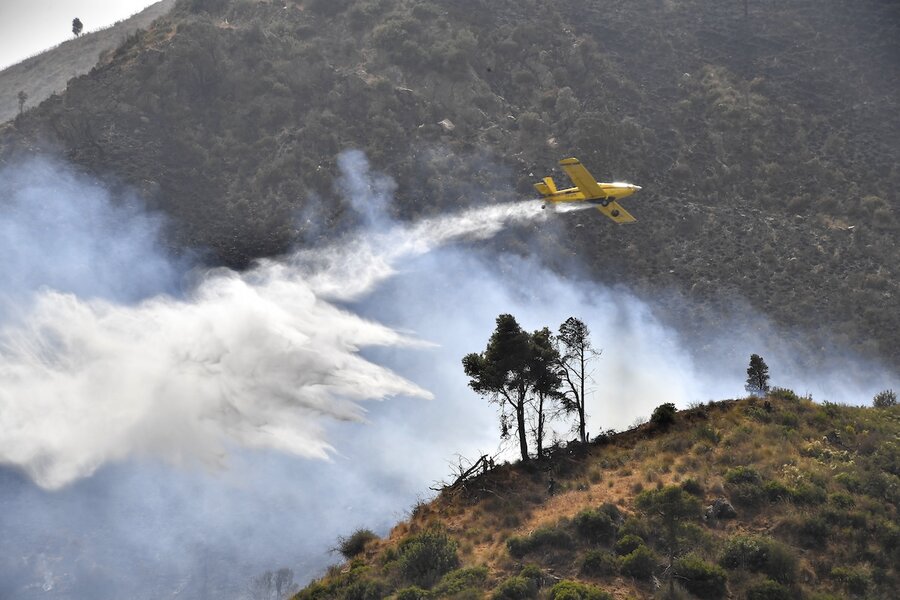
After Algeria's catastrophic August 2021 wildfires, which killed more than 100 people and caused over US$124 million in damage, the government adopted a new Forestry Law in 2023 and a Law on Disaster Risk Management in 2024, followed by a July 2024 decree reorganising how fire prevention and suppression are coordinated across the country's roughly 4.1 million hectares of forest (68% Aleppo pine, 21% cork oak), which lose an average of 35,000 hectares to fire every year.
The pilot is intended as the template for a nationwide investment plan now under development by the General Directorate of Forests and the National Delegation for Major Risks.
With support from the World Bank's multi-donor PROGREEN trust fund, a pilot early-warning and rapid-response system was deployed in Bejaia, Algeria's second most fire-affected province, where 5,300 fires burned more than 144,000 hectares between 1985 and 2022. The pilot combines AI-assisted high-resolution cameras and drones for hotspot detection with new access roads and water points.
Algerian officials and state media describe the 2024 and 2025 fire seasons as markedly less damaging, but the World Bank's own account of the pilot, published in 2026, does not itself report a quantified before/after reduction in area burned for Bejaia.
The on-the-ground ecological and fire-suppression impact of the technology deployment specifically remains to be independently confirmed, even as the legal and institutional groundwork is real and citable.
National / regional programmes
Indicative funding routes for practices of this type — always check each programme's current calls and eligibility rules.
Do you run this practice? Claim it — verified implementers get a public contact pathway and can propose corrections.
Where this practice's information was retrieved from, and when.
Iceland
Since 2007, Iceland's Hekluskógar project has enlisted 210+ landowners to re-establish native birch woodland around the Hekla volcano, planting 2.3M+ …
Indonesia
APRIL's Fire Free Village Programme pays Riau villages IDR 50–100 million for staying fire-free; a peer-reviewed 2019 study found programme …
Guyana
Guyana's Forestry Commission built a national satellite MRV system that verified a 0.068% deforestation rate, earning $190M from Norway (2009-2015). …
Vietnam
Since 2010, Vietnam's nationwide Payment for Forest Environmental Services has raised ~VND 10,000bn (2008-2018), mostly from hydropower. Lam Dong piloted …
Open full copilot Grounded in cited practices — always check the sources.