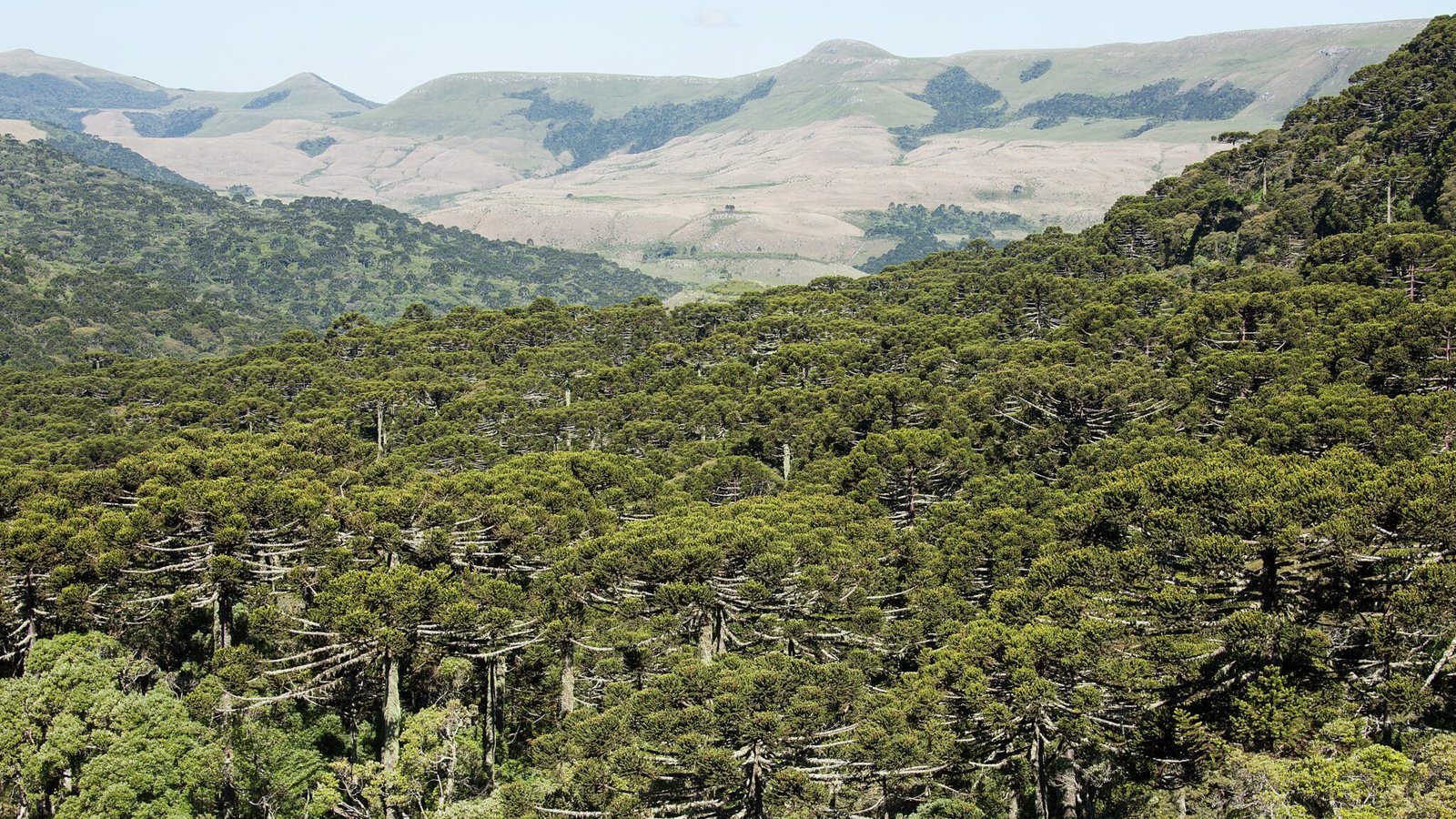
Created by Brazil's 2012 Forest Code but only operationalised in October 2025, the CRA lets landowners with surplus native vegetation sell tradable credits to those needing to offset a Legal Reserve deficit — a market valued at R$12.75bn/year, though only two titles are issued.
2 titles
CRA titles issued at launch (as of October 2025)
12.75 BRL billion
Estimated potential annual market value
500 BRL per hectare per year
Reference price used for the estimate
Details
Maturity
Pilot
Promoter
Brazilian Forest Service (SFB) / Ministry of Environment and Climate Change (MMA)
Brazil's 2012 Forest Code created the Cota de Reserva Ambiental (CRA) — a tradable title representing one hectare of native vegetation surplus (existing or under restoration) on a rural property, allowing landowners with more forest than the law requires to sell that surplus to landowners with a Legal Reserve deficit elsewhere in the same biome.
Objectives
The mechanism aims to let landowners with a Legal Reserve deficit comply with conservation obligations, or fund environmental service payments, by purchasing credits instead of restoring the land themselves.
Activities
The framework existed on paper for over a decade before it was operationalised: on 30 October 2025, the Brazilian Forest Service (SFB) and the Ministry of Environment and Climate Change (MMA) issued the country's first CRA titles, from two private forest reserves in Nova Friburgo, Rio de Janeiro state. Registration runs through the Rural Environmental Registry System (Sicar), with monitoring by state environmental agencies using satellite imagery, land-cover-change alerts and a defined measurement, reporting and verification (MRV) protocol; settlement can occur via commodity exchanges or platforms recognised by Brazil's Central Bank.
Results
Using a reference price of R$500 per hectare per year, the SFB estimates the mechanism could eventually mobilise around R$12.75 billion annually against a declared national Legal Reserve deficit in the tens of millions of hectares. At launch, the scheme remains almost entirely untested in practice: only two CRA titles had been issued as of the October 2025 launch event, and no transaction volume, verified conservation outcome, or market price data yet exists beyond the reference figures used to estimate the market's theoretical size.
Conclusions
Brazil's forest-credit markets have also had a difficult history — an earlier, informal CRA trading platform saw very limited uptake after 2012 — so realising this potential will depend on sustained enforcement of Legal Reserve compliance and market participation that has not yet materialised.
Implementation
Indicative cost
Medium (€50k–€500k) — Government implementation cost centres on the Sicar registry and satellite MRV protocol; the market itself is estimated by SFB at up to R$12.75 billion/year at full theoretical scale, though only two titles have transacted so far.
Time to results
Long (> 3 years) — Legal framework created 2012, operationalised October 2025 — a long, decade-plus rollout of national infrastructure.
Staffing & skills
Brazilian Forest Service (SFB), Ministry of Environment and Climate Change (MMA), State environmental agencies (monitoring), Landowners (sellers and buyers of CRA titles)
Conditions for success
Sustained enforcement of Legal Reserve compliance
Market participation from landowners with vegetation deficits
Functioning Sicar registration and satellite-based MRV monitoring
Common failure modes
An earlier informal CRA trading platform after 2012 saw very limited uptake
Only two titles issued 13 years after the Forest Code created the instrument
No transaction volume or verified conservation outcome data exists yet
Commonly funded by
National / regional programmes
Indicative funding routes for practices of this type — always check each programme's current calls and eligibility rules.
Do you run this practice?
Claim it —
verified implementers get a public contact pathway and can propose corrections.
Data sources
Where this practice's information was retrieved from, and when.
Indonesia's Landsat-based national forest-carbon MRV system verified emission cuts that triggered two results-based payments: $56m from Norway (11.23 Mt CO2e, …