LIFE Blue Natura — Andalusia's Posidonia Blue-Carbon Standard (Spain)
Spain
EU LIFE-funded project mapped carbon stocks across 13,000+ ha of Andalusian Posidonia oceanica meadows and salt marshes (13,085 ktCO2 stored), …
Australia · Melbourne · See the Australia profile · See the Melbourne profile
Evidence: Quasi-experimental Top 96% 20/100 · Ask Evidence Copilot about this practice
Victoria's BushBroker native-vegetation offset scheme (386 sites, 19,000+ ha, since 2006) was independently audited and peer-reviewed in 2024: both found little evidence it achieves 'no net loss', with weak compliance tracking and no detectable added biodiversity benefit.
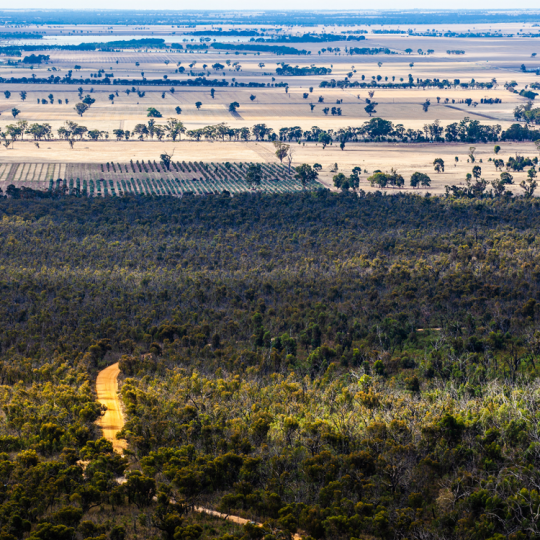
Established in 2006 under Victoria's Native Vegetation Management Framework, BushBroker requires developers who clear native vegetation to purchase equivalent credits from landowners who protect or restore vegetation elsewhere, tracked through the state's online Native Vegetation Credit Register.
The scheme's stated policy objective is 'no net loss' of native vegetation from clearing on private land.
At its audited scale the scheme covers 386 registered offset sites and more than 19,000 hectares statewide, having originally issued 5,287 tradeable credits; landowner payments have averaged AUD 45,000–170,000 per hectare (or AUD 500–2,300 per tree for smaller agreements).
A 2024 peer-reviewed study in Global Change Biology compared 196 early offset sites (registered 2006-2008) against matched non-participating land using satellite data through 2018: it found no detectable additional protection from 'avoided loss' offsets, and apparent gains from 'regeneration' offsets were not robust once a single fire-affected outlier site was excluded. Separately, the Victorian Auditor-General's Office concluded the state 'is not achieving its objective of no net biodiversity loss': only 49.7% of clearing permits issued in 2018-2020 had documented proof of a corresponding offset credit, at least five cases of credits being resold or double-counted were identified, and one council took action on only 5 of 69 illegal-clearing complaints it received.
BushBroker is a well-evidenced cautionary case rather than a demonstrated success: independent, methodologically rigorous scrutiny — a government audit plus a peer-reviewed matched-control study — found that formal biodiversity-offset infrastructure at scale did not reliably deliver its stated 'no net loss' objective.
National / regional programmes
Indicative funding routes for practices of this type — always check each programme's current calls and eligibility rules.
Do you run this practice? Claim it — verified implementers get a public contact pathway and can propose corrections.
Where this practice's information was retrieved from, and when.
Spain
EU LIFE-funded project mapped carbon stocks across 13,000+ ha of Andalusian Posidonia oceanica meadows and salt marshes (13,085 ktCO2 stored), …
Chile
Chile's environmental court approved a binding, up to US$93m agreement forcing the world's largest copper mine to fund 19 measures …
Mauritania
Mauritania's BACoMaB endowment, seeded in 2009 by the government, KfW, AFD, FFEM and MAVA, funds Banc d'Arguin, Diawling and the …
Colombia
Colombia's first Habitat Bank to issue tradeable Voluntary Biodiversity Credits protects 340 ha of Andean cloud forest in Támesis, Antioquia; …
Open full copilot Grounded in cited practices — always check the sources.