Colombo Wetland Management Strategy — Ramsar Wetland City Flood Buffer
Sri Lanka
Colombo's 2016 Wetland Strategy protects a 1,900-hectare wetland complex absorbing roughly 40% of the city's floodwater; Sri Lanka must keep …
Uganda · Buhoma, Bwindi Impenetrable National Park · See the Uganda profile
Evidence: Observational / pre–post Top 76% 33/100 · Ask Evidence Copilot about this practice
Since 1994, Uganda has shared 20% of park revenue plus a $10-per-permit gorilla levy with communities bordering Bwindi, funding schools and clinics as the mountain gorilla population grew from 240 to over 1,000 — though independent evaluation finds mixed local attitudes.
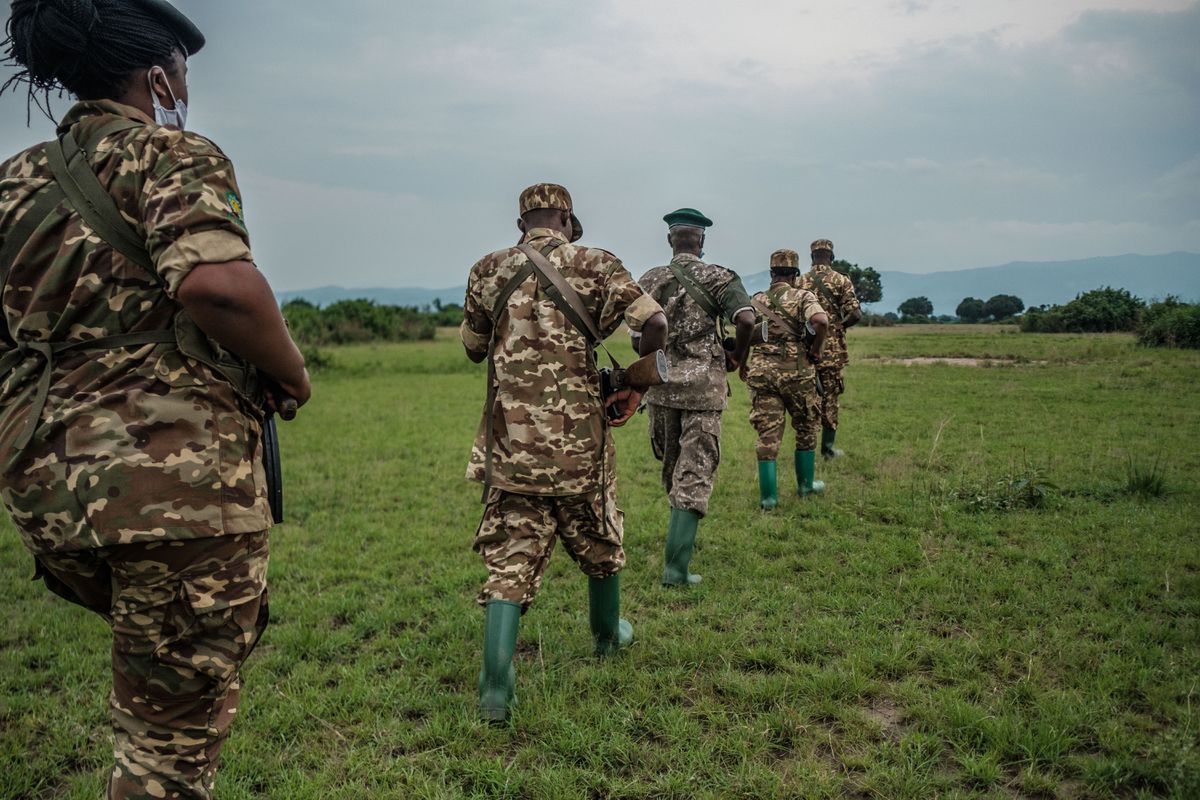
Established in 1994/95, the Uganda Wildlife Authority's revenue-sharing scheme returns 20% of annual park revenue to parishes bordering national parks and wildlife reserves, plus, at Bwindi specifically, a direct $10 levy on every gorilla-tracking permit sold, raised from $5 in July 2015.
Districts retain 5% for administration and forward 95% to sub-counties for approved projects that must either reduce human-wildlife conflict or improve frontline village livelihoods, including schools, health centres, feeder roads, water tanks, goat-rearing, beekeeping and Mauritius-thorn hedges to deter crop-raiding wildlife, with only villages directly bordering the park qualifying.
Over the same three decades, the mountain gorilla — found only in the Bwindi-Sarambwe ecosystem and the Virunga Massif — grew from about 240 individuals thirty years ago to 1,063 in the most recent joint census (459 in Bwindi-Sarambwe, 604 in Virunga), leading the IUCN to downgrade the species from Critically Endangered to Endangered in 2018.
Independent research led by IIED, however, found that despite three decades of revenue-sharing, many communities bordering the park still hold negative attitudes toward it, concluding that the scheme 'has not to date generated significant benefits for the majority of people living around the park' — a widely cited finding that the gorilla population recovery cannot be attributed to revenue-sharing alone, and that a well-documented governance structure does not by itself guarantee strong local buy-in.
Own resources / municipal budget
Indicative funding routes for practices of this type — always check each programme's current calls and eligibility rules.
Do you run this practice? Claim it — verified implementers get a public contact pathway and can propose corrections.
Where this practice's information was retrieved from, and when.
Sri Lanka
Colombo's 2016 Wetland Strategy protects a 1,900-hectare wetland complex absorbing roughly 40% of the city's floodwater; Sri Lanka must keep …
Nicaragua
Plan Vivo–certified community reforestation with 4,000+ smallholder families across 17,000+ ha in Estelí highlands. All 2015–2021 credits independently verified; US$3.1M …
United Kingdom
Since 2000 the Knepp Estate has replaced intensive farming on 1,400 ha with free-roaming grazers and natural regeneration; surveys report …
United Kingdom
Ten years of University of Exeter research on wild beavers on the River Otter: storm peak flows ~30% lower on …
Open full copilot Grounded in cited practices — always check the sources.