SLINTEC — Sri Lanka's Public–Private Nanotechnology Institute
Sri Lanka
Sri Lanka's public–private SLINTEC lost over 80 scientists to funding strain by 2022, then commercialised 8 patents in 12 months …
Czechia · Brno · See the Czechia profile · See the Brno profile
Evidence: Descriptive / self-reported Top 74% 57/100 · Ask Evidence Copilot about this practice
Since 2011, CEITEC has built a €223M EU-funded life-sciences and nanotechnology research institute across six Brno universities/institutes, producing 8 technology spinouts — though a 2025 national audit flags weakening Czech research-to-patent commercialization broadly.
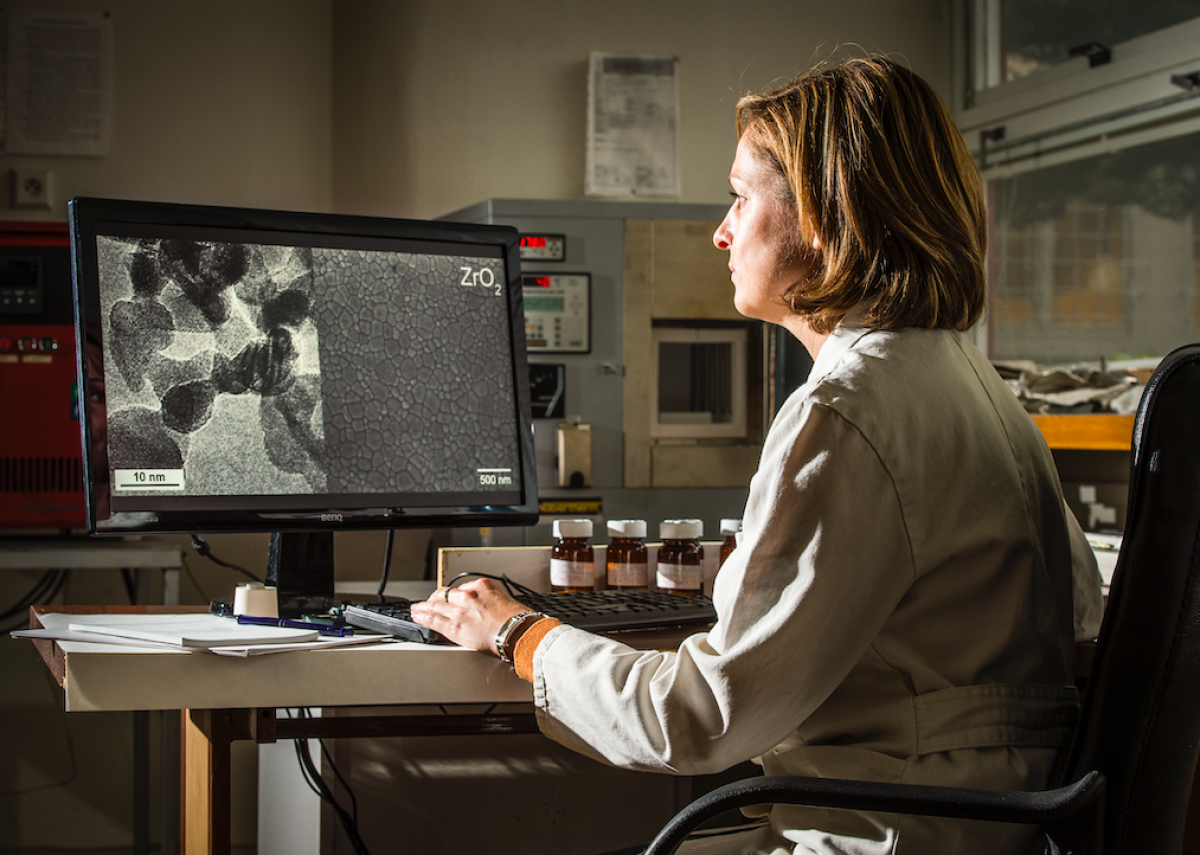
CZ06CEITEC (Central European Institute of Technology) is a life-sciences, advanced-materials and nanotechnology research institute formed as a consortium of six Brno institutions — Masaryk University (lead), Brno University of Technology, Mendel University, the University of Veterinary Sciences, the Veterinary Research Institute, and the Institute of Physics of Materials of the Czech Academy of Sciences. The European Commission approved the project on 6 June 2011 and it opened that September, funded through the EU Operational Programme 'Research and Development for Innovations' and the Czech state budget.
Construction between 2011 and 2015 cost €223 million (€189m EU Structural Funds, €34m Czech state budget), delivering 25,000 m² of laboratory space across two campuses. A follow-on 2016-2020 National Sustainability Programme grant (CZK 986 million approved support) and a 2014-2019 EU 'CEITEC_ERA' capacity-building project (€2.25 million EU contribution) funded continued institutional development.
CEITEC reports 1,400+ staff from 45+ countries, 61 research groups across 7 programmes, and more than 500 scientific publications a year. Its technology-transfer arm CEITEC BUT reports eight technology startups created to date, including the atomic-force-microscopy spin-off NenoVision and a Masaryk University spin-off developing STI diagnostics. These figures are institute-reported and were not independently cross-verified.
No CEITEC-specific independent audit or critical evaluation was found. A 2025 Czech Supreme Audit Office (NKÚ) report found that Czech research funding overall lacks strategic direction and that patents funded by the Technology Agency of the Czech Republic fell from 113 (2019) to 65 (2023) — a general Czech R&D commercialisation trend relevant as context, though not a CEITEC-specific finding.
ERDF — European Regional Development Fund
Indicative funding routes for practices of this type — always check each programme's current calls and eligibility rules.
Do you run this practice? Claim it — verified implementers get a public contact pathway and can propose corrections.
Where this practice's information was retrieved from, and when.
Sri Lanka
Sri Lanka's public–private SLINTEC lost over 80 scientists to funding strain by 2022, then commercialised 8 patents in 12 months …
Switzerland
The EPFL Innovation Park in Lausanne houses 250 high-tech companies and 2,500 researchers, enabling structured university–industry knowledge transfer. EPFL-related startups …
Norway
Nordic region's largest tech-transfer office, merging University of Oslo and Oslo University Hospital's TTOs: 2,072 inventions, 388 licences and 55 …
New Zealand
Since 2011, KiwiNet has pooled New Zealand's university and Crown Research Institute commercialisation efforts, backing 82+ spin-outs and $560m in …
Open full copilot Grounded in cited practices — always check the sources.