Vida Manglar — Colombia's First Verified Blue Carbon Mangrove Project (Cispatá Bay)
Colombia
Conservation International and Colombian partners' Vida Manglar project protects and restores mangroves across Cispatá Bay, scaling from 7,500 to 11,000 …
Cayman Islands · Grand Cayman · See the Cayman Islands profile
Evidence: Descriptive / self-reported Top 41% 47/100 · Ask Evidence Copilot about this practice
The National Trust for the Cayman Islands is buying parcels of the 8,655-acre Central Mangrove Wetland -- the Caribbean's largest contiguous mangrove -- protecting habitat for 83% of the country's whistling-duck population against 64% private-ownership development risk.
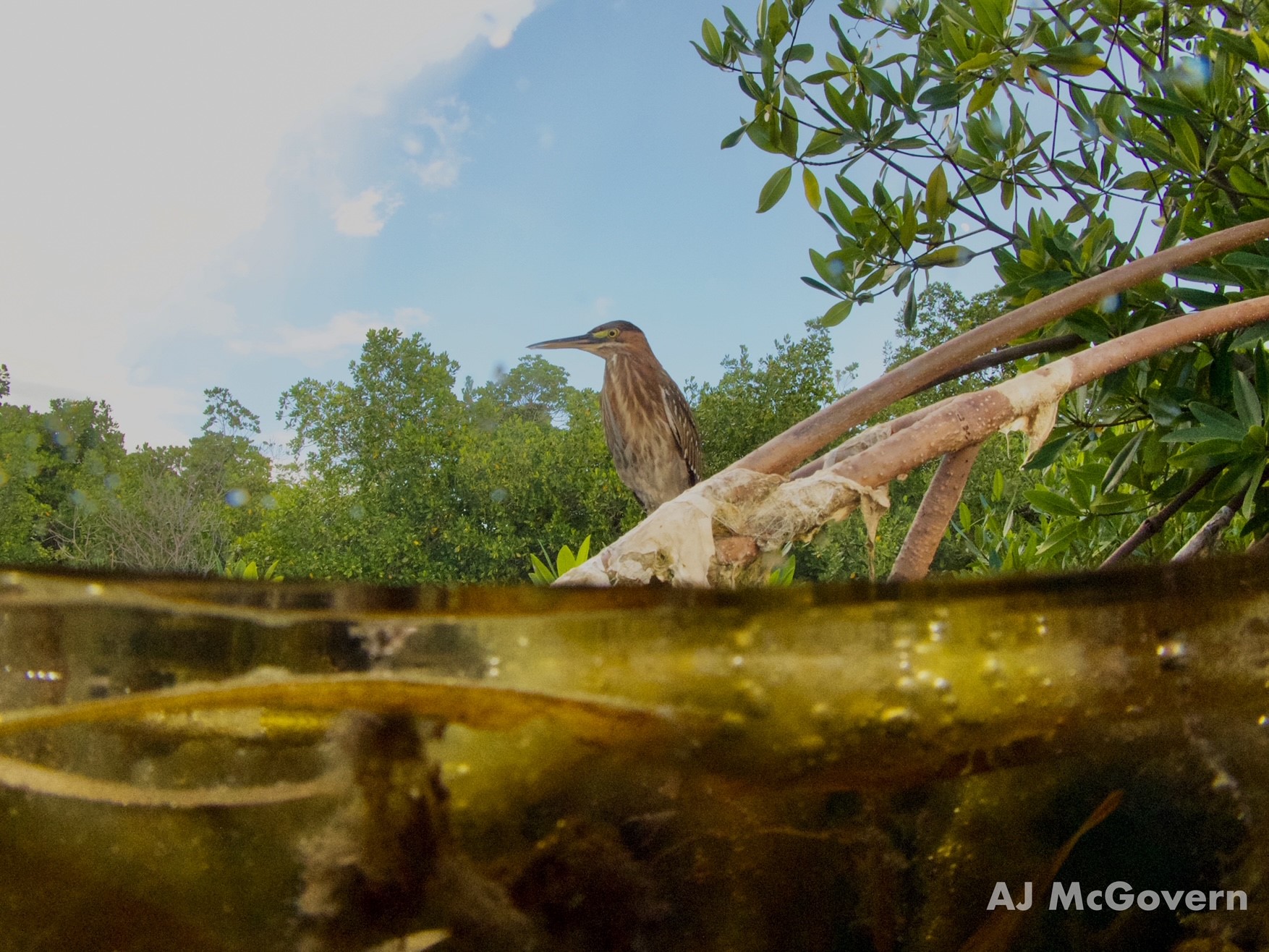
The Central Mangrove Wetland spans 8,655 acres across interior Grand Cayman, widely described as the largest remaining contiguous mangrove wetland in the Caribbean and covering roughly 30% of the island's land area; its evapotranspiration is credited with supplying about 40% of western Grand Cayman's rainfall.
The National Trust for the Cayman Islands is acquiring parcels of the wetland to protect it against ongoing development pressure, alongside the government's 1986 Environmental Zone designation.
The Trust buys land through an ongoing acquisition programme funded partly by public 'Island Offset' donations, and now owns and protects 1,032 acres (about 12% of the total).
A Key Biodiversity Areas factsheet documents internationally significant bird populations: at least 1,500 West Indian Whistling-Ducks (83% of the Cayman Islands' national population), 253-379 Grand Cayman Parrots (about 5% of the global population), and roughly 500 breeding pairs of Snowy Egret, Little Blue Heron and Tricoloured Heron.
64% of the wetland remains privately owned and at risk of clearing, and western Grand Cayman has already lost more than 70% of its mangrove habitat since the 1970s, so the land-trust model is protecting a globally significant site but has covered only a minority of it to date; the site also still lacks Ramsar designation despite advocacy.
Philanthropic / foundation funding
Indicative funding routes for practices of this type — always check each programme's current calls and eligibility rules.
Do you run this practice? Claim it — verified implementers get a public contact pathway and can propose corrections.
Where this practice's information was retrieved from, and when.
Colombia
Conservation International and Colombian partners' Vida Manglar project protects and restores mangroves across Cispatá Bay, scaling from 7,500 to 11,000 …
China
Shenzhen verified 38,745 t of mangrove-protection carbon sink at Futian Nature Reserve (2010-2020) and auctioned 3,875 t in China's first …
Costa Rica
Costa Rica's first marine PES scheme pays Gulf of Nicoya mollusk-harvester associations for verified mangrove conservation, scaling from 157 harvesters …
Sierra Leone
In October 2025, 124 communities on Sierra Leone's Sherbro Island signed a 50-year blue-carbon deal with developer West Africa Blue …
Open full copilot Grounded in cited practices — always check the sources.