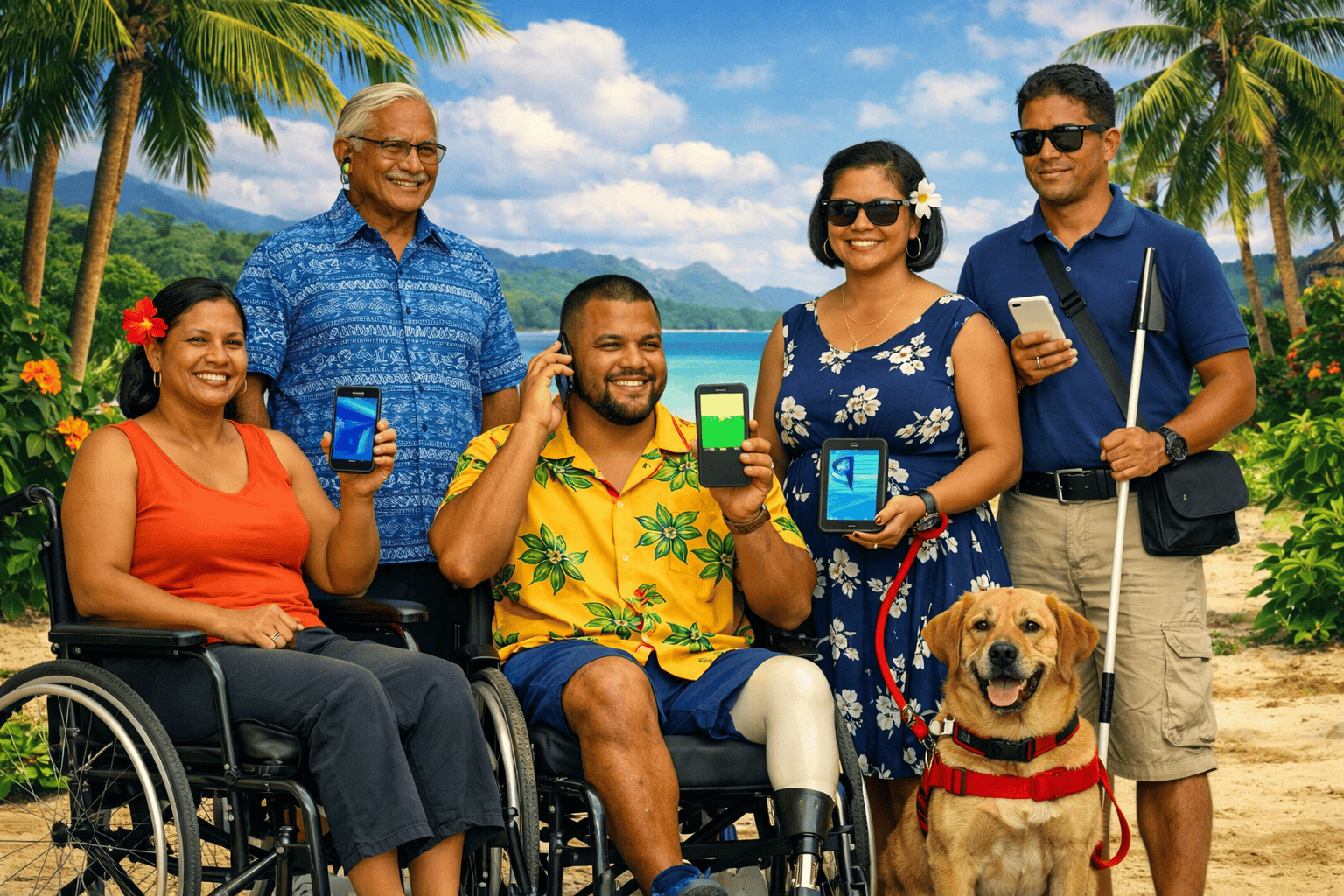
Across the Pacific, children with vision, hearing or mobility impairments are routinely undiagnosed because schools and clinics lack systematic screening, leaving them without the assistive devices needed to learn.
Launched in 2025 under ATscale's "Unlock Healthy Learning" initiative and backed by a US$10.5 million grant from the Australian Government, the Strengthening Pacific Assistive Technology and Rehabilitation for Kids (SPARK) programme runs across seven countries — Fiji, Kiribati, Samoa, Solomon Islands, Tonga, Vanuatu and the Federated States of Micronesia. In Vanuatu, it is delivered through UNICEF with the Ministries of Health, Education, and Justice, Youth & Community Services, alongside the Vanuatu Society for People with Disability.
Vanuatu's rollout targets more than 3,000 school-aged children, including an estimated 2,050 needing eyeglasses, 340 needing hearing aids, and 680 who could benefit from mobility devices such as wheelchairs and walking frames. Teachers and health workers on Efate and Santo have already received training in early identification, screening and referral.
The programme is still in its first year of a three-year grant with no independent outcome evaluation yet published, and — like similar donor-funded pilots — its post-2028 financing and institutional ownership have not been publicly detailed, leaving sustainability an open question.
Read the full analysis: https://islandsbusiness.com/partner-news/pacific-disability-forum-marks-world-day-for-assistive-technology/
Where this practice's information was retrieved from, and when.