SASA! Community Mobilisation Programme against Intimate Partner Violence — Uganda
Uganda
SASA! is a community mobilisation model to prevent intimate partner violence (IPV), developed in Kampala, Uganda. A cluster RCT (2007–2012) …
Nepal · Bharatpur · See the Nepal profile · See the Bharatpur profile
Top 83% 37/100 · Ask Evidence Copilot about this practice
A radio drama and weekly community listening groups run by Equal Access International in Chitwan, Nawalparasi and Kapilvastu, Nepal. A cluster-randomised trial found significant gains on secondary outcomes; primary violence figures were not independently confirmed here.
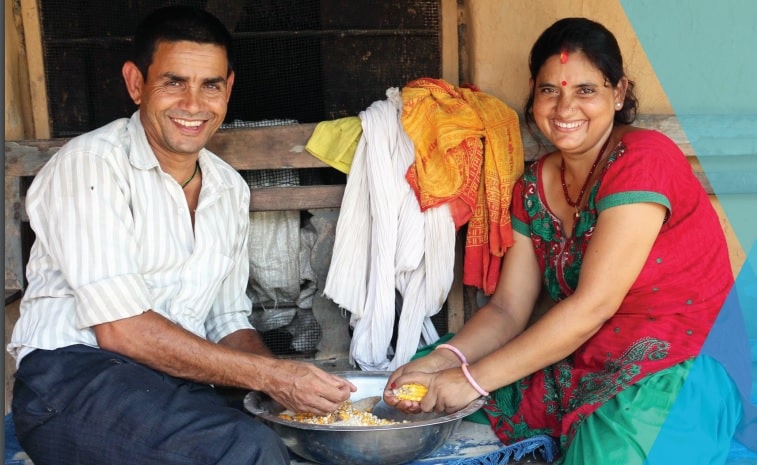
Change Starts at Home combined a serial radio drama with weekly, facilitator-led community listening and discussion groups (LDGs), run by Equal Access International across 36 communities in Nepal's Chitwan, Nawalparasi and Kapilvastu districts. The 40-week intervention targeted married couples directly, alongside broader radio audiences, aiming to shift the household and community norms that sustain intimate partner violence (IPV).
The programme was evaluated through a cluster-randomised controlled trial designed with Emory University and the University of Minnesota, funded by the UK's former Department for International Development under its 'What Works to Prevent Violence' programme. At baseline, roughly a quarter of women surveyed in the Terai intervention districts reported past-year IPV. Published analyses (Journal of Interpersonal Violence, 2021; Journal of Family Violence, 2025) report statistically significant improvements at midline and/or endline in secondary outcomes — including in-law violence, couples' financial decision-making, communication and relationship quality — and qualitative interviews describe reduced husband's alcohol use and improved conflict resolution among participating couples.
This review could not independently verify a single quantified topline effect size for the trial's primary physical/sexual IPV outcome from openly accessible sources, since the peer-reviewed results sit behind journal paywalls. The programme is included on the strength of its rigorous cluster-RCT design, multiple published follow-on analyses through 2025, and consistently positive secondary-outcome findings, but its evidence score reflects that the core violence-reduction result was not independently confirmed here.
Read the full analysis: https://www.equalaccess.org/resources/intimate-partner-violence-ipv-in-nepal-change-starts-at-home-study/
Implementation detail (cost, timeline, staffing, conditions for success) is not yet available for this practice.
Do you run this practice? Claim it — verified implementers get a public contact pathway and can propose corrections.
Where this practice's information was retrieved from, and when.
Uganda
SASA! is a community mobilisation model to prevent intimate partner violence (IPV), developed in Kampala, Uganda. A cluster RCT (2007–2012) …
Nicaragua
Puntos de Encuentro's youth TV drama and community-mobilisation strategy reached 70% of young Nicaraguan women; a three-year panel of 4,500 …
Nepal
A cluster-randomised trial in Nepal's Terai region combined a 9-month couples' curriculum with an 8-month community diffusion campaign, finding sustained …
Rwanda
Indashyikirwa ('Agents of Change') trains couples in a 21-session curriculum to prevent partner violence. A cluster-RCT across 28 Rwandan sectors …
Open full copilot Grounded in cited practices — always check the sources.