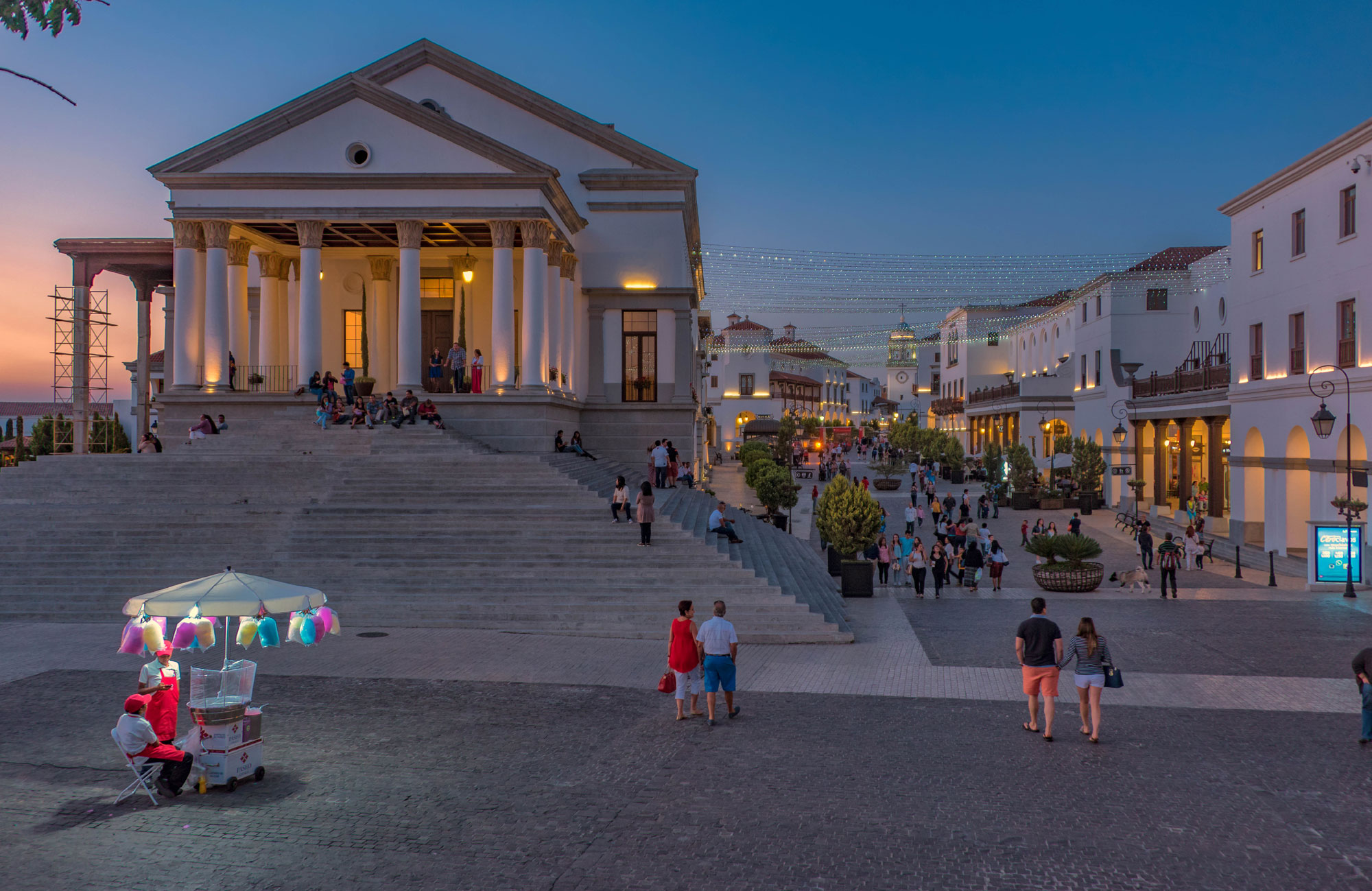
A privately built New Urbanist district in Guatemala City — 350 shops, 650 residences and a 2021 CNU Charter Award — that the mayor wants to replicate citywide, yet ~$1,300/month rents (over double average income) draw criticism as an exclusive enclave.
350 shops
Shops in district
650 units
Residences in district
60 blocks
Building blocks
100 acres
Nature preserve area
1300 USD/month
Average apartment rent
579 USD/month
Guatemala average monthly income (comparison)
Details
Maturity
Established
Promoter
Estudio Urbano
Period
2003–ongoing
Keywords
urban planning, real estate development, new urbanism, mixed-use development
Context
Ciudad Cayala is a privately developed New Urbanist district built as an extension of Guatemala City from 2003, designed by Estudio Urbano with master planner Leon Krier as a deliberate alternative to the car-dependent sprawl around it.
Objectives
The project applies traditional town-planning principles -- mixed-use blocks, walkable streets, plazas and human-scale buildings -- to demonstrate an alternative urban-growth model within the capital.
Activities
By the early 2020s the district had grown to more than 60 building blocks along 45 streets, avenues and boulevards, including roughly 350 shops, 650 residences, a university campus, a hotel, health facilities and a 100-acre nature preserve.
Results
In 2021 the Congress for New Urbanism gave the project its Charter Award, and Guatemala City's mayor publicly proposed extending the 'Cayala effect' to other districts of the capital. However, typical rents of about $1,300 a month are more than double the national average income of roughly $579, and independent commentary describes the district as an enclave largely inaccessible to most Guatemalans.
Conclusions
Cayala's design achievements are independently recognised, but the evidence on its social and economic accessibility is mixed, with its benefits concentrated among residents and shoppers who can afford it.
Implementation
Indicative cost
High (€500k–€5M)
Time to results
Long (> 3 years)
Staffing & skills
Estudio Urbano (developer/design firm), Leon Krier (master planner)
Conditions for success
Sustained private capital investment over two decades
Mixed-use, walkable master plan applying New Urbanist principles
Anchor institutions (university campus, hotel, health facilities) driving foot traffic
Common failure modes
High rents make the district inaccessible to most residents, undermining broader public benefit
Reliance on private capital rather than public funding limits direct public-sector replicability
Commonly funded by
National / regional programmes
Indicative funding routes for practices of this type — always check each programme's current calls and eligibility rules.
Do you run this practice?
Claim it —
verified implementers get a public contact pathway and can propose corrections.
Data sources
Where this practice's information was retrieved from, and when.