Medellín Social Urbanism — Cable Cars, Escalators and Urban Acupuncture
Colombia
Medellín integrated cable-car lines and hillside escalators with neighbourhood upgrading to connect its poorest comunas to the city, cutting homicide …
Czechia · Ostrava · See the Czechia profile
Evidence: Observational / pre–post Top 27% 76/100 · Ask Evidence Copilot about this practice
EU-funded living lab planted 442 trees, 1,867 shrubs and 14,700 m² of lawns in Ostrava's most-polluted districts, deployed a low-cost air-quality sensor network, and published a peer-reviewed green-infrastructure methodology for PM10 capture already adopted by two Czech cities.
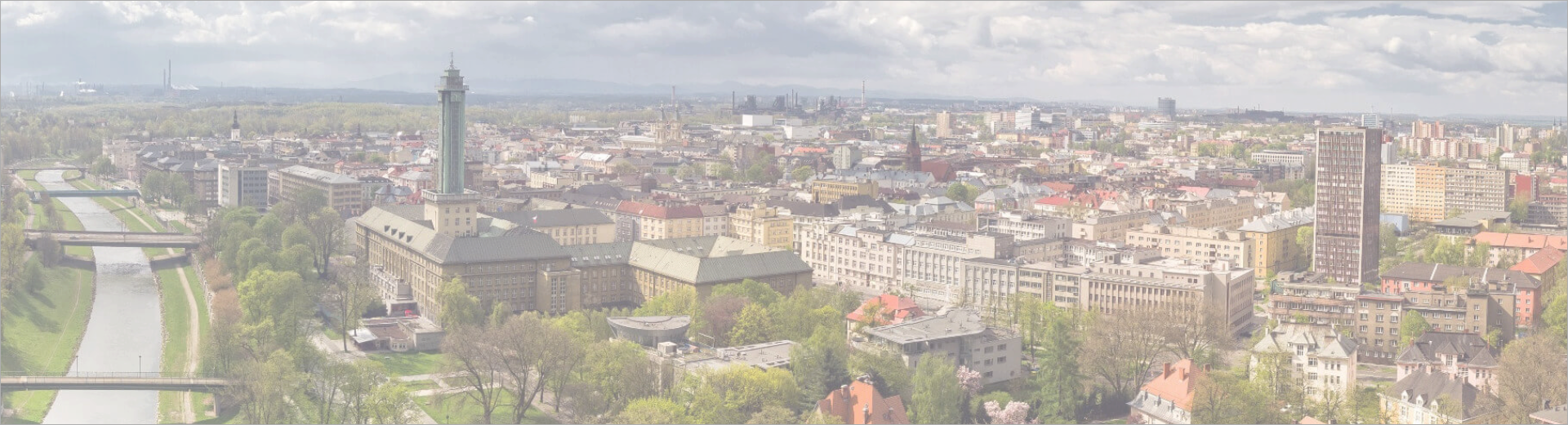
CZ08CLAIRO (UIA03-234) was co-financed by the European Regional Development Fund via Urban Innovative Actions (~€2.7M total budget, ~€2.2M EU share), led by the City of Ostrava with the Technical University of Ostrava (VSB-TU) as scientific partner. It targeted Ostrava's most air-polluted residential districts, Radvanice (~12,000 m²) and Bartovice (~8,000 m²), where EU annual-mean PM10/PM2.5 limits had regularly been exceeded.
Deploy a low-cost sensor network for continuous multi-year air-quality monitoring and develop a validated green-infrastructure methodology to capture ozone, SO2, NO2, CO and PM10 under Central European conditions.
From August 2019, a modular network of low-cost optical and electrochemical sensors was installed alongside reference instruments. In spring 2021, 442 trees, 1,867 shrubs and 14,700 m² of lawn were planted at both sites. Palacký University contributed plant-hormone research to improve tree survival in polluted soils. Over 1,200 residents were surveyed on attitudes to air quality and urban greenery.
A peer-reviewed methodology specifying pollution-optimised tree-species mixes was published (MDPI Environments, 2021), validated against reference instruments. Following dissemination workshops, the City of Trinec and the City of Orlova adopted the CLAIRO methodology and updated their strategic planning documents. The scientific monitoring programme runs through 2027.
The project demonstrates a replicable sensor-plus-species-selection methodology, already adopted by two other Czech cities, though city-wide PM10-reduction outcomes are still pending from the ongoing monitoring programme.
National / regional programmes LIFE Programme
Indicative funding routes for practices of this type — always check each programme's current calls and eligibility rules.
Do you run this practice? Claim it — verified implementers get a public contact pathway and can propose corrections.
Where this practice's information was retrieved from, and when.
Documented replications and adaptations of this practice elsewhere.
| Place | When | Adopter | Outcome |
|---|---|---|---|
| Trinec, Czechia | — | City of Trinec | Adopted the CLAIRO green-infrastructure methodology and updated strategic planning documents. |
| Orlova, Czechia | — | City of Orlova | Adopted the CLAIRO green-infrastructure methodology and updated strategic planning documents. |
Colombia
Medellín integrated cable-car lines and hillside escalators with neighbourhood upgrading to connect its poorest comunas to the city, cutting homicide …
Austria
Vienna's long-term, legally-binding smart-city strategy (first 2011, updated 2019/2022) aligning resource conservation, quality of life and social inclusion with annual …
Finland
Helsinki's city-owned innovation company co-creates smart-city, mobility and data solutions through agile pilots in real neighbourhoods (Smart Kalasatama, Jätkäsaari Mobility …
Portugal
Smart Open Lisboa (SOL) is a startup program focused on the validation and integration of innovative solutions meant to upgrade …
Open full copilot Grounded in cited practices — always check the sources.