Acorn Coffee Agroforestry Carbon Programme — San Martín (Peru)
Peru
Rabobank Acorn / Solidaridad / Lutheran World Relief agroforestry programme with ~1,000 coffee producers in San Martín, Peru; over 10,000 …
Colombia · La Sierra · See the Colombia profile
Solidaridad / Rabobank Acorn ex-post carbon-payment programme for ~1,200 smallholder coffee farmers in Cauca, Colombia; satellite-verified Plan Vivo certificates paid one farmer $520 for 26 tCO2 sequestered on 3 ha, funded partly by the German Postcode Lottery.
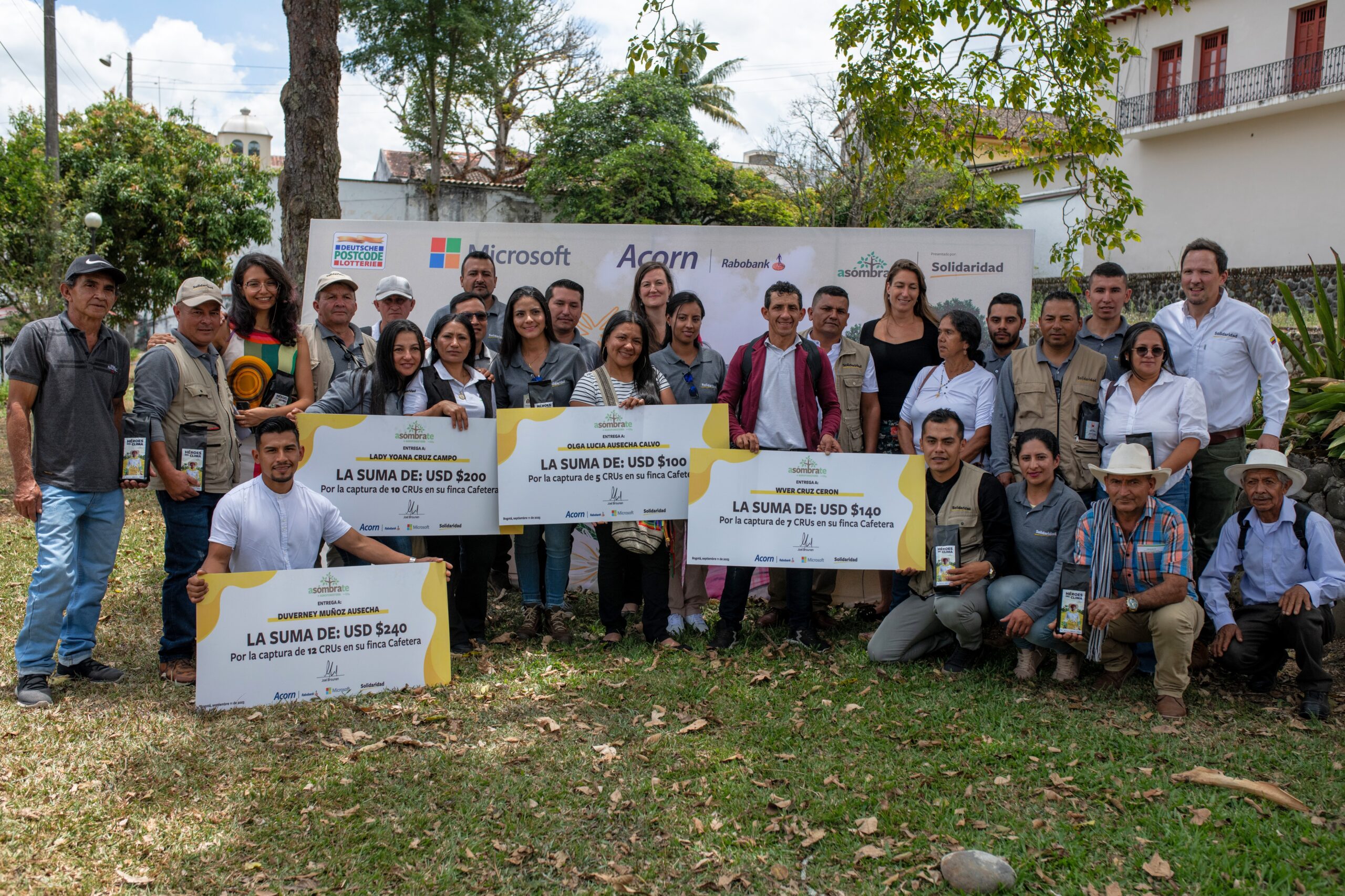
"Coffee Farmers Become Climate Heroes" is a Solidaridad-led programme, funded in part by the German Postcode Lottery and delivered on Rabobank's Acorn carbon platform, that pays smallholder coffee growers in Colombia's Cauca department for carbon sequestered by planting shade and medicinal trees alongside their coffee. The scheme uses the Plan Vivo-certified Acorn Agroforestry Methodology, with tree growth measured by satellite imagery and machine-learning algorithms; carbon certificates are issued ex-post, once sequestration is actually detected, rather than projected in advance.
In the village of La Sierra, roughly two hours from Popayán, around 1,200 smallholders take part. A documented example is farmer Diego Edison López, who together with his wife converted part of a 3-hectare farm (1 ha coffee, 2 ha protected woodland) and was credited with 26 tonnes of CO2 sequestered, receiving a payment of US$520 in autumn 2023 - a rate above the programme's minimum guaranteed floor of €20/tonne, with market sales elsewhere in the programme reaching €31/tonne. Of certificate revenue, 80% goes directly to producers, 10% to the Acorn platform and 10% to Solidaridad for programme delivery; Microsoft is among the corporate buyers of the resulting credits. Regional productivity on participating farms is reported to have risen 15-20% over three years as shade trees improved soil and microclimate conditions.
As with the parallel Peru cohort, first payments only arrive around three years after planting, once trees are reliably satellite-detectable, and reported outcomes such as the Diego López example are illustrative case data rather than a full independent audit of the entire Cauca cohort; average regional sequestration is reported at 4-6 tonnes per hectare, with this farm's yield notably higher.
Read the full analysis: https://www.solidaridadnetwork.org/news/coffee-farmers-in-colombia-receive-payments-for-carbon-sequestration/
Implementation detail (cost, timeline, staffing, conditions for success) is not yet available for this practice.
Where this practice's information was retrieved from, and when.
Peru
Rabobank Acorn / Solidaridad / Lutheran World Relief agroforestry programme with ~1,000 coffee producers in San Martín, Peru; over 10,000 …
Côte d'Ivoire
Since 2021, Swiss NGO FarmStrong has interplanted cocoa farms in Côte d'Ivoire's Nawa Region with timber and fruit trees across …
Uganda
A 20-year Plan Vivo agroforestry-carbon scheme run by ECOTRUST: 50,000+ smallholders, 34,000 ha, ~7.5 MtCO2, US$8.7M in performance-based payments, with …
Ethiopia
Plan Vivo- and Gold Standard-certified dryland restoration in Tigray, Ethiopia: landless and smallholder farmers have restored 30,000+ ha since 2016, …
Open full copilot Grounded in cited practices — always check the sources.