Vietnam Urban Upgrading Project — Participatory Infrastructure Upgrading for Low-Income Areas
Vietnam
A decade-long World Bank-financed programme upgraded drainage, roads and utilities in low-income alleys across Ho Chi Minh City and three …
Senegal · Dakar · See the Senegal profile · See the Dakar profile
Evidence: Descriptive / self-reported Top 39% 71/100 · Ask Evidence Copilot about this practice
Launched March 2024, Dakar's 18.3km BRT runs 144 electric buses between Dakar and Guédiawaye, targeting 300,000 daily passengers and cutting the journey from 95 to 45 minutes. World Bank/EIB financed infrastructure; a private consortium invested $144M in the fleet.
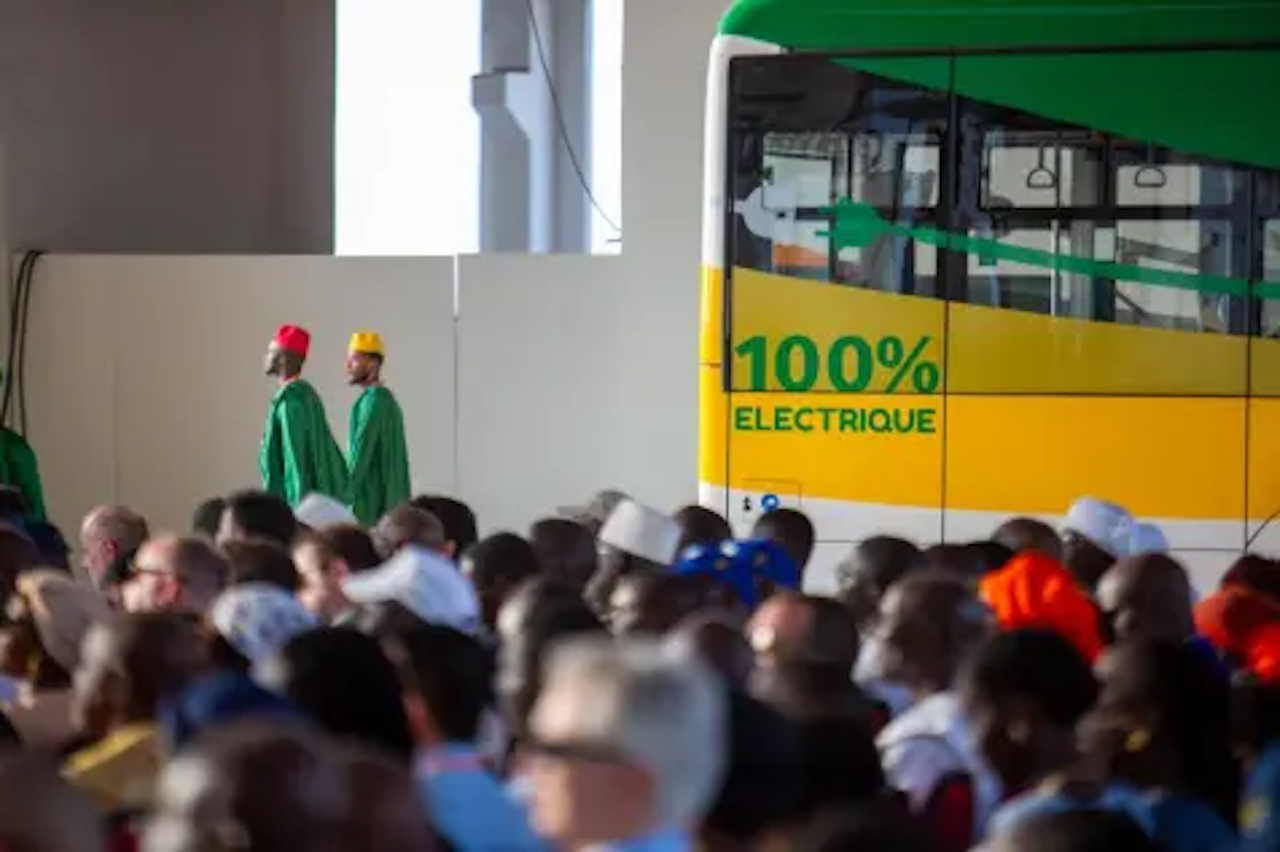
Dakar Bus Rapid Transit, operated as Dakar Mobilité, opened in March 2024 as sub-Saharan Africa's first fully electric BRT system: an 18.3km dedicated corridor linking central Dakar to the suburb of Guédiawaye, served by a fleet of 144 articulated electric buses.
Financing blends multiple public and private instruments: the World Bank and European Investment Bank financed the corridor infrastructure; the private Dakar Mobilité consortium invested USD 144 million in bus procurement and operations; the World Bank's Multilateral Investment Guarantee Agency (MIGA) provided a USD 22 million guarantee; and the Senegalese government committed USD 17 million over 15 years to subsidise fares.
The system is designed to cut journey times from 95 to 45 minutes and to carry up to 300,000 passengers a day at full ramp-up. World Bank project documentation projects a 1.2 million-tonne reduction in greenhouse-gas emissions over 30 years, roughly equivalent to removing 260,000 cars from the road, from the shift to electric traction and mode-shift away from private vehicles and informal minibuses.
As of the sources reviewed, the ridership, travel-time and emissions figures are project targets and appraisal-document projections rather than independently verified operating results, and World Bank documentation itself notes that key indicators need a multi-month ramp-up period to reach target values.
National / regional programmes
Indicative funding routes for practices of this type — always check each programme's current calls and eligibility rules.
Do you run this practice? Claim it — verified implementers get a public contact pathway and can propose corrections.
Where this practice's information was retrieved from, and when.
Vietnam
A decade-long World Bank-financed programme upgraded drainage, roads and utilities in low-income alleys across Ho Chi Minh City and three …
United States of America
In 2009 the US DOE gave Chattanooga's EPB a $111.5M smart-grid grant; EPB installed 1,200 automated sensors across 171 circuits, …
Netherlands
In 1977 Groningen split its centre into four sectors with no car links between them. Evaluations found car traffic down …
Kenya
Kenya's national informal-settlements upgrading programme has prepared over 23,000 land titles and delivered roads, drainage, water and sewer connections that …
Open full copilot Grounded in cited practices — always check the sources.