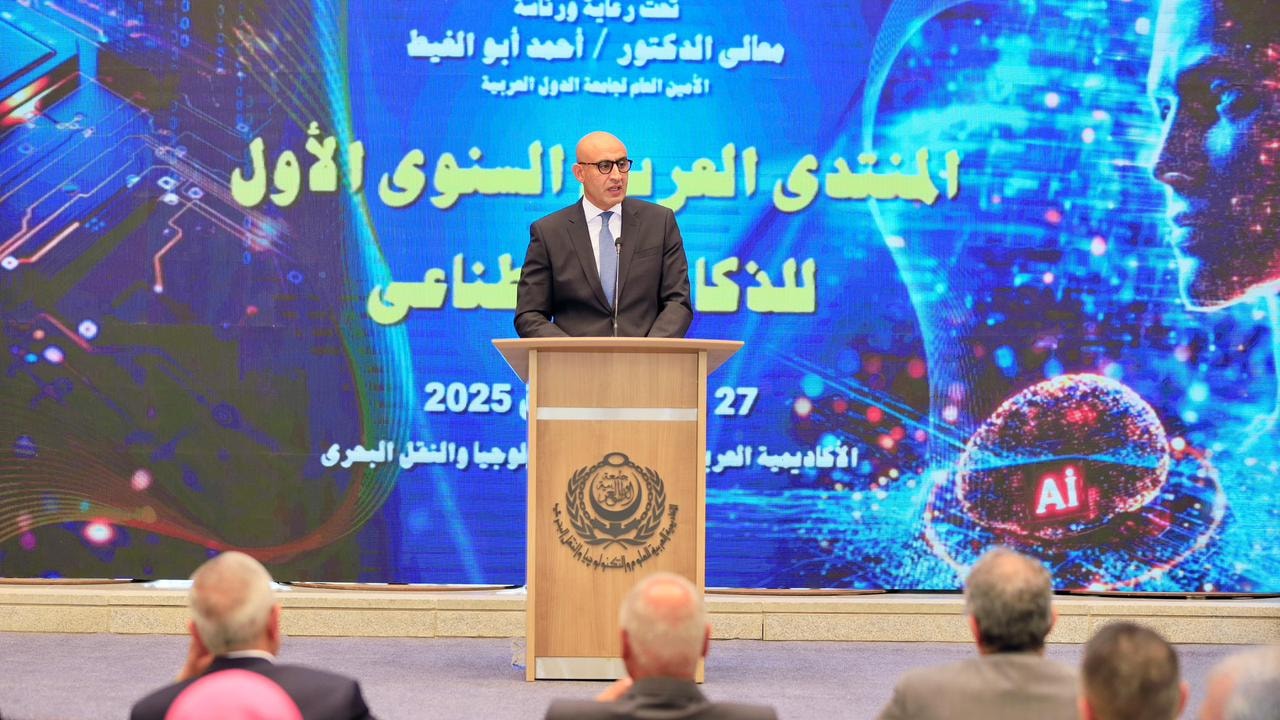
Egypt's Ministry of Education announced AI and programming as core subjects for select primary-to-secondary grades from 2025-26, backed by partnerships: Italy funding upgrades to 103 technical schools, Japan training staff in 100 schools, UK talks on 100 new technical schools.
103 schools
Technical schools upgraded via Italy partnership (from following academic year)
100 schools
New technical schools in talks with the UK (in talks)
100 schools
Schools with staff training via Japanese-university cooperation (n/a)
Details
Maturity
Pilot
Promoter
Egyptian Ministry of Education and Technical Education
Period
Announced Aug 2025; rollout from the 2025-2026 academic year
Keywords
AI literacy, K-12 curriculum, technical education, international partnerships, digital and financial literacy
Context
In August 2025, at the first Arab Artificial Intelligence Forum, Egypt's Minister of Education Mohamed Abdel Latif announced that AI instruction would be introduced into select grades across primary, middle and secondary schools from the 2025-2026 academic year, integrated alongside existing computer science and ICT subjects, with 'ethics and social implications of AI' named as a curriculum component.
Results
The rollout is anchored in international partnerships reported in early 2026: an agreement with Italy to upgrade 103 technical schools from the following academic year, talks with the UK to establish 100 new technical schools, staff training in 100 schools run with a Japanese university, and a cooperation protocol with Egypt's Financial Regulatory Authority to add financial literacy to the same digital-skills push. Tablets are being distributed to technical-education students as part of the effort.
Conclusions
This remains a policy rollout rather than an evaluated practice: no school or student counts, budget figures, or teacher-training completion numbers have been published for the core AI-curriculum component, and no learning-outcome data exists yet.
Implementation
Indicative cost
High (€500k–€5M) — Funded through bilateral partnerships (Italy, Japan) and infrastructure/lab investment; no consolidated national budget figure published for the AI-curriculum component specifically.
Time to results
Long (> 3 years) — Announced Aug 2025; core AI curriculum rollout from the 2025-2026 academic year; Italy-funded school upgrades from 'the following academic year'.
Staffing & skills
Egyptian Ministry of Education and Technical Education, Japanese university (staff training cooperation, 100 schools), Italian government partnership (technical school upgrades)
Conditions for success
Named international partnerships providing funding/infrastructure (Italy, Japan) and in talks (UK)
Explicit inclusion of AI ethics and social implications as a curriculum component
Parallel investment in school digital infrastructure and labs, plus tablet distribution to technical-education students
Common failure modes
No published school/student counts, budget figures or teacher-training completion numbers for the core AI-curriculum component
Rollout described mainly in terms of studied international models and ambitions rather than results achieved
Where it fits
Governance type
national ministry with bilateral international partnerships
Scale
national K-12 rollout (select grades)
Income level
lower-middle-income
Commonly funded by
National / regional programmes
Indicative funding routes for practices of this type — always check each programme's current calls and eligibility rules.
Do you run this practice?
Claim it —
verified implementers get a public contact pathway and can propose corrections.
Data sources
Where this practice's information was retrieved from, and when.
A 5-week AI-literacy module for pre-service physics teachers across nine Kazakhstani universities, led by Zhetysu University, raised literacy scores far …