Eddleston Water Project — Whole-Catchment Natural Flood Management Trial in the Scottish Borders
United Kingdom
A decade-plus monitored NFM experiment across 24 farms: 300,000+ native trees, ~40 leaky ponds and ~136 flow restrictors; reported ~30% …
Spain · El Prat de Llobregat · See the Spain profile
Evidence: Observational / pre–post Top 27% 53/100 · Ask Evidence Copilot about this practice
Under Catalonia's 2020 Emergency Drought Plan, advanced-treated effluent from the El Prat plant is pumped 8km upstream into the Llobregat River — up to 2 m3/s — before Barcelona's Sant Joan Despí intake, with monitoring shown safe through the severe 2021-2024 drought.
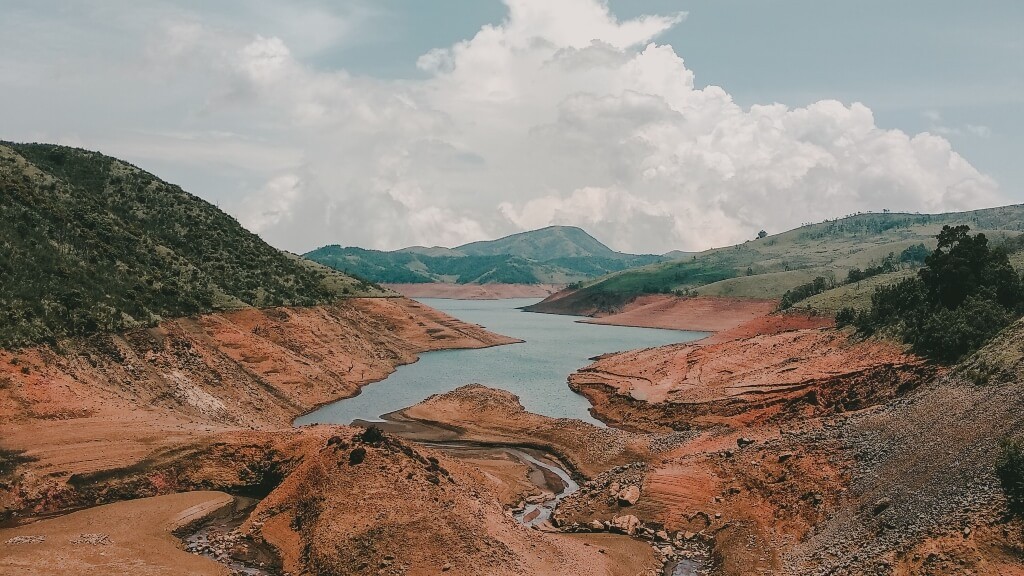
ES51Barcelona draws much of its drinking water from the Llobregat River, a source repeatedly strained by Mediterranean drought, culminating in Catalonia's severe 2021-2024 water emergency.
Under the Emergency Drought Situations Plan approved by the Catalan government in 2020, augment river flow with advanced-treated reclaimed water to safeguard both drinking-water supply and the receiving river's aquatic ecosystem.
The El Prat wastewater treatment plant produces advanced-treated reclaimed water and pumps it roughly 8km upstream, releasing up to 2 m3/s (about half of the plant's 4,000 litres/second capacity) into the Llobregat to blend with river flow before it is abstracted and treated again at the Sant Joan Despí drinking-water plant.
A peer-reviewed, multi-year (2021-2024) risk-monitoring programme published in Water Reuse concluded the practice was a 'successful water resilience strategy.' By 2023, desalinated and reclaimed sources together met an estimated 58% of Barcelona's water demand.
The scheme remains legally tied to declared drought emergencies rather than standing year-round policy. A parallel plan to replicate it on the neighbouring Besòs river, intended to eventually cover over 10% of the metropolitan area's drinking water, was still only around 70% built as of the sources reviewed.
ERDF — European Regional Development Fund National / regional programmes
Indicative funding routes for practices of this type — always check each programme's current calls and eligibility rules.
Do you run this practice? Claim it — verified implementers get a public contact pathway and can propose corrections.
Where this practice's information was retrieved from, and when.
United Kingdom
A decade-plus monitored NFM experiment across 24 farms: 300,000+ native trees, ~40 leaky ponds and ~136 flow restrictors; reported ~30% …
Canada
Since 2019, the Yunesit'in and Xeni Gwet'in First Nations have revived spring and fall cultural burning across Tsilhqot'in Territory, British …
Iceland
Since 2007, Iceland's Hekluskógar project has enlisted 210+ landowners to re-establish native birch woodland around the Hekla volcano, planting 2.3M+ …
United States of America
A 50/50 USACE-SFWMD project backfilled 22 miles of the C-38 flood-control canal and re-carved 44 miles of the Kissimmee River's …
Open full copilot Grounded in cited practices — always check the sources.