Zambia GEWEL — Girls' Education, Women's Empowerment and Livelihoods Programme
Zambia
Zambia's GEWEL programme (World Bank/GoZ) delivers livelihood packages to poor rural women and school stipends to vulnerable girls. By end-2024: …
Tajikistan · Gharm · See the Tajikistan profile
Evidence: Descriptive / self-reported Top 59% 59/100 · Ask Evidence Copilot about this practice
UN Women & IOM's 2013–2016 Tajikistan project trained 3,000 'left-behind' wives of labour migrants, formed 387 self-help groups & 30 economic initiatives, and won legal recognition (Decree 448/2015) for abandoned migrant families as a vulnerable group needing state support.
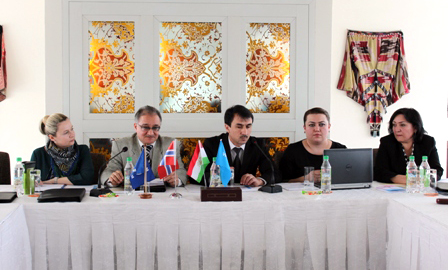
Around 1.5 million Tajik citizens, mostly men, work abroad each year, and hundreds of thousands of 'left-behind' wives face informal abandonment or divorce, loss of income and social protection, often remaining dependent on their husband's extended family for housing under local custom. The programme ran in the Rasht Valley (including Jirgatol district) and Khatlon region between 2013/2014 and 2016.
Provide abandoned wives of labour migrants with livelihood skills, microenterprise support, legal aid and psychosocial services, and secure formal state recognition of their vulnerability.
UN Women and IOM, funded by Norway's Ministry of Foreign Affairs, delivered livelihood training, microenterprise support, legal aid and psychosocial services through community-based women's self-help groups, working with local NGOs Fidokor (business development) and Surkhob (legal support). This included forming the 'Asamat' dairy cooperative in the Rasht Valley.
By the project's conclusion, 387 self-help groups and 30 joint economic initiatives had been formed, livelihood training had been delivered to 3,000 abandoned wives, and free legal support had been provided to nearly 4,500 women. Tajik Government Decree No. 448 (2 July 2015) formally recognised abandoned wives and children of labour migrants as a socially vulnerable category entitled to state support services for the first time.
Independent commentary from OSCE/ODIHR and IWPR confirms the scale and persistence of the underlying problem but highlights unresolved gaps: weak legal enforcement against absent husbands (only around 100 prosecution cases by 2017), a rejected 2013 proposal for a migrant-tracking database, and continuing cultural norms of dependency on in-laws. No independently audited impact evaluation was located, and the reach of a few thousand women is modest relative to an estimated 230,000-300,000 affected households nationwide.
Do you run this practice? Claim it — verified implementers get a public contact pathway and can propose corrections.
Where this practice's information was retrieved from, and when.
Zambia
Zambia's GEWEL programme (World Bank/GoZ) delivers livelihood packages to poor rural women and school stipends to vulnerable girls. By end-2024: …
Armenia
Founded in 2010, Armenia's Women's Support Center is the country's only organisation running full-time shelters for domestic-violence survivors, growing from …
Uganda
UN Women's LEAP programme trained refugee and host women in Uganda's Yumbe and Adjumani districts in leadership and livelihoods; women's …
Kenya
Founded in 2001 as a charitable trust of Nairobi Women's Hospital, GVRC has treated some 65,000 survivors of rape and …
Open full copilot Grounded in cited practices — always check the sources.