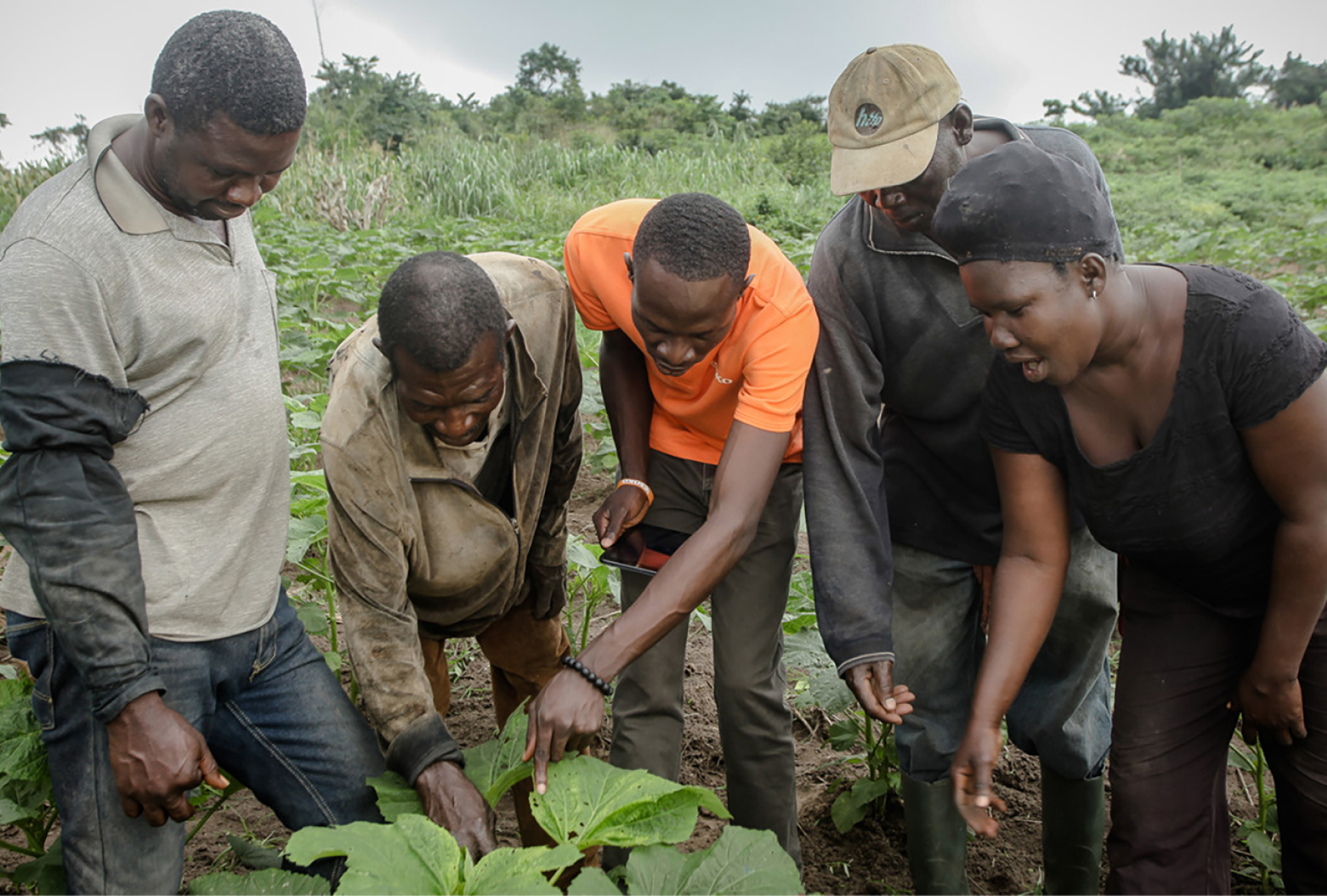
Esoko delivers SMS/voice crop-price, weather and agronomic advice to smallholder farmers across Africa; independent research found Ghanaian users earned about 10% more for maize and 7% more for groundnuts than non-users, and it now reaches over 2 million farmers.
10 %
Maize price premium for Esoko users vs. non-users
7 %
Groundnut price premium for Esoko users vs. non-users
2 million+
Farmers reached (2024)
~10
Countries with Esoko service
15+
Years operating (2009-present)
Details
Maturity
Established
Promoter
Esoko Networks
Period
2009-present
Keywords
agriculture, agritech, mobile services, market information
Context
Esoko is an agritech company founded in Ghana in 2009 (building on the earlier TradeNet platform) that sends smallholder farmers real-time crop prices, weather forecasts, agronomic tips and digital payment tools via SMS, voice, IVR and USSD — channels that work on basic phones without internet access. The service has expanded to roughly ten African countries.
Results
A study of the Northern Region of Ghana found that farmers receiving Esoko's mobile market-information service earned about 10% more for maize and 7% more for groundnuts than farmers without access to the service, evidence that better price information strengthens smallholder bargaining power. By 2024 the platform reported reaching over 2 million farmers.
Conclusions
Esoko has sustained itself for over 15 years through a mixed model of donor funding and paid services to agribusinesses, NGOs, mobile operators and governments — a contrast to peer projects that folded once grant funding ended, and a useful reference point for digital-inclusion programmes weighing free vs. revenue-generating designs.
Implementation
Implementation detail (cost, timeline, staffing, conditions for success) is not yet available for this practice.
Commonly funded by
Own resources / municipal budget
Indicative funding routes for practices of this type — always check each programme's current calls and eligibility rules.
Do you run this practice?
Claim it —
verified implementers get a public contact pathway and can propose corrections.
Data sources
Where this practice's information was retrieved from, and when.
A randomised trial with 2,900 Egyptian smallholder farmers found classroom-based digital-literacy training raised uptake of the government's Mahsoly price-monitoring app …