Greater Cape Town Water Fund — Invasive Alien Vegetation Clearing for Water Security (South Africa)
South Africa
Since 2018 the Greater Cape Town Water Fund has cleared 46,000+ hectares of invasive alien vegetation, recovering 15.2 billion litres …
Chile · Santiago · See the Chile profile · See the Santiago profile
Evidence: Observational / pre–post Top 58% 40/100 · Ask Evidence Copilot about this practice
A 26-organisation public-private water fund — utility Aguas Andinas, miner Anglo American, Nestlé and The Nature Conservancy — pooling resources to protect the Maipo basin that supplies 80% of greater Santiago's drinking water for about 7 million people.
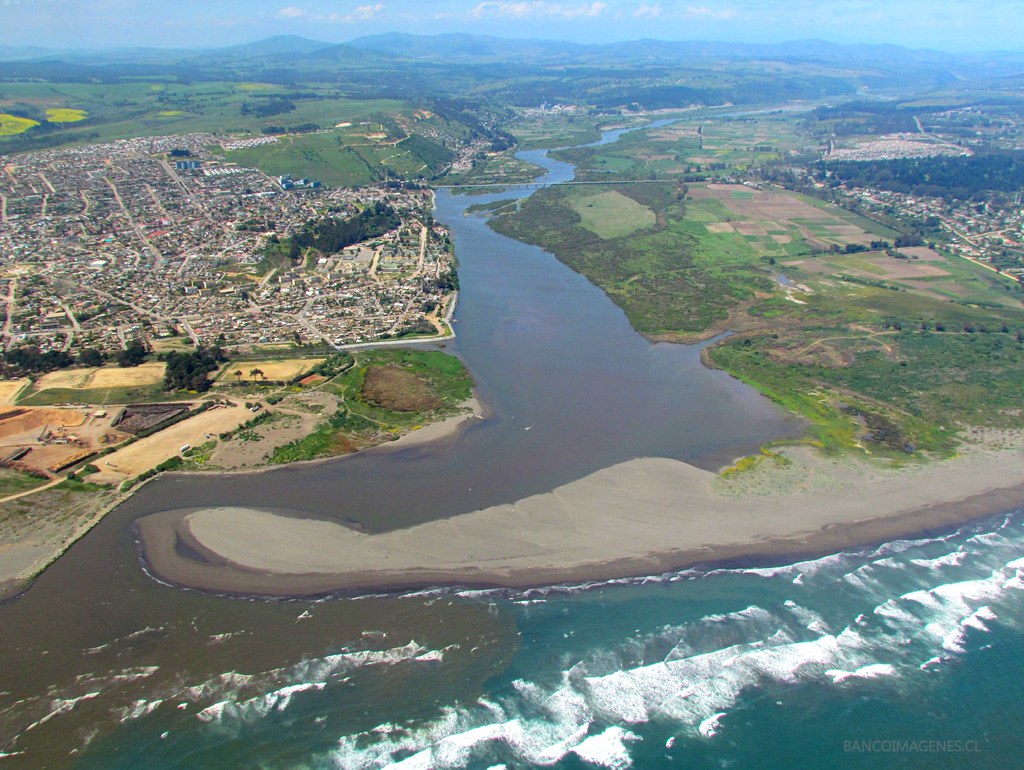
The Maipo river basin is the source of about 80% of drinking water for greater Santiago's roughly 7 million residents. The basin faces acute stress: precipitation has fallen roughly 30% over the past two decades, the Metropolitan Region's aquifer is dropping about a metre a year with groundwater rights over-allocated by 35% relative to recharge, and modelling cited by the fund projects a 40% decline in the basin's water balance by 2070. Less than 5% of the watershed was under formal protection when the fund launched.
Protect the Maipo river basin that supplies Santiago's drinking water through a nonprofit public-private corporation pooling resources from government, corporate and civil-society partners.
Fondo de Agua Santiago-Maipo (FDA-SM) was founded by 26 organisations, including the Santiago Metropolitan Regional Government, water utility Aguas Andinas, mining company Anglo American, Nestlé, the rural municipalities association AMUR, the National Agricultural Society and The Nature Conservancy. Partners formally committed at the end of 2019 following a design phase led by TNC as part of the Latin American Water Funds Alliance model; the corporation's Strategic Plan 2021-2025 was published in January 2021. Governance rests with a nine-member board (three seats for the regional government, plus Aguas Andinas, Anglo American, TNC, AMUR and SNA) supported by a nine-member advisory council. In March 2025, FDA-SM, Asociación Parque Cordillera and FSC Chile signed an alliance targeting ecological restoration across 27,000 hectares in seven communes to improve infiltration and recharge. An earlier pilot with Aguas Andinas built about 1,800 metres of infiltration trenches, and separate field projects with TNC, Coca-Cola Chile and Chile's forestry service CONAF operate at the Río Clarillo (40 ha) and El Morado (28 ha, 80% complete) reserves, alongside an 11-farm irrigation-efficiency project.
The infiltration-trench pilot captured roughly 1,400 m³ of rainwater in 2024. The Río Clarillo and El Morado field projects reported recovering about 30,000 m³ of water per year, and the 11-farm irrigation-efficiency project reported saving 1.7 million m³ over three years.
No public source discloses the fund's total capitalisation or corporate contribution amounts, and the 27,000-hectare restoration figure is an agreement target rather than hectares already restored — only the smaller Río Clarillo and El Morado pilots (under 70 ha combined) have documented, near-complete implementation. Sources also give inconsistent founding dates, and coordination is complicated by more than 40 Chilean public agencies holding some jurisdiction over water.
Own resources / municipal budget Philanthropic / foundation funding
Indicative funding routes for practices of this type — always check each programme's current calls and eligibility rules.
Do you run this practice? Claim it — verified implementers get a public contact pathway and can propose corrections.
Where this practice's information was retrieved from, and when.
South Africa
Since 2018 the Greater Cape Town Water Fund has cleared 46,000+ hectares of invasive alien vegetation, recovering 15.2 billion litres …
Peru
Andean water fund restoring 86 km of pre-Inca amunas to recharge Lima's rivers; 15m m³/year water secured, 605,000 t CO2 …
Ethiopia
Heineken Ethiopia's BURQA initiative, with World Vision Ethiopia and Acacia Water, restores the Dabena and Hakim Gara catchments; an independent …
India
ITC's Kovai paperboard unit became the world's 2nd, and India's 1st, facility to earn AWS Platinum water certification (2019-20), rejuvenating …
Open full copilot Grounded in cited practices — always check the sources.