Gibraltar Digital Skills Academy
Gibraltar
A Gibraltar charity trains residents as Microsoft-certified IT technicians via a free four-month course with guaranteed work placement, funded by …
Djibouti · Djibouti City · See the Djibouti profile · See the Djibouti City profile
Evidence: Observational / pre–post Top 82% 52/100 · Ask Evidence Copilot about this practice
UNDP's Frontier Tech Leaders programme ran Djibouti's first Python and Machine Learning bootcamps in 2024, selecting 43 of 500+ applicants and graduating 23 with local-problem capstone projects, before a second cohort of 67 (20 women) began in January 2025.
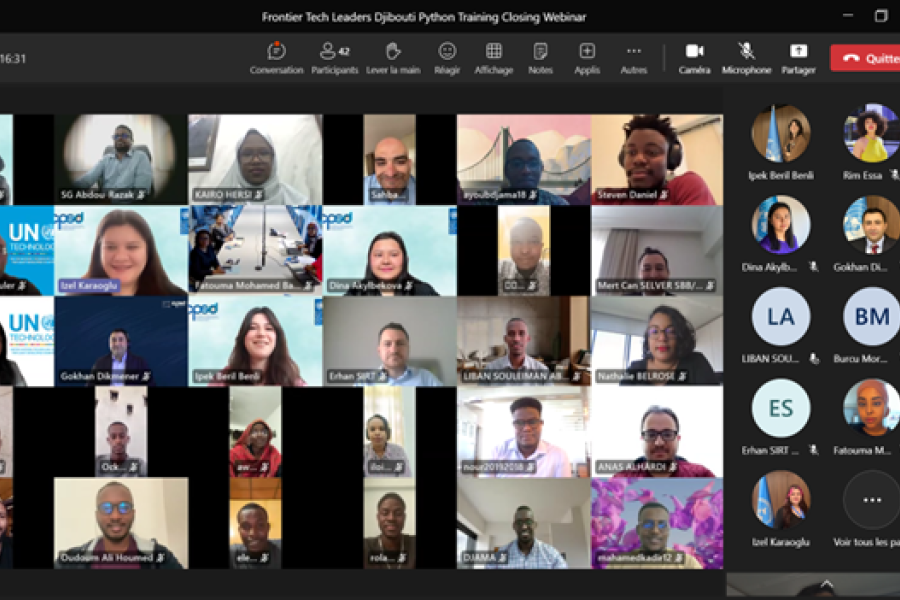
Launched at the UN's Fifth Conference on Least Developed Countries, the Frontier Tech Leaders (FTL) programme - run by UNDP's Istanbul International Centre for Private Sector in Development and the UN Technology Bank for LDCs, with funding from the Government of Turkiye - aims to build applied digital skills in some of the world's least-connected economies. Djibouti was FTL's first country implementation.
Build applied Python and machine-learning skills among young Djiboutians through structured bootcamps culminating in locally-relevant capstone projects.
From January 2024, young Djiboutians took a three-week intensive Python course; 20 completed it by late February. On 5 March 2024 a Machine Learning bootcamp began, selecting 43 participants from over 500 applicants. A second, larger cohort of 67 students (20 women) started in January 2025.
23 participants graduated on 15 July 2024, presenting capstone projects on predicting road-accident risk, forecasting agricultural yields and assessing vegetation using satellite-derived data.
All participation and completion figures come from UNDP's own press releases and the UN Djibouti country office, with no independently published evaluation of graduates' employment or skills retention yet available. Total graduates remain modest relative to Djibouti's youth population, but the capstone projects are concrete, locally-relevant documented outputs of the training.
Philanthropic / foundation funding
Indicative funding routes for practices of this type — always check each programme's current calls and eligibility rules.
Do you run this practice? Claim it — verified implementers get a public contact pathway and can propose corrections.
Where this practice's information was retrieved from, and when.
Gibraltar
A Gibraltar charity trains residents as Microsoft-certified IT technicians via a free four-month course with guaranteed work placement, funded by …
United Arab Emirates
Dubai-led pan-Arab initiative delivering free online coding courses via Udacity to Arab youth across 80 countries; reported 1 million participants, …
Mali
In June 2024, UNDP Mali and Orange Mali launched a two-year partnership to train 3,000 young people in digital skills …
Palestine, State of
Since 2011, Mercy Corps' Gaza Sky Geeks has trained over 60,000 Palestinian youth in coding, freelancing and startup skills through …
Open full copilot Grounded in cited practices — always check the sources.